


Trending Now
 Karnataka proposes 270-km RRTS Network linking Bengaluru with Tumakuru, Mysuru and KGF
 Alstom and Vingroup sign MoU to supply up to 200 Metro Trains for Hanoi Urban Rail Projects
 Afcons Infrastructure wins ₹1,383 crore Civil Contract for Lucknow Metro Phase 1B Corridor
 GMRL issues ₹1,662 crore Civil Tender for Sector 9–Cyber City Gurugram Metro Rail Corridor
 Madrid unveils €1.57 billion Metro Rail Expansion Programme with 27.8 km of New Corridors
 Global Tender launched for Project Management Consultancy for Abu Dhabi Tram Line 4
 NV Dynamics awarded Noise and Vibration Study contract for Jaipur Metro Phase 2 Project
 Two global consortia bid for India’s 350 kmph High-Speed Rail Design consultancy contract
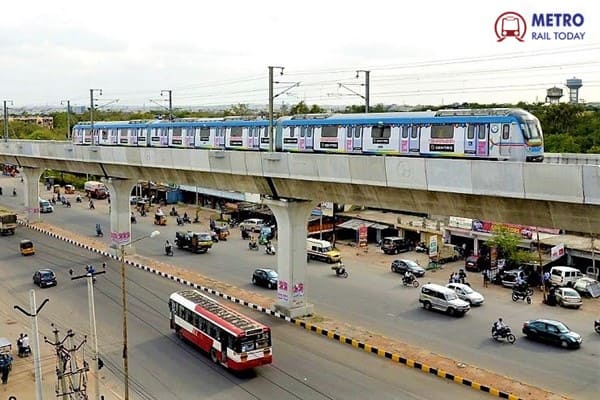 Larsen & Toubro (L&T) extends Hyderabad Metro stake sale timeline to 31 December 2026
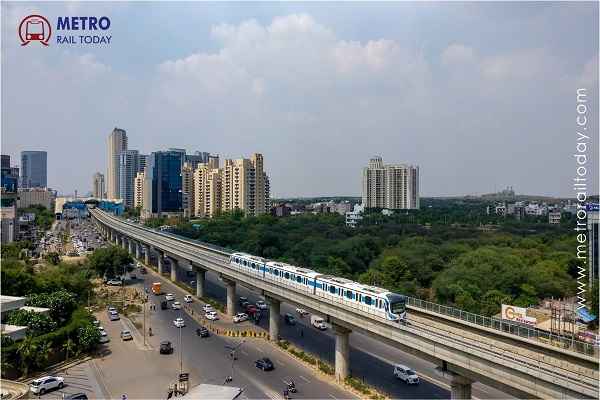 Haryana Govt approves ₹1,662 crore construction tender for Gurugram Metro Phase 2
Telangana pushes for approval of ₹38,595 Crore Hyderabad Metro Phase-II Expansion
MRT Online Desk
Posted on: 2026-05-06 16:30:00
Viewer: 2,260
Comments: 0
Country: India
City: New Delhi
New Delhi, India (Metro Rail Today): Telangana Chief Minister A. Revanth Reddy has urged the Central Government to expedite approval for the Hyderabad Metro Rail Phase-II project, highlighting the urgent need to expand the city’s urban transit network amid rapid urban growth and rising commuter demand.
During a meeting with Union Minister for Housing and Urban Affairs Manohar Lal in New Delhi, the Chief Minister presented the state’s comprehensive expansion roadmap for Hyderabad Metro and sought early clearance for both Phase-II and Phase-III projects.
According to officials, the Telangana government has already submitted a Detailed Project Report (DPR) for Phase-II, proposing a 122.9-km metro network spread across seven corridors with an estimated investment of ₹38,595 crore.
Telangana Seeks Joint Venture Model with Centre
During the discussions, Revanth Reddy requested the Union Government to implement the Hyderabad Metro Phase-II project as a joint venture between the Centre and the Telangana government. He stressed that expanding the metro network has become essential to provide safe, efficient, and sustainable public transportation for Hyderabad’s rapidly growing population.
The Chief Minister informed the Union Minister that the city’s increasing traffic congestion and expanding urban footprint require urgent metro connectivity upgrades across emerging residential, commercial, and industrial zones.
Officials said the proposed corridors under Phase-II are aimed at significantly improving connectivity across key parts of Hyderabad while strengthening integration with existing transit infrastructure.
Metro Expansion After Government Takeover of Phase-I
A major highlight of the meeting was the discussion surrounding the Telangana government’s recent takeover of Hyderabad Metro Rail Phase-I from L&T Metro Rail (Hyderabad) Limited. The Chief Minister stated that the state assumed full control of the existing metro network specifically to ensure smoother planning and execution of future expansion phases.
According to the Chief Minister’s Office, Revanth Reddy emphasized that government control over Phase-I would help streamline decision-making, improve project coordination, and facilitate faster implementation of both Phase-II and Phase-III.
Industry observers believe the takeover could help create stronger alignment between metro development, urban planning, and future mobility strategies in Hyderabad.
Mrs. Mamta Shah, MD & CEO of Urban Infra Group, said, “Hyderabad’s metro expansion is critical for supporting the city’s rapid economic and urban growth. Integrated planning between existing and future metro corridors, combined with strong state and central collaboration, can significantly improve mobility, reduce congestion, and create a more sustainable urban transport ecosystem.”
Focus on Airport Connectivity Under Phase-III
Apart from Phase-II, the Chief Minister also requested the Centre to support the proposed Rajiv Gandhi International Airport–Bharat Future City corridor under Metro Rail Phase-III. He informed the Union Minister that the DPR for the Phase-III proposal has already been submitted to the Centre.
The proposed airport corridor is expected to play a crucial role in strengthening connectivity between Hyderabad’s expanding airport region and upcoming urban development zones, including the planned Bharat Future City project.
Growing Demand for Urban Mobility in Hyderabad
Hyderabad has emerged as one of India’s fastest-growing metropolitan regions, witnessing rapid expansion in IT, commercial, residential, and industrial sectors. With increasing traffic congestion and rising travel demand, metro rail expansion has become central to the city’s long-term mobility planning.
The proposed Phase-II and Phase-III corridors are expected to significantly enhance public transport accessibility, improve commuter convenience, and support sustainable urbanisation across the Hyderabad metropolitan region.
Senior officials including Union Housing and Urban Affairs Secretary K. Srinivas, HMRCL Managing Director Sarfaraz Ahmed, Telangana government advisor N.V.S. Reddy, and other senior representatives were also present during the meeting.
With the Telangana government aggressively pursuing approvals, Hyderabad Metro’s next phase of expansion could soon become one of the largest urban transit development programmes currently planned in India.

MRT Online Desk
Metro Rail Today is an authentic and global news provider for the Rail & Metro industry from and around the world.