

Trending Now
 Siemens wins ₹91.65 crore Telecom Contract for Kochi Metro Phase 2 Pink Line
 GHV Infra wins ₹150 crore Civil Contract for Vasantkunj Depot of Lucknow Metro East-West Corridor
 Texmaco Rail wins ₹130 crore Track Contract for Kochi Metro Phase 2 Pink Line
 Indian Railways unveils Alignments and Routes of four new High Speed Bullet Train Corridors
 Telangana pushes for approval of ₹38,595 Crore Hyderabad Metro Phase-II Expansion
 Boston Consulting Group appointed to prepare 10 years Corporate Plan for Delhi Metro
 Exclusive Interview with Champak Panda, Managing Director, Rolling Stock & Components, Alstom India
 Delhi Metro invites Expression of Interests to manufacture Platform Screen Doors in India
 NMRC to appoint General Consultant for Noida-Greater Noida Aqua Line Metro Expansion
- NHSRCL launches Five Heavy Portal Beams on Mumbai-Ahmedabad Bullet Train Project
Texmaco Rail wins ₹130 crore Track Contract for Kochi Metro Phase 2 Pink Line
MRT Online Desk
Posted on: 2026-05-08 16:50:00
Viewer: 75
Comments: 0
Country: India
City: Kochi
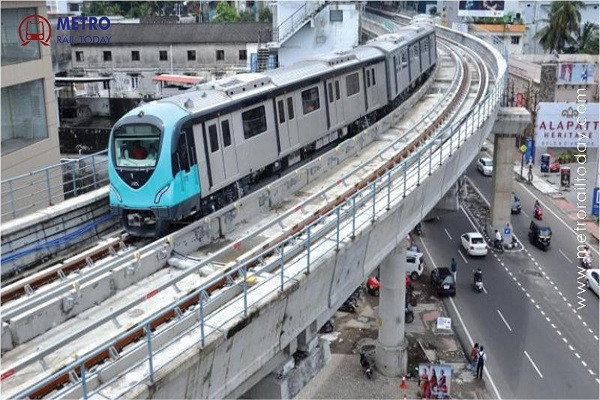
Kochi, India (Metro Rail Today): Texmaco Rail & Engineering Limited has secured a ₹130.22 crore contract from Kochi Metro Rail Limited (KMRL) for ballastless track work on the elevated section of the Kochi Metro Phase-II corridor. The development further strengthens the company’s growing footprint in India’s rapidly expanding metro rail infrastructure sector.
The contract covers the design, supply, installation, testing, and commissioning of ballastless track systems along with standard gauge connections for the elevated stretch of the corridor. The project is scheduled to be completed within 16 months from the issuance of the Letter of Acceptance (LoA).
Texmaco Rail had earlier emerged as the lowest bidder for the package, and the formal award now marks another important milestone in the implementation of Kochi Metro’s Phase-II expansion.
Kochi Metro Pink Line to Connect Key IT and Business Hubs
Kochi Metro Phase-II, also known as the Pink Line, is a strategically important 11.2-km corridor connecting JLN Stadium to Infopark in Kakkanad through 11 stations. The line is expected to significantly improve connectivity between Kochi’s residential zones and major commercial and IT destinations.
The corridor will serve critical economic hubs including Infopark, SmartCity, KINFRA, Rajagiri Valley, and the Cochin Special Economic Zone, areas that have witnessed rapid urban and commercial growth in recent years.
Once operational, the Pink Line is expected to ease traffic congestion in Kakkanad and provide a reliable, sustainable public transport option for thousands of daily commuters travelling to the region’s technology and business campuses.
Ballastless Track Technology for Modern Metro Operations
The awarded package involves ballastless track technology, which is increasingly becoming the preferred choice for modern metro rail systems due to its durability, reduced maintenance requirements, and smoother ride quality.
Ballastless tracks are designed to support higher operational reliability and lower lifecycle costs compared to conventional ballasted systems, making them ideal for high-frequency urban transit networks.
The project also includes standard gauge track connections and associated systems integration to ensure seamless metro operations on the elevated corridor.
Mrs. Mamta Shah, MD & CEO of Urban Infra Group, said, “The award of the ballastless track package for Kochi Metro Phase-II reflects the growing adoption of advanced rail infrastructure technologies in India’s metro sector. Projects like the Kochi Metro Pink Line are essential for supporting sustainable urban growth and improving connectivity to emerging economic and IT corridors.”
Strengthening Kerala’s Urban Mobility Network
The Kochi Metro Phase-II project, estimated at around ₹1,957 crore, forms a key part of Kerala’s broader urban mobility strategy. Apart from metro connectivity, the corridor is designed to support multimodal integration through links with bus transport services, the Kochi Water Metro network, and public bicycle-sharing systems.
This integrated mobility approach is expected to improve first-mile and last-mile connectivity while encouraging greater public transport usage across the city.
The expansion also aligns with Kochi’s vision of building a more sustainable and transit-oriented urban transport ecosystem capable of supporting future population and economic growth.
Texmaco Expands Presence in Metro Rail Infrastructure
For Texmaco Rail & Engineering Limited, the project represents another step in diversifying beyond its traditional freight wagon manufacturing business into metro rail systems, rail infrastructure, and allied engineering segments.
The company has been actively participating in India’s growing urban transit market, where multiple cities are accelerating investments in metro rail and rapid transit projects to address rising urbanisation and mobility demands.
With metro rail construction activity gaining momentum across the country, infrastructure companies such as Texmaco are increasingly positioning themselves as integrated players in India’s evolving rail transportation ecosystem.

MRT Online Desk
Metro Rail Today is an authentic and global news provider for the Rail & Metro industry from and around the world.