


Trending Now
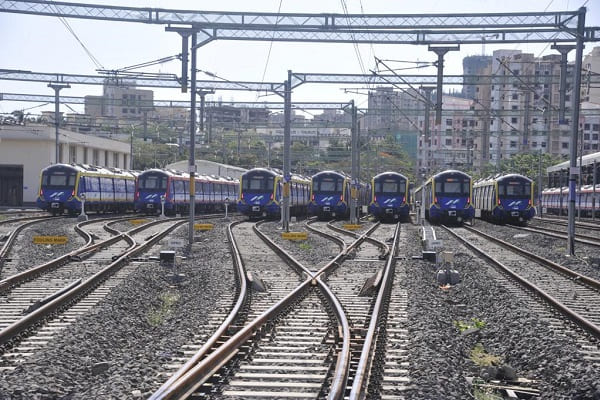 MMRDA issues Track Works Tender for Kasheli Depot of Mumbai Metro Line 5
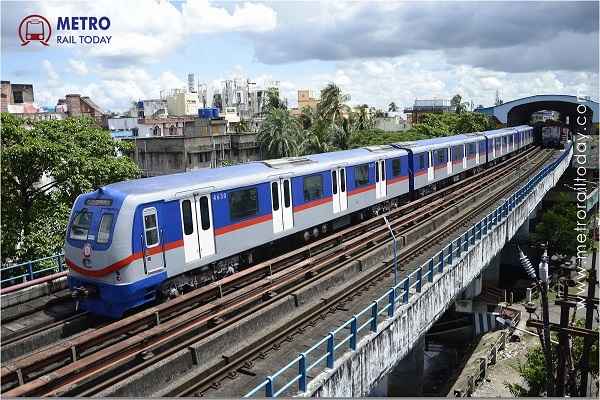 Indian Railways to procure 60 new Rolling Stock Trains for Kolkata Metro in five years
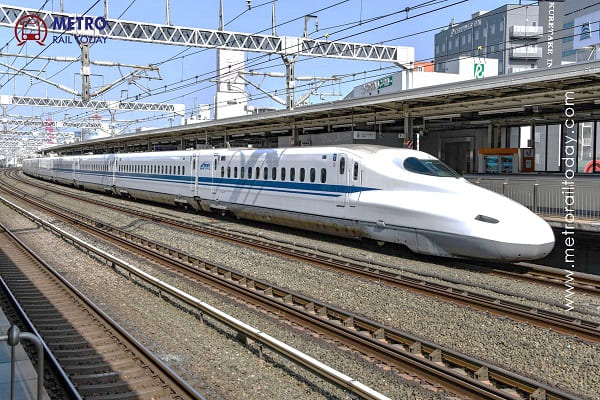 Kerala forms Expert Committee to evaluate Thiruvananthapuram–Kannur High-Speed Rail Corridor
 Mumbai–Ahmedabad Bullet Train Project achieves third Mountain Tunnel Breakthrough in Maharashtra
 MMRDA invites bids for ₹4,882 Crore Rolling Stock & Systems Contract for Mumbai Metro Line 12
 Kolkata Metro completes Aluminium Third Rail Upgrade on Blue Line
- Metroman E. Sreedharan submits new Blueprint for ₹54,000 Crore Kerala High Speed Rail Corridor
 Union Housing & Urban Affairs Minister Tokhan Sahu to inaugurate 6th RailTrans Expo 2026
 Maha Metro plans Six-Coach Trains ahead of Pune Metro Line 3 Launch
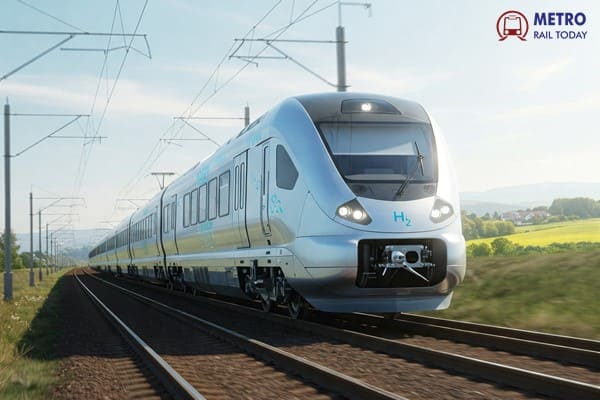 Railway Ministry approves launch of India’s First Hydrogen-Powered Train on Jind–Sonipat Route
Silver Line of Delhi Metro Phase 4 renamed as Golden Line
MRT Online Desk
Posted on: 2024-01-29 07:00:00
Viewer: 3,663
Comments: 0
Country: India
City: New Delhi
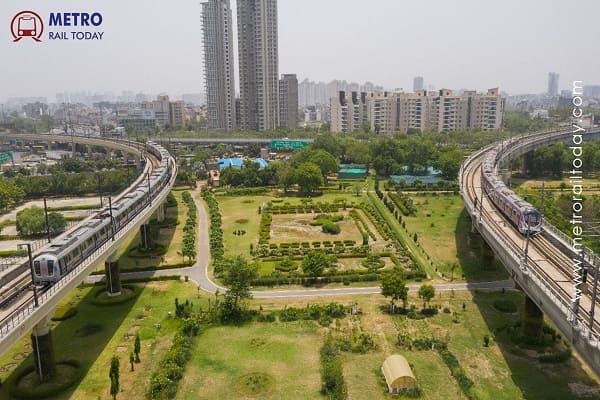
New Delhi, India (Metro Rail Today): The Delhi Metro Rail Corporation (DMRC) has officially rebranded the highly anticipated 23.60 km Silver Line (Aerocity – Tughlakabad) as the Golden Line with effect from January 27, 2024.
The Golden Line, part of the extensive 65.1 km Delhi Metro Phase 4 project, is currently under construction through a combination of three underground packages (DC-07 by Afcons Infrastructure, DC-08 by J Kumar Infraprojects, and DC-09 by Larsen & Toubro) and one elevated package DC-04 by YFC Projects.
The line, featuring 16 stations, is set to transform Delhi's connectivity landscape. Currently under construction at key locations such as Aerocity, Mahipalpur, Vasant Kunj, and Tughlakabad, the Golden Line promises to be a pivotal part of Delhi's evolving metro network.
The decision to rename the line has stirred some dissent, with critics questioning the choice of "Golden." Given the proximity of this color to existing lines, particularly yellow (Samaypur Badli – Millienium City Centre) and orange (NDLS – Yashobhoomi Dwarka Sector 25), both of which have interchanges with the Golden Line, concerns about potential confusion have arisen.
Moreover, the term "golden" itself has raised eyebrows, as it is traditionally an adjective describing something bright or lustrous, rather than a distinct color. This linguistic nuance has left some perplexed about the rationale behind the second name change.
"The decision has been taken since the golden colour can be displayed more prominently and clearly on the trains rather than silver, which tends to get mixed with the overall silvery texture of the stainless steel body of the Metro trains. Therefore, the selection of ‘golden’ as the colour code would ensure better visibility on trains and will be more convenient for the passengers," said Anuj Dayal, Executive Director (Corporate Communications), Delhi Metro Rail Corporation.
Construction is progressing rapidly, with 16 stations underway, including prominent locations like Chhatarpur, Saket G-Block, and Tughlakabad. The line will be serviced by thirteen 6-coach Alstom trains, a significant development under Package RS-17, ordered in October 2022.
This isn't the first instance of DMRC altering color codes. In Phase 3, the Magenta Line was initially color-coded brown until 2015. A brown-striped train, produced by Hyundai Rotem, even rolled out at their Changwon plant in South Korea.
The decision to rename the Silver Line to the Golden Line is undoubtedly a bold one, raising questions about potential confusion and the accuracy of the chosen color descriptor. As Delhi eagerly anticipates the completion of the Golden Line and its integration into the metro network, the controversy surrounding its nomenclature adds an intriguing layer to the city's transit narrative.


MRT Online Desk
Metro Rail Today is an authentic and global news provider for the Rail & Metro industry from and around the world.