

Trending Now
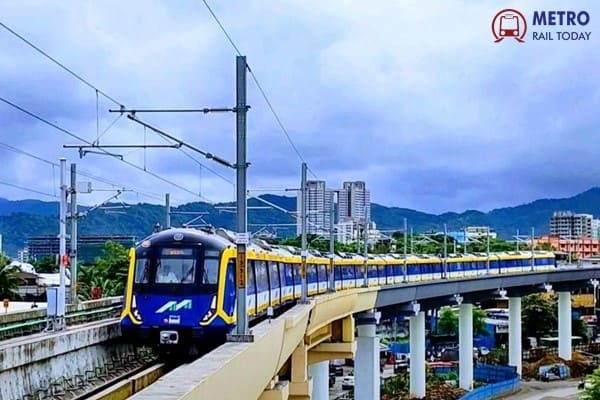 MMRDA invites bids for ₹4,882 Crore Rolling Stock & Systems Contract for Mumbai Metro Line 12
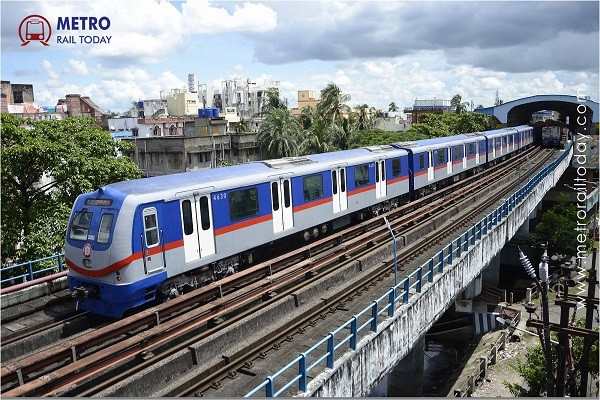 Kolkata Metro completes Aluminium Third Rail Upgrade on Blue Line
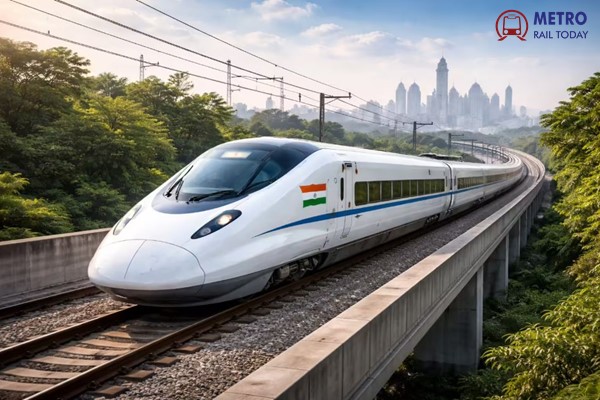 Metroman E. Sreedharan submits new Blueprint for ₹54,000 Crore Kerala High Speed Rail Corridor
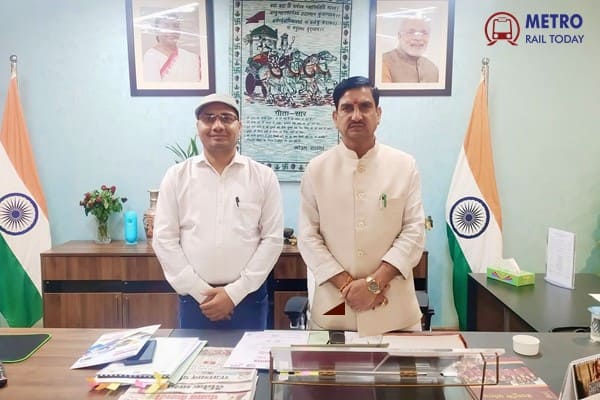 Union Housing & Urban Affairs Minister Tokhan Sahu to inaugurate 6th RailTrans Expo 2026
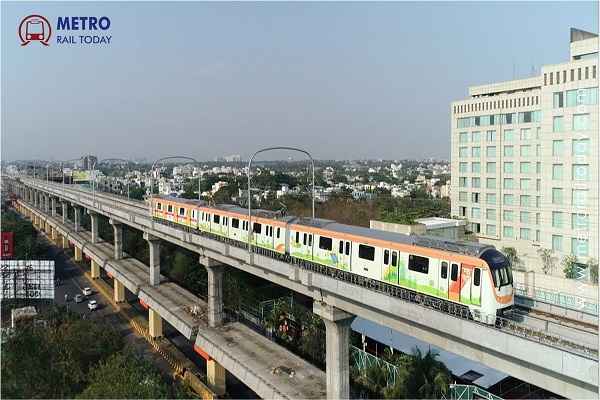 Maha Metro plans Six-Coach Trains ahead of Pune Metro Line 3 Launch
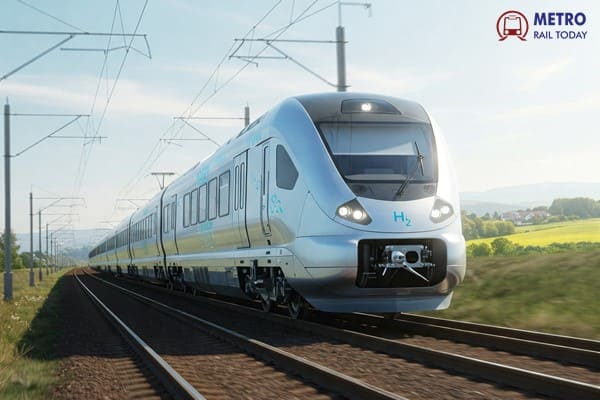 Railway Ministry approves launch of India’s First Hydrogen-Powered Train on Jind–Sonipat Route
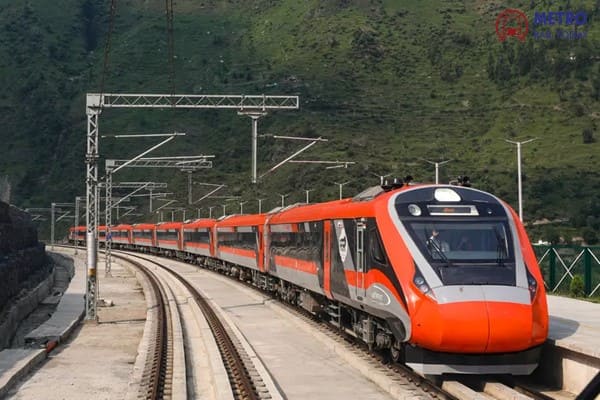 Kineco Global Rail secures Interior Contract for new 100 Vande Bharat Sleeper Trains
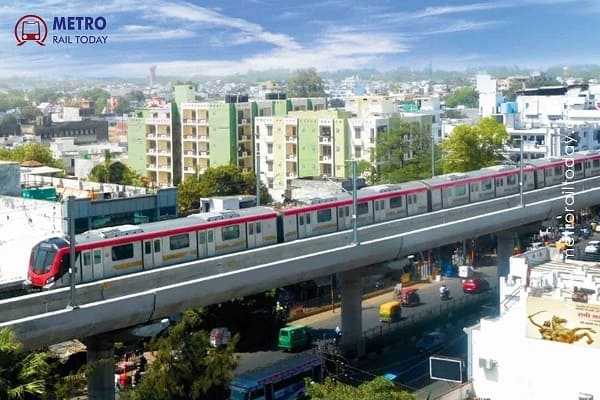 Ranjit Buildcon Wins ₹383.98 Crore Civil Contract for Lucknow Metro Phase 1B
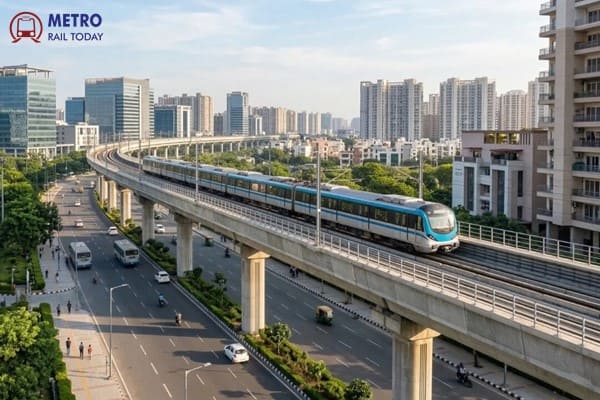 Tamil Nadu seeks Central Support for new Metro Rail Projects in Coimbatore, Hosur and Madurai
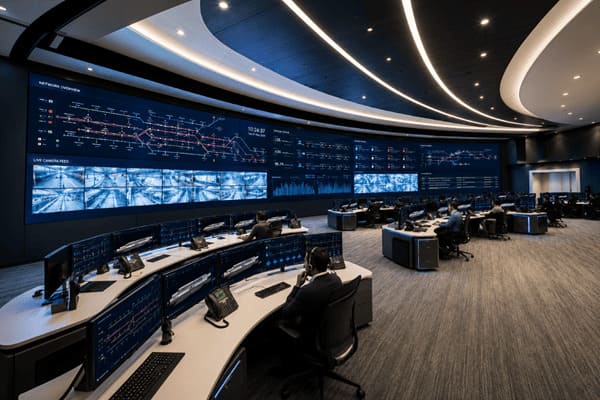 Future Metro Control Centres: ST Engineering Transforms Command Rooms to Intelligent Nerve Centres
India's Rail & Metro Year-End Review 2025: A Year of Accelerated Execution and Visible Outcomes
Mamta Shah
Posted on: 2025-12-31 07:00:00
Viewer: 16,531
Comments: 0
Country: India
City: New Delhi
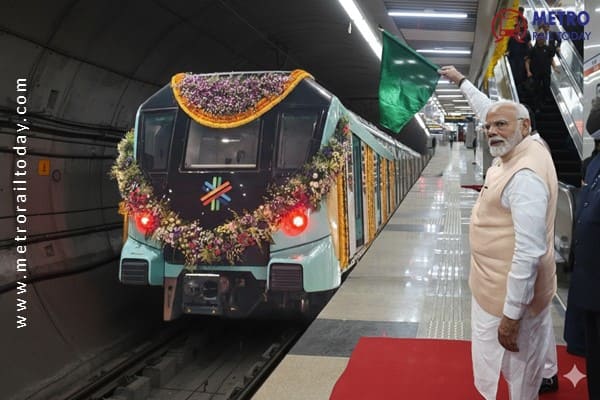
As the sun sets on 2025, India’s urban transportation landscape stands transformed. This year has been defined not just by the expansion of tracks, but by the seamless integration of technology and the achievement of long-awaited milestones. From the historic 1,000-km operational metro milestone to the rollout of the first Vande Bharat Sleeper, 2025 has cemented India’s position as a global leader in modern transit.
1. The Metro Revolution: Crossing the 1,000-KM Frontier
The most significant headline of the year was the Indian Metro network surpassing the 1,000-km mark, reaching a total of 1,090 km of operational tracks across 26 cities.
Key Operational Milestones in 2025:
- Mumbai Metro Line 3: The crowning achievement of 2025 was the completion of Mumbai’s first fully underground metro.
-
Phase 2A (BKC to Acharya Atre Chowk): Inaugurated in May 2025, adding 6 crucial stations to the line.
-
Final Phase (Acharya Atre Chowk to Cuffe Parade): On October 8, 2025, the final 11-km stretch was dedicated to the nation. This 33.5 km corridor now connects the business districts of Nariman Point and Worli to the International Airport and SEEPZ, expected to carry over 13 lakh passengers daily.
-
-
Bhopal & Indore Metros: December 2025 saw the "Heart of India" finally join the metro club. The Bhopal Metro Orange Line (Priority Corridor) was inaugurated on December 23, spanning 7 km with 8 stations. Indore followed suit with its own priority stretch, significantly easing the commute in Madhya Pradesh.
-
Bengaluru’s Yellow Line: A major relief for the tech hub, the 19.15-km Yellow Line (RV Road to Bommasandra) was inaugurated on August 10, 2025. It now serves as the primary artery for Electronics City, seeing a record-breaking 10.48 lakh passengers on its first day.
-
Delhi Metro Phase-IV: The DMRC opened the Janakpuri West-Krishna Park Extension early in the year and achieved a significant engineering feat by tunneling under the operational Red Line at Pulbangash.
2025 Sanctioned Projects & Investment
The Ministry of Housing and Urban Affairs (MoHUA) remained aggressive in its expansion strategy. Between January and November 2025, projects worth ₹25,932 Crore were sanctioned, covering 84.57 km. These include crucial extensions in Pune, Thane, and the Rithala-Narela-Nathupur (26.5 km) corridor in Delhi.
A decade-long wait ended in September 2025 with the Commencement of Construction on the 28.5-km Gurugram Metro Extension. The project, costing ₹5,452 crore, will feature 27 stations and finally bridge the gap between "Old Gurugram" and the existing "New Gurugram" Rapid Metro and Yellow Line.
2. Regional Rapid Transit System (RRTS): Namo Bharat Accelerates
The Namo Bharat (RRTS) trains have redefined regional connectivity in the NCR. By December 2025, the Delhi-Ghaziabad-Meerut corridor saw 55 km of its 82-km total length operational (from New Ashok Nagar to Meerut South).
Major RRTS Developments:
-
PIB Approvals: In November 2025, the Public Investment Board approved two new priority corridors—Delhi-Gurugram-SNB-Alwar and Delhi-Panipat-Karnal—with a combined budget of approximately ₹65,000 crore.
-
Ridership Surge: Monthly ridership on the operational sections reached 1.5 million by year-end, with daily peaks touching 81,550 commuters.
-
Interoperability: Work is nearing completion on the Sarai Kale Khan Mega-Hub, which will allow commuters to switch between all three RRTS lines without changing trains.
3. High-Speed Rail (HSR): The Bullet Train Gains Momentum
The Mumbai-Ahmedabad High-Speed Rail (MAHSR) project made massive strides in civil construction this year.
| Parameter | Progress (as of Nov 30, 2025) |
| Physical Progress | ~55.6% |
| Financial Progress | ₹85,801 Crore (70% utilized) |
| Viaduct Completed | 331 km |
| Piers Erected | 405 km |
| Track Bed Constructed | 272 km |
While the full corridor is targeted for 2029, the Surat-Bilimora section is undergoing advanced trials. The integration of the "Shinkansen" technology with Indian environmental conditions has been a highlight of the year.
4. Semi-High Speed & Suburban Rail: Vande Bharat 2.0
2025 was the year of the "Sleeper" variant. The first Vande Bharat Sleeper was rolled out for the Patna-Delhi route in late December, offering a high-speed overnight alternative to the Rajdhani Express with a top speed of 160 kmph.
-
Vande Metro (Namo Bharat Rapid Rail): Two services are now operational (Bhuj–Ahmedabad and Jaynagar–Patna), filling the gap between short-distance suburban and long-distance express trains.
-
Bengaluru Suburban Rail (K-RIDE): After years of delays, the appointment of a full-time MD in December 2025 has revived the project. Work on the Kasturi Nagar station and the "Mallige" and "Kanaka" lines has finally accelerated, with a 2027-2028 operational window.
5. Policy Reforms & Indigenous Technology
The year 2025 was a landmark for Atmanirbhar Bharat in the rail sector:
-
Platform Screen Doors (PSD): India successfully developed and deployed its first indigenous PSDs, reducing reliance on imports.
-
Safety Reforms: The Ministry amended the Metro Railways (Procedure of Claims) Rules 2017, significantly enhancing compensation for commuters in case of accidents.
-
One Nation, One Card: The National Common Mobility Card (NCMC) saw nearly 100% adoption across all major metro systems, integrated with QR-based ticketing via apps like Sarthi-Momentum 2.0.
"2025 has been the year of 'Multimodal Integration.' The focus shifted from just building lines to ensuring that a commuter can use one ticket to travel from a Kochi Water Metro boat to a Delhi RRTS train."
6. Institutional Reforms: The "Rail Chamber" & Safety
The year also saw significant structural shifts in how the industry is governed:
-
The Rail Chamber: On December 25, 2025 (Good Governance Day), India launched its first Chamber of Railway Industries. This non-governmental apex body aims to provide a unified voice for manufacturers and tech innovators, driving the "Viksit Rail 2047" vision.
-
Safety & Claims: The MoHUA amended the Metro Railways Rules 2017 to enhance compensation for accidents, while Kavach 4.0 was deployed over 738 route km on the national rail network.
The year 2025 was also a landmark for launching of India's first dedicated Chamber of Railway Industries (Rail Chamber) in India. Despite operating the world’s fourth-largest rail network, India has until now lacked a comparable non-governmental industry chamber. The creation of the Rail Chamber closes this longstanding gap by providing a unified voice for rolling stock manufacturers, technology innovators, system integrators and infrastructure developers to engage directly with policy makers.
Conclusion: Looking Ahead to 2026
As we move into 2026, the focus will shift toward the completion of Delhi Metro Phase-IV priority corridors and the first full-length trials of the Bullet Train in Gujarat. With ₹2.5 Lakh Crore likely earmarked for the next fiscal year, the momentum of India’s urban rail odyssey shows no signs of slowing down.


Mamta Shah
Mrs. Mamta Shah is Managing Director & CEO of Urban Infra Group. She is an active member of NITI Aayog (WEP Division) and honored with Global Goodwill Humanitarian for her contributions to the society.