

Trending Now
 Siemens Bags Order from Titagarh Rail Systems for Pune Metro Extension Trainsets
 Titagarh Rail Systems becomes Corporate Member of Chamber of Railway Industries (Rail Chamber)
 World Bank approves ₹1,400 crore Civil Tender for Gurugram Metro Phase 2
 Bi-RIDE invites ₹200 crore Tender for Soladevanahalli Depot of Bengaluru Suburban Rail Project
 GHV India awarded ₹107.79 crore Civil Contract for Lucknow Metro East-West Corridor
 Pune Metro Line 3 set to launch First 12-km Section on 15 July 2026
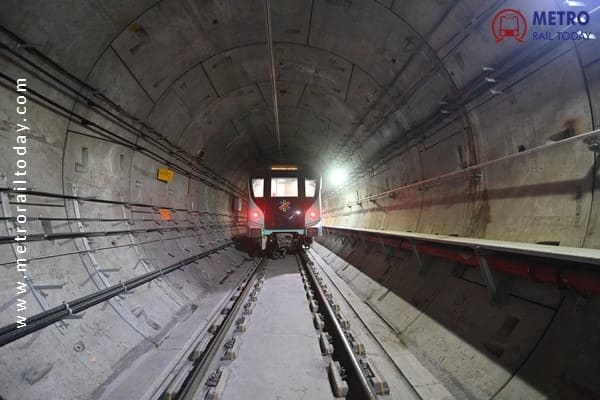 DMRC gets approval to Fell or Transplant 364 Trees for Central Vista Metro Corridor under Phase IV
 ₹4.5 Lakh crore Metro Rail Investment reaches less than 5% of Urban Population in India
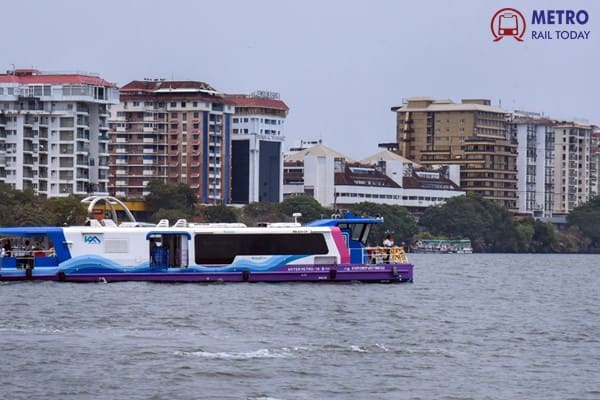 West Bengal plans to launch Water Metro Systems in Kolkata
- Titagarh Rail Systems targets full Indigenous Aluminium Coach Manufacturing by FY2027
South Korea unveils EMU-370, Set to come World’s Second Fastest High-Speed Train
MRT Online Desk
Posted on: 2025-12-22 16:15:00
Viewer: 2,178
Comments: 0
Country: Korea South
City: Seoul
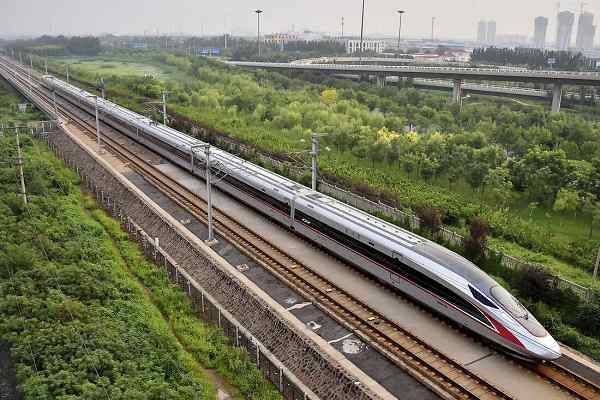
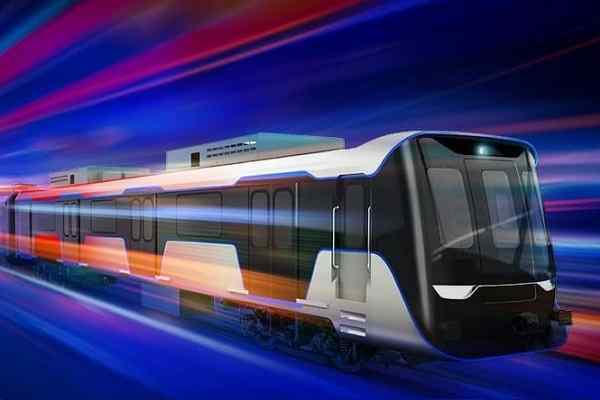
Seoul, South Korea: South Korea has taken a major leap in the global high-speed rail race with the successful development of the core technologies for the EMU-370. Announced by the Ministry of Land, Infrastructure and Transport (MOLIT) on 22 December 2025, the next-generation train is designed for a top speed of 407 kmph and will operate commercially at 370 kmph, making it the world’s second fastest high-speed train after China’s upcoming CR450 series. The announcement firmly places South Korea among the world leaders in ultra-high-speed rail technology.
High-speed rail networks in leading countries such as France, Germany, Italy and Japan currently operate mostly in the 300 to 320 kmph range. With the EMU-370, South Korea is stepping into a higher performance class altogether, targeting sustained operations in the 350 kmph-plus segment. This development puts the nation in direct competition with China’s CR450 programme, future upgrades of Japan’s Shinkansen network and next-generation very-high-speed platforms being developed in Europe. The EMU-370 is expected to redefine passenger mobility and further strengthen South Korea’s reputation as a technology-driven rail innovator.
Technological leap over existing Korean trains
The EMU-370 marks a significant advance compared to the country’s current fastest service, the KTX-Cheongyong. The new train promises substantially higher traction motor output, reduced aerodynamic drag, lower onboard vibration and noticeably quieter cabins. A modular architecture is also being introduced to improve reliability and ease of maintenance. These innovations together will help deliver faster journeys with improved energy efficiency and greater travel comfort, strengthening the competitiveness of Korea’s rail industry in the global market for 350 kmph-plus trains.
Commenting on the milestone, Mrs. Mamta Shah, MD & CEO of Urban Infra Group, said, “South Korea’s EMU-370 marks a decisive shift in the global high-speed rail landscape. Moving into the 350+ kmph operating range is not just about speed — it represents a technological leap in energy efficiency, safety, passenger comfort and sustainability. As more countries adopt ultra-high-speed rail, we will see stronger regional integration, lower aviation dependence and significant reductions in carbon emissions. India, too, can draw valuable lessons from Korea’s long-term planning approach and innovation-driven ecosystem.”
Two-hour nation vision to reshape travel
A central goal behind the EMU-370 programme is MOLIT’s “Two-Hour Zone” strategy, which aims to connect major Korean regions within two hours of travel time. This vision is expected to reduce congestion in the Seoul metropolitan area, cut domestic aviation emissions, improve national productivity and stimulate balanced regional development. The project also strengthens South Korea’s ambition to emerge as a major exporter of next-generation high-speed rail systems during the 2030s.
Manufacturing of the first EMU-370 trainsets is scheduled to begin in 2026, followed by extensive testing and trial runs by the end of the decade. Commercial deployment is targeted for 2031, after which Korea plans to move toward developing a new class of 400 kmph-capable trains. The programme has already benefited from significant public research investment and is part of the country’s broader strategy to secure leadership in ultra-high-speed rail technologies.
A defining moment in the high-speed rail race
With growing pressure to cut aviation emissions, handle rapid urbanisation and offer faster inter-city travel, many countries are revisiting high-speed rail as a sustainable solution. By advancing the EMU-370, South Korea joins the front ranks alongside China, Japan, France and Germany in shaping the future of ultra-high-speed rail. As testing progresses and commercial rollout approaches, the EMU-370 is expected to influence global standards, export opportunities and the next chapter of high-speed mobility worldwide.


MRT Online Desk
Metro Rail Today is an authentic and global news provider for the Rail & Metro industry from and around the world.