


Trending Now
 Paras Railtech wins ₹84.72 crore Ballastless Track Contract for Jaipur Metro Rail Project
 Indian Railways announces 3,548 Graduate-Level Vacancies under NTPC Recruitment 2026
 European Union sanctions €10 million to support extension of Hanoi Metro Line 3
 GMRC issues ₹683 crore Tender for construction of 8.68 km stretch for Ahmedabad Metro
- GMRC launches ₹439 crore Tender for construction of 5 New Ahmedabad Metro Stations
 Global tender issued for procurement of 60 Rolling Stock coaches for Hyderabad Metro Rail Project
 Global tender issued for procurement of 102 Rolling Stock coaches for Patna Metro Rail Project
 Gamuda awarded RM3.7 billion contract to build Keelung Mass Rapid Transit in Taiwan
 Maharashtra forms special Task Force to plan Rail, Metro and RRTS expansion
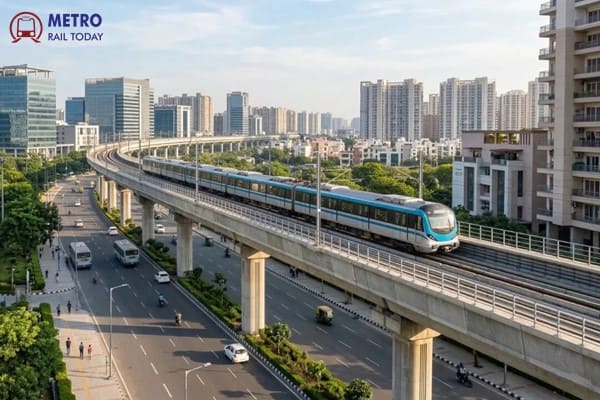 Govt. of India approves ₹12,200 crore, 29-km Thane Integral Ring Metro project in Maharashtra
Tender floated for 4.94-km Underground Central Vista Corridor under Delhi Metro Phase V
MRT Online Desk
Posted on: 2026-09-25 16:51:00
Viewer: 1,702
Comments: 0
Country: India
City: New Delhi
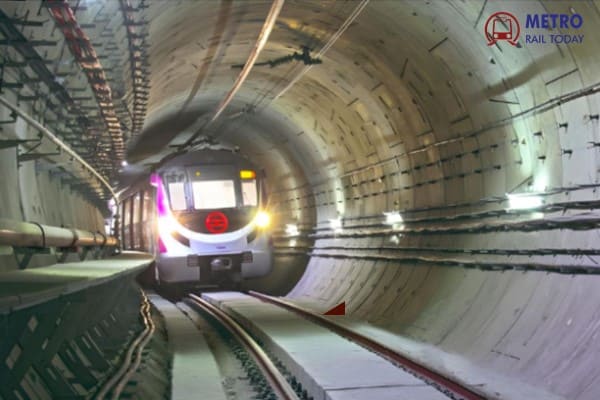
New Delhi, India (Rail & Metro Today): The Delhi Metro Rail Corporation (DMRC) has issued a major civil works tender for the construction of a 4.94-km underground section of the upcoming Central Vista Metro corridor, marking a significant step forward in the development of Delhi Metro’s Phase V(A) network.
The tender, issued on September 25, 2026, covers the construction of twin underground tunnels and four underground stations along the RK Ashram Marg–Indraprastha corridor. The selected contractor will have 42 months, or 1,260 days, to complete the works.
The Central Vista Metro corridor will have a total length of approximately 9.913 km with nine stations. The newly tendered civil works package covers the underground portion of the corridor and includes construction of tunnels, station structures, concourse and platform levels, pedestrian subways, entry and exit structures, ventilation systems, drainage and other associated infrastructure.
The underground tunnels will be constructed primarily using Tunnel Boring Machines (TBMs). Depending on ground conditions and the requirements of individual locations, the project will also employ construction techniques such as shield tunnelling, cut-and-cover and box-pushing.
The combination of these methods is intended to facilitate construction through densely developed sections of central Delhi while managing the complex engineering and site constraints associated with underground infrastructure.
The tender was issued by DMRC on September 25, 2026, with bids scheduled to be submitted by November 9, 2026. The completion period specified for the package is 1,260 days.
The works will involve not only excavation and construction of the twin tunnels but also the complete civil infrastructure required for the underground stations. This includes station boxes, concourse and platform levels, pedestrian connectivity, access structures and supporting systems.
Given the corridor's location in a densely developed part of Delhi, execution of the underground works will require close coordination, detailed planning and precise construction management to minimise disruption to existing urban infrastructure.
The Central Vista corridor is planned to improve metro connectivity across an important part of central Delhi, providing access to major government, institutional and public destinations in and around the Central Vista area.
The project is part of Delhi Metro Phase V(A) and will add further underground capacity to the city's rapidly expanding metro network. The RK Ashram Marg–Indraprastha corridor is expected to provide an important link across central Delhi and improve accessibility for commuters travelling to key destinations.
Mrs. Mamta Shah, MD & CEO, Urban Infra Group, said the tender reflects the growing importance of advanced underground construction in Delhi's next phase of metro expansion.
“The Central Vista Metro corridor represents an important phase in the evolution of Delhi's urban mobility infrastructure. Constructing nearly five kilometres of metro infrastructure underground in a densely developed area demands advanced tunnelling technology, careful engineering and strong coordination. The use of TBMs alongside shield tunnelling, cut-and-cover and box-pushing techniques demonstrates the engineering complexity involved in delivering modern metro systems in established urban environments.”
With the civil works tender now on the market, the Central Vista Metro corridor is set to move into a critical implementation phase. The project will add to Delhi's underground metro infrastructure while strengthening connectivity to some of the capital's most important public and institutional destinations.


MRT Online Desk
Metro Rail Today is an authentic and global news provider for the Rail & Metro industry from and around the world.