


Trending Now
 Siemens wins ₹91.65 crore Telecom Contract for Kochi Metro Phase 2 Pink Line
 GHV Infra wins ₹150 crore Civil Contract for Vasantkunj Depot of Lucknow Metro East-West Corridor
 Texmaco Rail wins ₹130 crore Track Contract for Kochi Metro Phase 2 Pink Line
 Indian Railways unveils Alignments and Routes of four new High Speed Bullet Train Corridors
 Telangana pushes for approval of ₹38,595 Crore Hyderabad Metro Phase-II Expansion
 Boston Consulting Group appointed to prepare 10 years Corporate Plan for Delhi Metro
 Exclusive Interview with Champak Panda, Managing Director, Rolling Stock & Components, Alstom India
 Delhi Metro invites Expression of Interests to manufacture Platform Screen Doors in India
 NMRC to appoint General Consultant for Noida-Greater Noida Aqua Line Metro Expansion
- NHSRCL launches Five Heavy Portal Beams on Mumbai-Ahmedabad Bullet Train Project
Tender floated to appoint Consultant for ₹23,487 crore Mumbai Metro Line 11
MRT Online Desk
Posted on: 2025-10-20 16:00:00
Viewer: 2,613
Comments: 0
Country: India
City: Mumbai
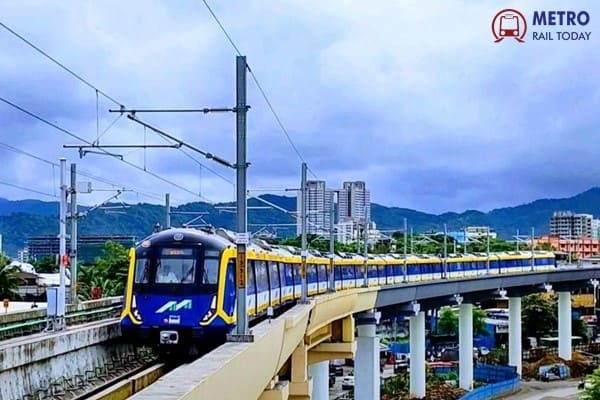
Mumbai, India (Metro Rail Today): The long-awaited Metro Line 11, connecting Anik Depot in Sion to the Gateway of India, has taken a major step forward as the Mumbai Metro Rail Corporation Ltd (MMRCL) officially submitted its proposal to the central government for approval. Once cleared, the project will mark Mumbai’s second fully underground metro line, promising faster, cleaner, and more sustainable travel across the city’s historic and congested corridors.
To expedite planning, MMRCL has floated tenders to appoint an interim consultant for the project.
Key details:
- Tender Notice No.:MMRC/PLN/L11/TP-05/IC/2025/01
- Tender Issue Date: 20th October 2025
- Scope of Work: Selection of Interim Consultant for Mumbai Metro Line 11 (Anik Depot to Gateway of India
- Pre-Bid Meeting Date: 4th November 2025
- Bid Submission Last Date: 4th December 2025 by 04.00 PM
- Bid Opening Date: 5th December 2025 at 04.05 PM.
The consultant’s key responsibilities will include:
-
Finalising the station layout and architecture
-
Conducting technical assessments and tunnel design
-
Planning civil and structural works
-
Preparing traffic diversion strategies for construction phases
According to MMRCL officials, the route design is nearly finalised, and the corporation has sought financial support from the Japan International Cooperation Agency (JICA) for project funding.
Project Overview
The 17.4-km Metro Line 11 corridor, estimated to cost ₹23,487 crore, will be developed as an extension of Metro Line 4 (Wadala–Thane–Kasarvadavali) being implemented by the Mumbai Metropolitan Region Development Authority (MMRDA).
This new underground corridor will enhance connectivity between South Mumbai and the eastern suburbs, reducing travel time and decongesting major arterial roads such as P D’Mello Road and Dr Ambedkar Road.
Once operational, the line will offer seamless interchange connectivity at Wadala, allowing commuters to travel conveniently from the suburbs to South Mumbai without depending on road transport.
Key Alignment and Connectivity
The proposed route will pass through some of Mumbai’s most densely populated and heritage-rich neighbourhoods, including:
-
Wadala
-
Byculla
-
Nagpada
-
Bhendi Bazaar
-
Crawford Market
-
Horniman Circle
-
Chhatrapati Shivaji Maharaj Terminus (CSMT)
-
Gateway of India (terminal point)
Officials said this alignment was carefully planned to cover areas underserved by suburban rail networks, providing direct access to commercial and cultural hubs.
Land Requirement and Government Approvals
The Maharashtra government granted its approval for Metro Line 11 in September 2025. The project will require approximately 22.7 hectares of land, of which 20.35 hectares are government-owned and 2.36 hectares privately owned.
The Anik Depot in Sion will serve as the car depot for the new line, featuring a multi-level parking hub integrated with BEST bus services. The plan aligns with the civic body’s initiative to redevelop bus depots into modern, mixed-use mobility hubs.
Mrs. Mamta Shah, Managing Director & CEO of Urban Infra Group, commended the project’s forward-thinking approach:
“Metro Line 11 represents a transformative leap in Mumbai’s metro expansion — connecting cultural heritage with modern urban infrastructure. A fully underground, high-capacity corridor linking Sion to the Gateway of India will redefine urban mobility while preserving the city’s landscape. It’s a model of sustainable infrastructure development that other Indian metros can emulate.”
Mrs. Shah also highlighted that projects like Metro Line 11 align with the Government of India’s ‘Viksit Bharat 2047’ vision by promoting integrated, multimodal, and environment-friendly transport solutions for rapidly growing cities.
Once completed, Metro Line 11 will offer Seamless east–south connectivity, Reduced road congestion and pollution, Faster travel between residential and commercial zones, Interchange link with Line 4 at Wadala, and Enhanced accessibility for heritage districts and business hubs.
Experts believe that this corridor will revitalize South Mumbai’s transport ecosystem, making daily travel smoother for thousands of commuters.

MRT Online Desk
Metro Rail Today is an authentic and global news provider for the Rail & Metro industry from and around the world.