


Trending Now
 Japanese Delegation visits KRIDE to explore Bengaluru Suburban Rail Project opportunities
 GMRC issues ₹879 crore Civil Tender for Airport Extension under Ahmedabad Metro Phase 2A
 Global Mobility Leaders Alstom and Siemens become Corporate Member of Chamber of Railway Industries
 L&T-MHI JV wins contract for Automated People Mover at Dubai’s Al Maktoum International Airport
 Delhi Metro Rail Network to expand to 695 km by 2047, Six new RRTS Corridors planned
 HÜBNER at InnoTrans 2026: Global rail expertise and local capability for India’s Next-Gen Mobility
 Australia shortlists three firms/consortia for Sydney–Newcastle High Speed Rail Project
 MRVC set to procure 238 AC Vande Metro Trainsets worth ₹19,293 crore from Indian Railways
 Maharashtra approves ₹17,725 crore Mumbai Metro Line 13 linking Mira-Bhayandar with Vasai-Virar
 Gujarat issues three tenders for 48.38-km Metro-RRTS Hybrid corridors under Ahmedabad Metro Phase 3
UP Govt approves 11.16 km East-West Corridor of Lucknow Metro Rail Project
MRT Online Desk
Posted on: 2024-01-03 07:00:00
Viewer: 7,884
Comments: 0
Country: India
City: Lucknow
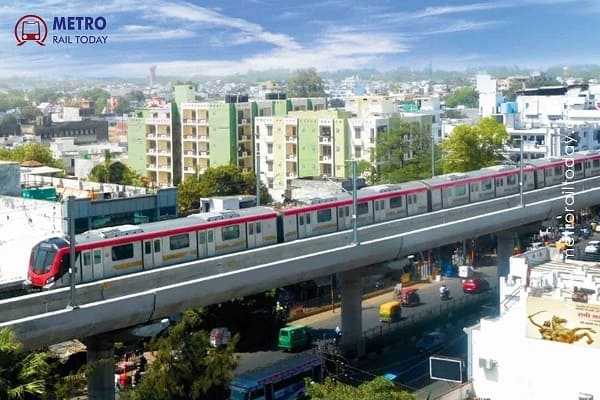
Lucknow, India (Metro Rail Today): In a pivotal decision aimed at transforming the city's landscape, Chief Minister Yogi Adityanath has approved the expansion of the Lucknow Metro. This expansion will witness the construction of the East-West Corridor, connecting Charbagh to Vasant Kunj via Chowk, adding a new dimension to the city's urban transport.
Recognizing the Need for Growth
During a review meeting of the Uttar Pradesh Metro Rail Corporation (UPMRC), Chief Minister Yogi Adityanath emphasized the importance of expanding the Lucknow Metro to meet the growing needs of the state capital. He directed officials to commence work on a new route, extending from Charbagh to Basant Kunj via Chowk.
Ambitious Extension Plans
Chief Minister Yogi Adityanath outlined the vision for the extended metro, proposing connectivity up to IIM on Sitapur road and SGPGIMS on the Rae Bareli route. Acknowledging the potential contribution of private-sector collaboration, he suggested exploring Public-Private Partnership (PPP) mode for the expansion. This forward-looking approach aligns with the broader goal of fostering cooperation between the public and private sectors for efficient infrastructure development.
The East-West Metro Corridor (Line 2) of the Lucknow Metro Rail Project will be 11.16 kilometers long and it will connect Charbagh to Vasant Kunj with 12 metro stations. Out of the 4.286 kilometers will be elevated and 6.88 kilometers will be underground. The underground stations are Charbagh, Gautam Buddha Marg, Aminabad, Pandeyganj, City Station, KGMU Crossing and Nawajganj. The elevated stations are Thakurganj, Balaganj, Sarafrazganj, Musa Bagh and Vasant Kunj The revised cost of this project is Rs 5,880 crore. The estimated time of completion of this corridor is 5 years.
Timely Approval Sparks Enthusiasm
Following six years since the completion of the first phase, the Chief Minister's approval for the expansion of the Lucknow Metro has injected enthusiasm into the Uttar Pradesh Metro Rail Corporation. An official from UPMRC expressed delight, stating, "After six years of completion of the first phase, the chief minister has given the green signal for the expansion of Lucknow Metro."
Strategic Directions for Implementation
Chief Minister Yogi Adityanath wasted no time in instructing officials to prepare a Detailed Project Report (DPR) for the new metro route from Charbagh to Vasant Kunj via Chowk. He emphasized the importance of conducting primary soil testing and suitability tests for both underground and elevated metro services. The directive included the swift preparation and submission of the proposal, emphasizing the goal of connecting a larger population with modern urban transport facilities.
Financial Backing and Stipulated Timeframes
Addressing concerns about financial constraints, the Chief Minister assured that there is no shortage of funds for projects of public interest. He emphasized the timely release of funds and urged officials to ensure the completion of projects within stipulated time frames. This commitment extends to ongoing metro projects in Kanpur and Agra, reflecting the government's dedication to comprehensive infrastructure development.
Emphasis on Safety and Commercial Viability
As the expansion plans unfold, Chief Minister Yogi Adityanath underscored the importance of adhering to safety standards in the execution of underground metro projects. He encouraged the promotion of commercial activities within the Metro Rail complex and stressed the need for concrete arrangements for passenger service and security.
Significance of the Decision
The decision to expand the Lucknow Metro holds significant importance, particularly in addressing the financial challenges faced by the Uttar Pradesh Metro Rail Corporation. Operating at a loss of ₹307 crore per year, the expansion opens avenues for increased ridership, revenue generation, and economic revitalization.
In conclusion, Chief Minister Yogi Adityanath's approval of the Lucknow Metro expansion marks a visionary move toward enhancing urban infrastructure. The ambitious plans, coupled with a commitment to financial backing, safety standards, and timely execution, position Lucknow on the path to becoming a hub of modern and efficient transportation.

MRT Online Desk
Metro Rail Today is an authentic and global news provider for the Rail & Metro industry from and around the world.