

Trending Now
 Madrid unveils €1.57 billion Metro Rail Expansion Programme with 27.8 km of New Corridors
 Global Tender launched for Project Management Consultancy for Abu Dhabi Tram Line 4
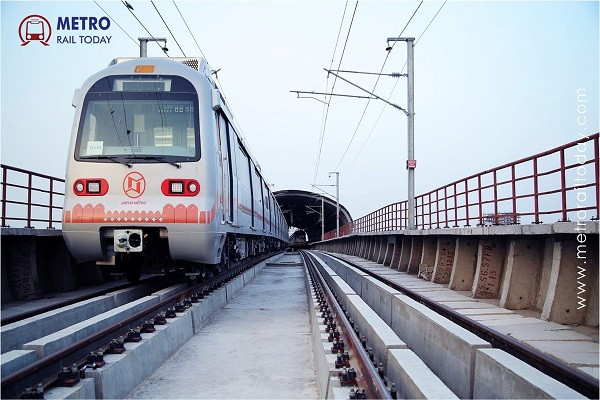 NV Dynamics awarded Noise and Vibration Study contract for Jaipur Metro Phase 2 Project
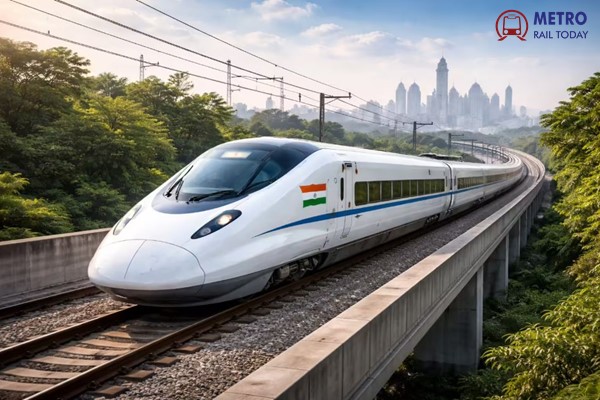 Two global consortia bid for India’s 350 kmph High-Speed Rail Design consultancy contract
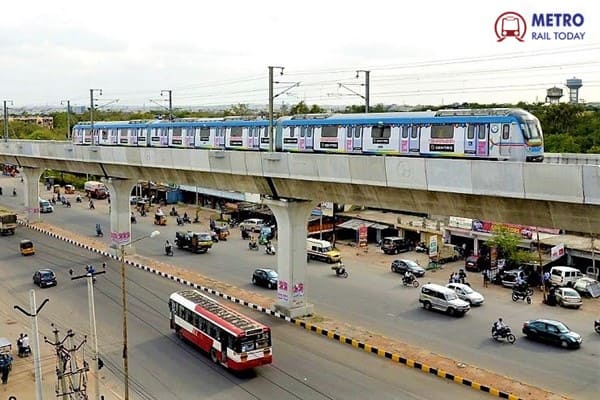 Larsen & Toubro (L&T) extends Hyderabad Metro stake sale timeline to 31 December 2026
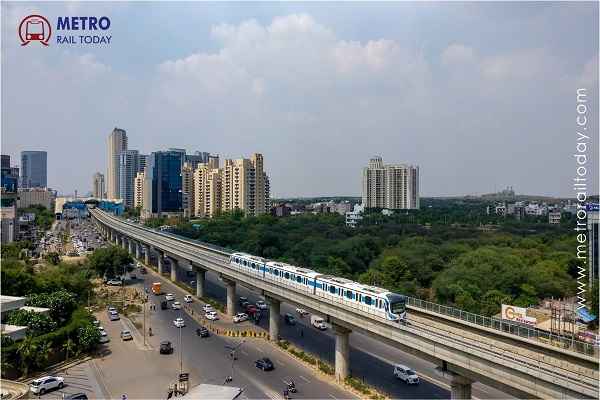 Haryana Govt approves ₹1,662 crore construction tender for Gurugram Metro Phase 2
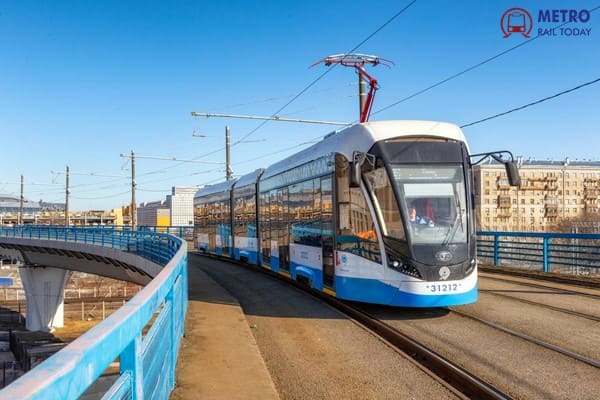 Hyundai Rotem Targets Fully Autonomous Hydrogen Trams by 2031
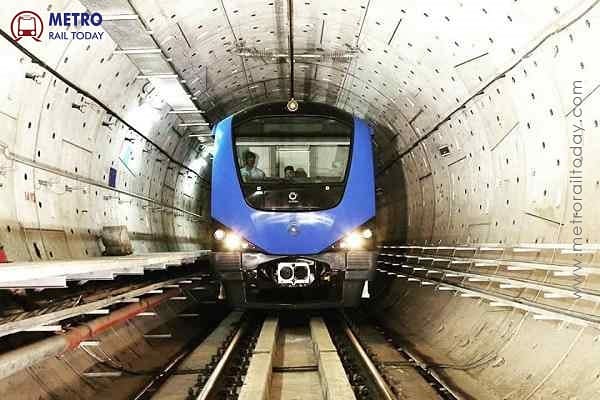 TBM Kaveri records Tunnel Breakthrough at KMC Station for Chennai Metro Phase 2
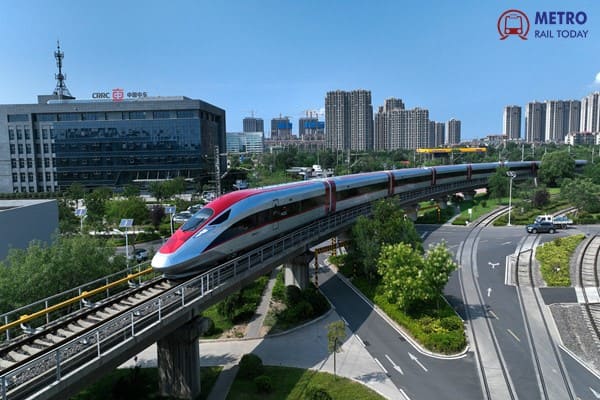 China opens four High-Speed Railway Lines, Adds 1,142 km to existing Bullet Train Network
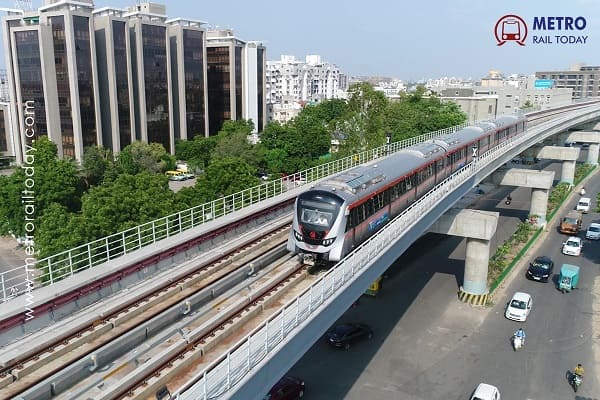 AECOM appointed as Detailed Design Consultant for Ahmedabad Metro Phase 3A
BHEL vs Siemens, ABB and Medha: A Case Study in Technology Ownership and Industrial Strategy
MRT Online Desk
Posted on: 2026-03-02 09:00:00
Viewer: 33,031
Comments: 0
Country: India
City: New Delhi
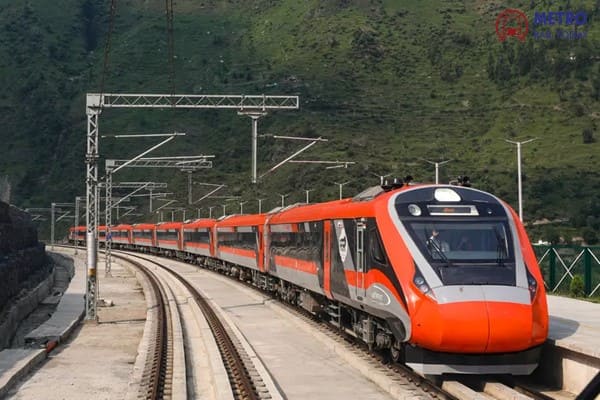
For decades, Bharat Heavy Electricals Limited (BHEL) stood at the centre of India’s railway propulsion ecosystem. If Indian Railways needed traction equipment in the 1980s or 1990s, the answer was almost always BHEL.
But fast forward to today, and the landscape looks dramatically different.
Global technology leaders such as Siemens and ABB, along with agile domestic players like Medha Servo Drives, have carved out significant positions in India’s railway propulsion and electronics space. BHEL, once the unquestioned supplier to Indian Railways, now finds itself competing in a market it once dominated.
This transformation is not simply a story about competition. It is a case study in technology strategy, organizational culture, and the consequences of confusing manufacturing capability with technological leadership.
Phase 1: The Era of Assured Dominance
During the pre-liberalization era, India followed a state-led industrial policy where public sector enterprises were entrusted with building strategic manufacturing capability.
In the railway sector, BHEL was positioned as the primary supplier of traction equipment, including traction motors, transformers, and electrical systems.
Much of this equipment was produced under technology licensing agreements with global companies such as AEI/GEC and ABB. These arrangements helped India develop domestic manufacturing capability and reduce dependence on imports.
However, the structure of the market had one important characteristic:
Competition was almost absent.
Orders were largely assured, and the incentive to push the technological frontier was limited. BHEL became extremely good at manufacturing technology designed elsewhere, but it did not aggressively pursue indigenous ownership of the next generation of propulsion technologies.
Phase 2: The Global Technology Race
While India’s railway manufacturing ecosystem remained relatively stable, the global railway propulsion industry was evolving rapidly.
The 1990s saw a major technological transformation with the shift toward three-phase AC propulsion systems using IGBT-based converters. These systems enabled higher efficiency, better traction control, and improved reliability.
Global engineering leaders seized this moment.
Siemens invested heavily in power electronics and digital traction control systems. The company built integrated platforms combining propulsion, signalling, and train control technologies.
ABB, already a pioneer in industrial electrification, expanded its leadership in traction converters, motors, and integrated propulsion systems used in high-speed and freight locomotives worldwide.
Both companies understood a critical principle:
The real value in railway propulsion lies not in manufacturing components but in owning the intellectual property behind the system architecture.
By controlling the technology stack—from converters to control software—they ensured long-term global leadership.
Phase 3: India’s Modern Locomotive Era
The technology gap became visible when Indian Railways began introducing modern high-performance locomotives.
The WAP-5 passenger locomotive and WAG-9 freight locomotive, introduced in the late 1990s and early 2000s, represented a significant leap in performance for Indian Railways. These locomotives used advanced three-phase AC traction systems developed by ABB.
Similarly, the diesel locomotive platforms WDP-4 and WDG-4, built using EMD technology, introduced a new generation of diesel-electric propulsion.
In these projects, BHEL played a supporting manufacturing role rather than serving as the technology owner.
This marked a subtle but important shift. The company that once dominated traction equipment was now part of a supply chain shaped by global technology leaders.
Phase 4: Liberalization and the Rise of New Competitors
India’s economic reforms and procurement liberalization after 2000 fundamentally changed the market structure.
Indian Railways began opening contracts to competitive bidding, allowing global suppliers and private Indian companies to participate more actively.
For BHEL, this transition exposed structural weaknesses.
Decades of operating in a protected environment meant the company struggled with high cost structures and slower decision-making processes. At the same time, it lacked the aggressive commercial culture that global companies had developed through decades of international competition.
While BHEL adjusted slowly, new players moved quickly.
One of the most notable examples was Medha Servo Drives, a Hyderabad-based company that built strong expertise in power electronics and control systems. Unlike many traditional manufacturers, Medha focused heavily on electronics, embedded systems, and software-driven propulsion control.
This specialization proved decisive.
Over time, Medha began supplying traction converters, control electronics, and integrated propulsion solutions for locomotives and trainsets, becoming a major technology partner for Indian Railways.
Different Strategies, Different Outcomes
The contrasting trajectories of BHEL, Siemens, ABB, and Medha highlight fundamentally different strategic approaches.
Siemens and ABB invested continuously in research, digitalization, and system-level integration. Their strategy was to control the core technology platforms that define modern railway propulsion.
Medha, despite being a smaller player, focused intensely on power electronics and control systems, areas that increasingly define the intelligence of modern trains.
BHEL, by contrast, remained strongest in heavy manufacturing and equipment integration, areas where margins and strategic control gradually declined.
The difference lies in a single strategic question:
Who owns the technology architecture?
Those who control the technology architecture ultimately control the market.
The Cultural Dimension
Technology strategy alone does not explain the entire story.
Organizational culture plays a critical role in shaping how companies respond to technological change.
Private companies such as Siemens, ABB and Medha operate in environments where performance incentives, talent mobility, and rapid decision-making are essential for survival.
Public sector enterprises often face different constraints.
Complex administrative processes, limited flexibility in hiring specialized talent, and shorter leadership tenures can make long-term technology transformation difficult.
In BHEL’s case, leadership turnover—often occurring within two-year cycles—has made it challenging to sustain multi-decade technology development strategies.
Yet propulsion technology leadership is rarely built in two years. It requires persistent investment and strategic continuity over decades.
The Lessons for India’s Industrial Ecosystem
The case of BHEL offers important lessons for India as it seeks to build global leadership in infrastructure technology.
First, manufacturing capability must eventually evolve into technology ownership. Countries that remain dependent on licensed production rarely become global technology leaders.
Second, competition is not a threat—it is a catalyst. Exposure to global markets forces organizations to innovate, reduce costs, and attract world-class talent.
Third, organizational culture determines technological ambition. Institutions that reward experimentation, empower engineers, and encourage long-term thinking are better positioned to lead in high-technology industries.
The Road Ahead
Despite the challenges, the opportunity for BHEL remains significant.
Indian Railways is currently undergoing one of the largest modernization programmes in its history, with massive investments in electrification, advanced locomotives, high-speed rail, and digital systems.
If BHEL can reposition itself in areas such as next-generation traction electronics, silicon carbide power converters, predictive maintenance systems, and export markets, it could still play an important role in India’s evolving railway ecosystem.
But doing so will require a strategic shift—from being primarily a manufacturer of systems designed elsewhere to becoming an owner and developer of critical technologies.
The Real Question
BHEL had the scale, talent and national backing to become India’s equivalent of Siemens or ABB in railway propulsion.
The fact that it did not achieve this position is not simply a corporate story—it is a reflection of how policy, culture, technology strategy and competition interact in shaping industrial outcomes.
Today, as India invests trillions of rupees in railway modernization, the question is more relevant than ever:
Can legacy industrial giants reinvent themselves fast enough in a world where technology cycles move at unprecedented speed?


MRT Online Desk
Metro Rail Today is an authentic and global news provider for the Rail & Metro industry from and around the world.