

Trending Now
 RITES submits fresh DPR to UPMRC for ₹12,000 crore Prayagraj Metro Rail Project
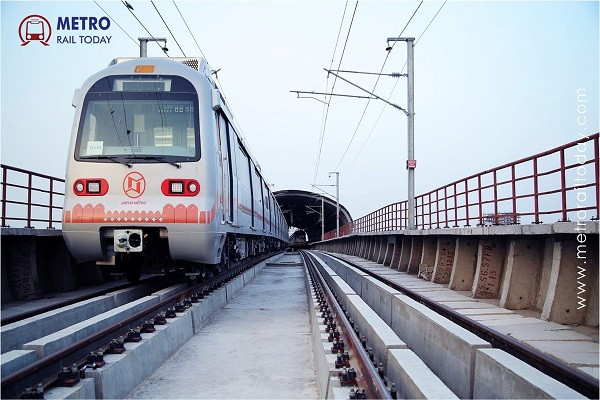 Paras Railtech wins ₹84.72 crore Ballastless Track Contract for Jaipur Metro Rail Project
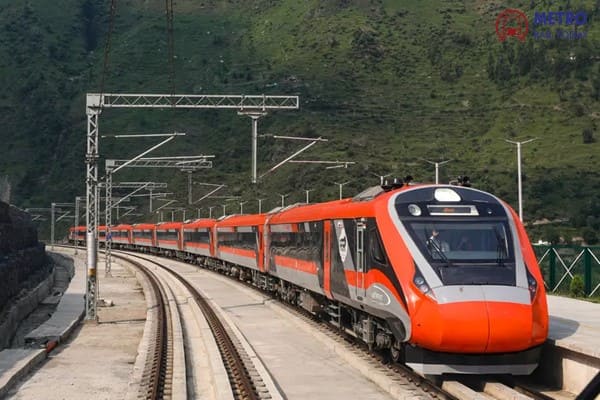 Indian Railways announces 3,548 Graduate-Level Vacancies under NTPC Recruitment 2026
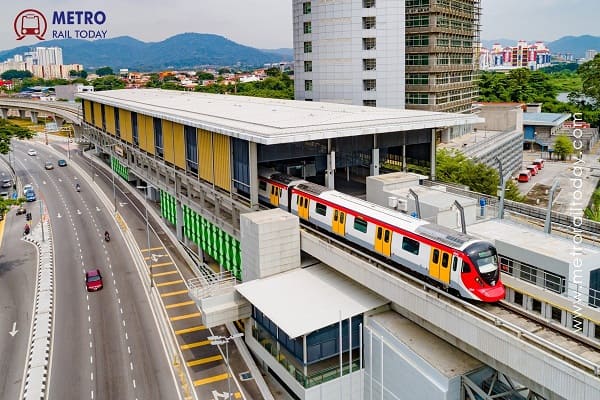 European Union sanctions €10 million to support extension of Hanoi Metro Line 3
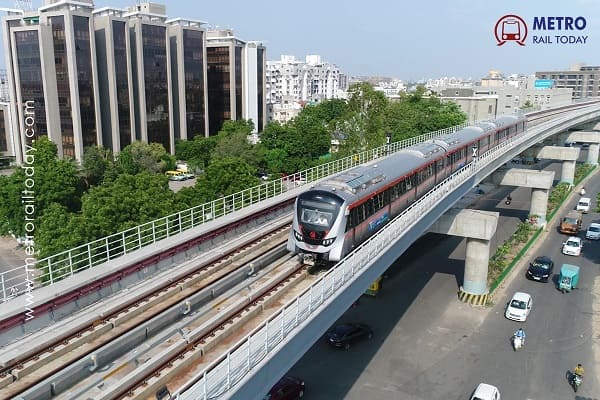 GMRC issues ₹683 crore Tender for construction of 8.68 km stretch for Ahmedabad Metro
- GMRC launches ₹439 crore Tender for construction of 5 New Ahmedabad Metro Stations
 Global tender issued for procurement of 60 Rolling Stock coaches for Hyderabad Metro Rail Project
 Global tender issued for procurement of 102 Rolling Stock coaches for Patna Metro Rail Project
 Gamuda awarded RM3.7 billion contract to build Keelung Mass Rapid Transit in Taiwan
 Maharashtra forms special Task Force to plan Rail, Metro and RRTS expansion
How Ashwini Vaishnaw is shaping India's Railways, Digital Future and Manufacturing Rise?
Dr. Vinod Shah
Posted on: 2025-12-01 06:20:00
Viewer: 12,043
Comments: 0
Country: India
City: New Delhi
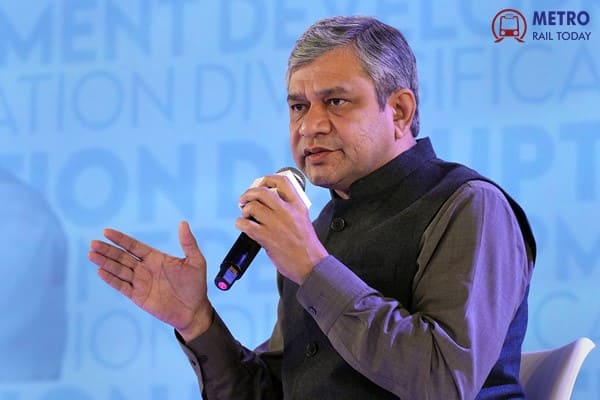
In an era where public life is often dominated by loud proclamations and headline-friendly declarations, Ashwini Vaishnaw represents a refreshing contrast. His leadership stands out for its calm clarity, methodical execution and long-term thinking. Instead of speeches, results define his work. Instead of noise, it is the steady strengthening of India’s systems—railways, logistics, digital infrastructure and manufacturing—that marks his tenure.
Over the past few years, Vaishnaw has emerged as one of the most influential architects of India’s future-ready infrastructure ecosystem. His portfolio—railways, electronics, IT, semiconductors, telecom—covers the backbone sectors that determine any nation’s competitiveness. From laying thousands of kilometres of track to shaping semiconductor policy, and from electrifying the rail network to building electronics supply chains, his approach has been consistent: build institutions, not headlines.
For India, this quiet transformation matters. It signals a shift from incremental upgrades to structural reform—something the global manufacturing, logistics and technology world is watching closely.
A Technology-Led Railways Revolution Built on Quiet Execution
The Indian Railways has undergone one of its most significant modernisation phases under Vaishnaw’s stewardship. What makes this transformation remarkable is not just its scale, but its intention. The focus has shifted from a passenger-only mindset to anational logistics and industrialperspective.
Over35,000 km of new trackshave been added andmore than 46,000 km electrified—a pace unmatched in independent India’s history. These strides strengthen capacity, lower fuel dependence, improve reliability and support faster, safer services.
Alongside track expansion, India has created a sharp manufacturing momentum within the sector. Nearly40,000 new coacheshave been introduced or are under production, reflecting growing self-reliance in rolling stock design, materials, and fabrication. Coach factories in Chennai, Kapurthala, Rae Bareli and Sonipat have stepped up output, aligning with the broader “Atmanirbhar Rail” vision.
Freight movement—traditionally the financial backbone of Indian Railways—has also seen a decisive shift. With multimodal logistics parks, dedicated freight corridors, upgraded yards and integrated transport policies, the railways is evolving into a more cost-efficient, faster and more reliable freight carrier. This directly helps lower India’s historically high logistics costs, strengthening manufacturing competitiveness.
Another quiet but powerful change is the rise of railway exports. Indian-built locomotives, bogies, propulsion systems and coaches are now being supplied to Africa, Latin America, South-East Asia and parts of Europe. This marks a new era where India is not just an engineering power domestically but a credible participant in global rail supply-chains.
Equally transformative are station upgrades under theAmrit Bharat Station Scheme (ABSS). Stations are being reworked as multimodal, passenger-friendly hubs with improved accessibility, safety and amenities—bringing India closer to global benchmarks.
Collectively, these developments signal a deep strategic reorientation. Indian Railways is increasingly seen not only as a transport utility but as the core spine of India’s industrial, logistics and export ecosystem.
Building India’s Digital and Electronics Backbone
If railways reflect Vaishnaw’s commitment to physical infrastructure, his work inelectronics and digital infrastructurecaptures India’s ambitions in the global technology landscape.
In a world where supply-chains for electronics are being reconfigured, India has moved from focusing solely on assembly to building integrated component-level capacity. TheElectronics Component Manufacturing Scheme (ECMS), announced in 2023 and expanded significantly inNovember 2025, marks a crucial shift.
Seventeen new ECMS projects worth₹7,172 crorehave been approved across nine states. These units will produce essential sub-assemblies and components—camera modules, PCBs, connectors, enclosures, oscillators and precision parts—components that India has historically imported.
The expected output of₹65,111 croreandnearly 12,000 direct jobshighlights the scale of this transition.
This development is more foundational than it appears. Component-level capability determines the strength of an entire supply chain—whether in smartphones, EVs, telecom equipment, defence electronics or renewable energy systems. By building it, India is positioning itself not just as an assembly market but as a meaningful contributor to global electronics value chains.
What stands out is the methodical, long-term lens through which these policies are shaped. The focus is not on short-term numbers but on creating capacities that will matter decades from now—research, materials manufacturing, skilled labour, and a diversified geographical base.
Strengthening Manufacturing Through Full-Stack Ecosystems
A recurring theme across Vaishnaw’s portfolios is the emphasis on full-stack manufacturing. From rail components to electronics parts, the strategy consistently moves India deeper into core industrial layers.
This means developing capability in:
- Raw materials
- Sub-assemblies
- Components
- Final products
- Testing, quality control and certification
Such a system builds resilience against global supply-chain shocks—whether caused by geopolitical tensions, pandemics, or trade restrictions.
The geographical spread of new investments—from Uttar Pradesh to Tamil Nadu, and from Rajasthan to Karnataka—ensures balanced regional development. High-skill job creation, especially in electronics, is helping transform India’s young workforce into globally competitive talent.
For a country aiming to become a major manufacturing hub by 2030, these foundational steps may prove decisive.
A Leadership Model Built on Systems Thinking
Perhaps the most defining element of Vaishnaw’s public life is his style of leadership. It is low-key yet deeply structured. Trained as an engineer, seasoned as a bureaucrat, and now operating at the highest levels of political decision-making, he brings a rare mix of technocratic expertise and administrative precision.
His decisions indicate strategic patience rather than headline-chasing. Whether it is upgrading stations, electrifying thousands of kilometres of track, or nurturing a domestic electronics ecosystem, the underlying pattern is the same: build systems that last.
This approach contrasts sharply with the globally growing trend of populist governance. Here, execution—not rhetoric—is the defining currency.
Why This Matters for India and the World
India’s rise is increasingly tied to its ability to become a global manufacturing and logistics powerhouse. The world is looking beyond traditional hubs in East Asia. Companies are diversifying supply chains. Geopolitics is reshaping trade. In this shifting environment, India’s structural reforms under Vaishnaw align with what the world needs.
Rail modernisation enables fast, reliable freight movement at scale. Electronics manufacturing builds supply-chain depth. Digital infrastructure supports innovation, AI, EVs, 5G and smart factories. Together, these systems create a firm foundation for India to emerge as a core node in global value chains.
This convergence of physical and digital infrastructure is rare among developing economies and significantly enhances India’s long-term competitiveness.
The Bigger Lesson: Quiet Builders Shape Nations
The deeper message of Vaishnaw’s journey is that countries do not transform through slogans or bursts of attention. They rise through strong systems, disciplined execution and leaders who are comfortable building foundations silently. India’s long-term progress—whether in high-speed rail, semiconductor ecosystems, or global manufacturing—will depend on such systemic thinking.
And if India maintains policy consistency in these sectors, the results may define its place in the world economy for decades.
Conclusion: India’s Future Is Being Built Quietly—but Powerfully
Whether through new railway tracks and electrified corridors, growing electronics factories, or the nurturing of resilient supply chains, India is laying the bricks of a future-ready economy. The transformation is not flashy. It is not theatrical. But it is undeniably deep, strategic and consequential.
The world’s manufacturing and technology centres are shifting, and India is preparing itself not as a peripheral participant but as a central pillar. In this landscape, Ashwini Vaishnaw’s model of quiet, systems-driven leadership stands out as one of the most important forces shaping India’s next chapter.


Dr. Vinod Shah
Dr. Vinod Shah is an experienced urban transport journalist, blogger and key opinion leader.