

Trending Now
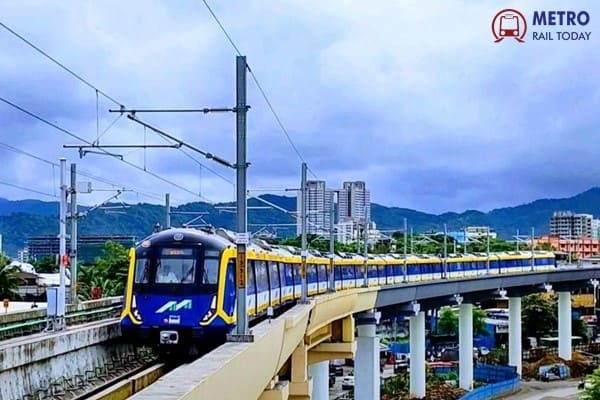 MMRDA invites bids for ₹4,882 Crore Rolling Stock & Systems Contract for Mumbai Metro Line 12
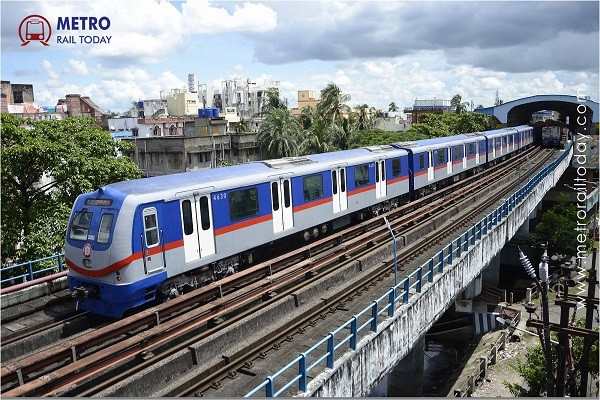 Kolkata Metro completes Aluminium Third Rail Upgrade on Blue Line
 Metroman E. Sreedharan submits new Blueprint for ₹54,000 Crore Kerala High Speed Rail Corridor
 Union Housing & Urban Affairs Minister Tokhan Sahu to inaugurate 6th RailTrans Expo 2026
 Maha Metro plans Six-Coach Trains ahead of Pune Metro Line 3 Launch
 Railway Ministry approves launch of India’s First Hydrogen-Powered Train on Jind–Sonipat Route
 Kineco Global Rail secures Interior Contract for new 100 Vande Bharat Sleeper Trains
 Ranjit Buildcon Wins ₹383.98 Crore Civil Contract for Lucknow Metro Phase 1B
 Tamil Nadu seeks Central Support for new Metro Rail Projects in Coimbatore, Hosur and Madurai
 Future Metro Control Centres: ST Engineering Transforms Command Rooms to Intelligent Nerve Centres
Why Digital is the Next Track in India’s Railway Transformation?
Rajeev Joisar
Posted on: 2025-12-09 16:10:00
Viewer: 6,589
Comments: 0
Country: India
City: New Delhi
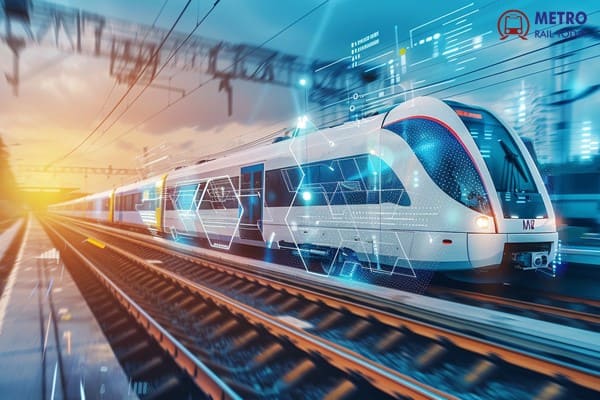
India’s railways are at a tipping point. After achieving one of the world’s fastest electrification drives — with more than 98% of its broad-gauge network already powered by electricity and metro systems in over 24 cities — the country has taken a giant leap toward greener mobility. But while electrification has reduced dependence on fossil fuels and improved efficiency, it is no longer enough.
The next frontier lies in digitalization. If electrification was about where the energy comes from, digitalization is about how smartly it is used.
Beyond infrastructure: Building intelligence into operations
India’s urban population is set to grow by 270 million by 2040 (IEA). Building new tracks and trains alone cannot meet this demand in a sustainable way. What the railways need now is a “digital nervous system” — one that helps existing infrastructure deliver more, faster, and better.
Technologies like Communications-Based Train Control (CBTC) and Automatic Train Operation (ATO) allow trains to run more frequently and safely on the same tracks. Globally, such solutions have raised capacity by up to 30% while cutting energy use by 15–25%. In simple terms, digitalization means more passengers moved with less power consumed.
A smarter, connected rail ecosystem
The future of rail lies in creating an intelligent, integrated ecosystem where stations, signals, and power supply can “talk” to each other in real time. Features like predictive maintenance, automated scheduling, and energy management ensure operations adapt instantly to challenges.
If a train is delayed, for example, software can automatically adjust speed and schedules across the network to prevent bottlenecks. Predictive maintenance alone can lower lifecycle costs by 20% and improve availability by more than 25% (World Bank, 2023). In other words, intelligence reduces downtime, saves money, and enhances passenger trust.
Driving towards net zero
India’s target of achieving net-zero railways by 2030 adds urgency to digital adoption. From regenerative braking to eco-driving algorithms and smart traction power management, digital technologies are already helping networks worldwide cut emissions. Standardizing and scaling these solutions in India will accelerate decarbonization — but requires strong public-private collaboration.
The human factor: A digital-ready workforce
Technology cannot transform railways on its own. Engineers, drivers, and operators must be trained to use automation tools effectively. With the right skills, a control room operator can resolve a power fluctuation in seconds, while maintenance teams can stop a minor issue from becoming a service outage.
The International Transport Forum emphasizes that digital literacy is essential for resilient rail systems in fast-growing economies. India must therefore invest as much in people as in platforms — turning control rooms and depots into hubs of digital innovation.
Collaboration and interoperability
No single player can deliver this transformation alone. Success depends on metro authorities, regulators, technology providers, and academia working together. Just as important is interoperability: shared frameworks and open standards that allow modern and legacy systems to work seamlessly across metro, intercity, regional, and high-speed rail corridors.
The track ahead
Electrification has powered India’s progress. But to serve 1.4 billion people and enable sustainable economic growth, the focus must now shift — from hardware to software, movement to optimization, and infrastructure to intelligence.
The future of rail in India will be built not just by technology, but by people and partnerships. A smart, digital railway will not only carry 270 million new urban residents but also carry forward India’s growth story — with speed, reliability, and sustainability.

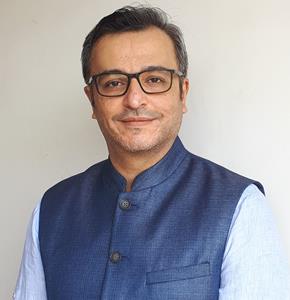
Rajeev Joisar
Rajeev Joisar is Chief Executive Officer of Siemens Limited's Mobility Business.