

Trending Now
 Siemens Bags Order from Titagarh Rail Systems for Pune Metro Extension Trainsets
 Titagarh Rail Systems becomes Corporate Member of Chamber of Railway Industries (Rail Chamber)
 World Bank approves ₹1,400 crore Civil Tender for Gurugram Metro Phase 2
 Bi-RIDE invites ₹200 crore Tender for Soladevanahalli Depot of Bengaluru Suburban Rail Project
 GHV India awarded ₹107.79 crore Civil Contract for Lucknow Metro East-West Corridor
 Pune Metro Line 3 set to launch First 12-km Section on 15 July 2026
 DMRC gets approval to Fell or Transplant 364 Trees for Central Vista Metro Corridor under Phase IV
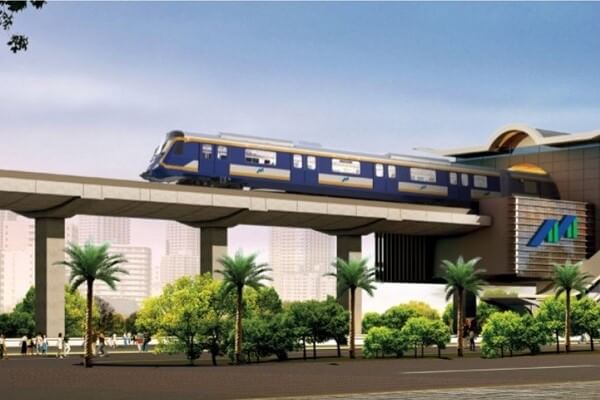 ₹4.5 Lakh crore Metro Rail Investment reaches less than 5% of Urban Population in India
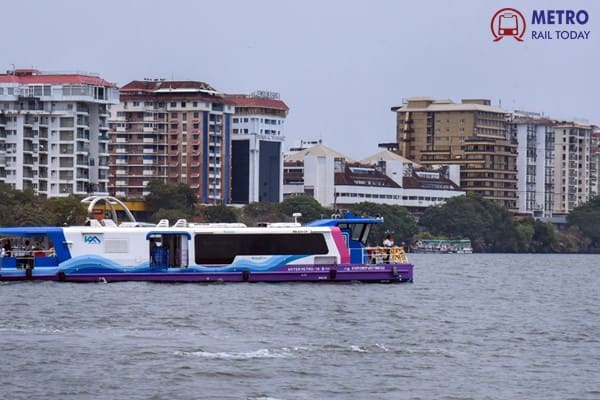 West Bengal plans to launch Water Metro Systems in Kolkata
- Titagarh Rail Systems targets full Indigenous Aluminium Coach Manufacturing by FY2027
Ahmedabad to unveil India’s First 16-Storey Multimodal Railway Station by 2027
MRT Online Desk
Posted on: 2025-12-01 09:10:00
Viewer: 1,624
Comments: 0
Country: India
City: Ahmedabad
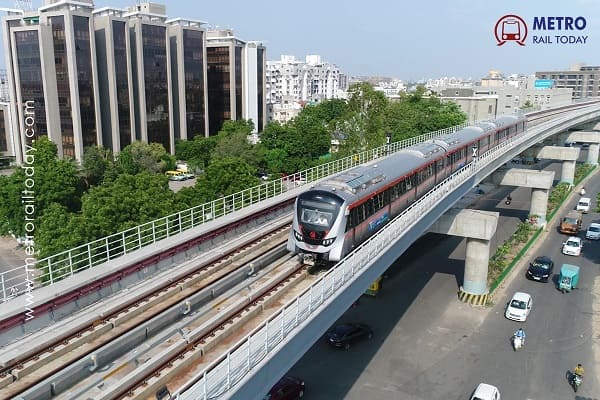
Ahmedabad, India (Metro Rail Today): Ahmedabad is gearing up to set a national benchmark in modern travel with the development of India’s first 16-storey multimodal railway station. Slated for completion by July 2027, the landmark project will bring bullet trains, metro services, conventional rail and bus transport under one integrated roof—redefining how urban mobility is experienced in India.
The new station will serve as a major interchange on the 508 km Mumbai–Ahmedabad High-Speed Rail (MAHSR) corridor, India’s first bullet train project developed with Japanese collaboration. Rising above Western Railway platforms 10, 11 and 12, the structure will directly link with Kalupur Metro Station, offering seamless transfers between different modes of transport.
India’s first Shinkansen-type bullet trains, based on Japan’s advanced E5 Series technology, will operate from this terminal at speeds of up to 320 km/h. Once operational, the service will dramatically reduce travel time between Mumbai and Ahmedabad and position the city as a pivotal gateway for high-speed rail travel in Western India.
The station’s architectural design celebrates Ahmedabad’s vibrant cultural identity. Its roof is inspired by soaring kites symbolising the city’s famed Uttarayan festival, while the façade draws from the intricate architectural motifs of the iconic Sidi Saiyyed Jaali, blending contemporary engineering with timeless craftsmanship.
India’s First Fully Integrated Mobility and Commercial Hub
More than just a transport terminal, the upcoming station is envisioned as a comprehensive urban mobility and commercial centre. It will integrate bullet train operations, metro connectivity, long-distance and local trains, and bus services in a single, well-planned vertical complex. Large parking zones, office areas, retail spaces, mall facilities, and modern lounges and waiting zones will offer commuters a seamless and high-quality experience.
Offering an industry perspective, Mrs. Mamta Shah, MD & CEO of Urban Infra Group, said, “The Ahmedabad multimodal station exemplifies how India is advancing toward next-generation mobility solutions. Bringing bullet trains, metro, rail and bus systems into one coordinated hub will transform passenger experience and strengthen the city’s position as a modern economic powerhouse.”
Built for High Capacity and Future Growth
Railway officials say that the 16-storey facility is being engineered to manage significantly higher passenger volumes in the coming decades. Redevelopment of the surrounding area—wider access roads, improved last-mile connectivity and enhanced public transport links—will ensure smooth passenger flow into and out of the hub.
Such large-scale improvements will not only reduce congestion but also offer Ahmedabad a more organised and efficient urban mobility environment. For daily commuters, tourists and interstate travellers, the new hub promises faster, smarter and more convenient journeys.
A Major Economic Boost for the City
The station is expected to catalyse major economic and tourism benefits by attracting more visitors, boosting local commerce and stimulating growth in retail, hospitality and business activities. Its strategic location and world-class amenities will anchor Ahmedabad as a premier travel and commercial destination in Western India.
As construction progresses, the upcoming 16-storey station stands as a symbol of India’s mobility transformation—an architectural and technological leap that will redefine how millions travel across the region.

MRT Online Desk
Metro Rail Today is an authentic and global news provider for the Rail & Metro industry from and around the world.