

Trending Now
 RITES submits fresh DPR to UPMRC for ₹12,000 crore Prayagraj Metro Rail Project
 Paras Railtech wins ₹84.72 crore Ballastless Track Contract for Jaipur Metro Rail Project
 Indian Railways announces 3,548 Graduate-Level Vacancies under NTPC Recruitment 2026
 European Union sanctions €10 million to support extension of Hanoi Metro Line 3
 GMRC issues ₹683 crore Tender for construction of 8.68 km stretch for Ahmedabad Metro
- GMRC launches ₹439 crore Tender for construction of 5 New Ahmedabad Metro Stations
 Global tender issued for procurement of 60 Rolling Stock coaches for Hyderabad Metro Rail Project
 Global tender issued for procurement of 102 Rolling Stock coaches for Patna Metro Rail Project
 Gamuda awarded RM3.7 billion contract to build Keelung Mass Rapid Transit in Taiwan
 Maharashtra forms special Task Force to plan Rail, Metro and RRTS expansion
Centre orders NCRTC to prepare revised DPR for ₹20,637 crore Delhi-Noida Airport RRTS Corridor
MRT Online Desk
Posted on: 2025-12-15 07:30:00
Viewer: 4,451
Comments: 0
Country: India
City: New Delhi
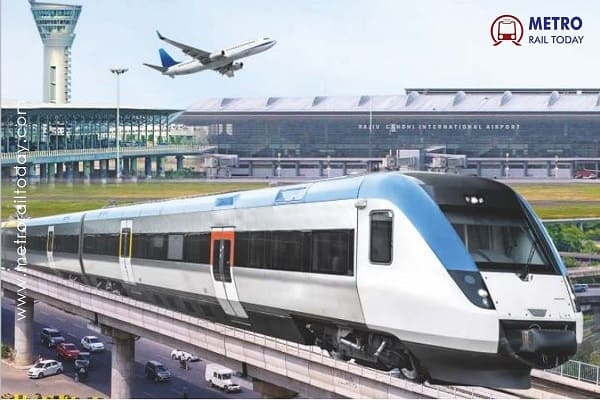
New Delhi, India (Metro Rail Today): In a significant course correction aimed at ensuring robust long-term airport connectivity, the Union Ministry of Housing and Urban Affairs (MoHUA) has directed the National Capital Region Transport Corporation (NCRTC) to revise the alignment of the proposed Noida Airport Rapid Rail Transit System (RRTS). The Centre has made it clear that the corridor must originate from Sarai Kale Khan in Delhi, rather than Ghaziabad, to deliver a direct, high-speed connection between the national capital and the upcoming Noida International Airport at Jewar.
The directive follows a detailed review of NCRTC’s earlier proposal for a 72-kilometre Ghaziabad–Jewar rapid rail corridor, which had received in-principle approval from the Uttar Pradesh government in December 2023. However, MoHUA raised serious concerns over the project’s limited connectivity to Delhi, questionable ridership projections, and long-term operational viability, prompting the Centre to return the Detailed Project Report (DPR) with multiple objections.
According to officials familiar with the review process, the Centre concluded that the Ghaziabad-origin corridor would fail to meet the strategic objective of providing strong airport connectivity for Delhi and Noida—expected to be the primary catchment areas for Jewar airport passengers. The ministry flagged that most air travellers would originate from Delhi, central Noida, and eastern NCR, areas largely bypassed by the earlier alignment.
The rejected DPR, estimated at ₹20,637 crore, proposed an elevated rapid-rail-cum-metro corridor with 22 stations, evenly split between rapid rail and metro operations. It ran from Siddharth Vihar to Ecotech-6, passing through Char Murti and multiple YEIDA sectors before reaching the airport. MoHUA objected to the absence of a Delhi link, lack of a destination-based traffic survey, duplication with Noida Metro Rail Corporation’s Aqua Line extension, and technical concerns over sharing an elevated corridor between metro and semi-high-speed systems.
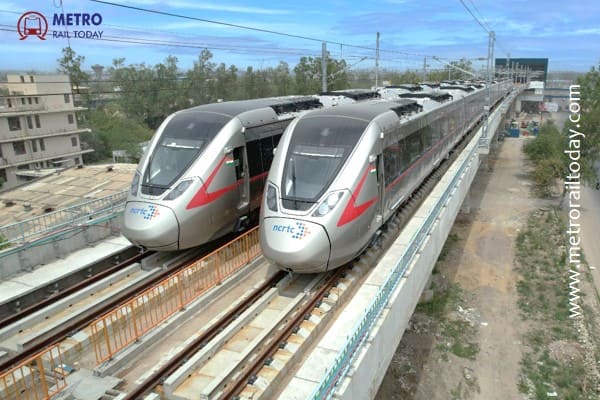
Following the review meeting attended by officials from the UP government, NCRTC, Noida International Airport Ltd, Yamuna International Airport Pvt Ltd, and NMRC, it was unanimously agreed that the corridor must originate from Sarai Kale Khan, the terminal station of the Delhi–Meerut Namo Bharat RRTS.
A preliminary alignment now under study is expected to pass through DND Flyway, Noida City Centre metro station, Noida Phase-2 (NSEZ), Surajpur, Knowledge Park-3, Pari Chowk, Ecotech-6, Dankaur, and YEIDA sectors 18 and 21, before terminating at the airport. Officials clarified that routing the line through Greater Noida West was deliberately avoided, as it would overlap with NMRC’s proposed Aqua Line extension and increase travel time for Delhi-bound passengers.
If operational or land-use constraints arise at Sarai Kale Khan, New Ashok Nagar may be evaluated as an alternative origin point. Final alignment and station locations will be decided after NCRTC completes a fresh feasibility study and survey, as directed by the Centre.
Commenting on the development, Mrs. Mamta Shah, MD & CEO, Urban Infra Group, said, “The Centre’s insistence on a direct Sarai Kale Khan–Jewar RRTS reflects a clear understanding of airport-driven mobility demand. Strong, high-speed connectivity from Delhi’s core will be critical to the success of Noida International Airport and to maximising ridership, economic impact, and regional integration across NCR.”
NCRTC has now been tasked with preparing a new feasibility report and revised project proposal, prioritising seamless Delhi–Jewar connectivity and long-term scalability. Until the revised alignment is cleared by MoHUA, the original Ghaziabad–Jewar proposal—once tentatively targeted for completion by 2030—will remain on hold.
The move underscores the Centre’s growing emphasis on ridership realism, system compatibility, and integrated regional planning, particularly for airport-linked rail corridors. Once approved, the revised RRTS is expected to play a pivotal role in shaping fast, reliable, and sustainable airport access for the National Capital Region.

MRT Online Desk
Metro Rail Today is an authentic and global news provider for the Rail & Metro industry from and around the world.