


Trending Now
 MMRDA invites bids for ₹4,882 Crore Rolling Stock & Systems Contract for Mumbai Metro Line 12
 Kolkata Metro completes Aluminium Third Rail Upgrade on Blue Line
 Metroman E. Sreedharan submits new Blueprint for ₹54,000 Crore Kerala High Speed Rail Corridor
 Union Housing & Urban Affairs Minister Tokhan Sahu to inaugurate 6th RailTrans Expo 2026
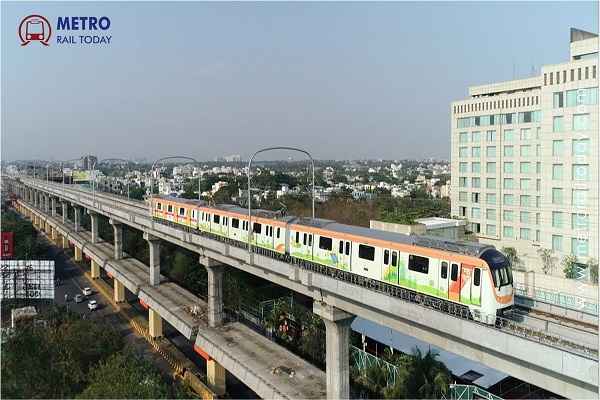 Maha Metro plans Six-Coach Trains ahead of Pune Metro Line 3 Launch
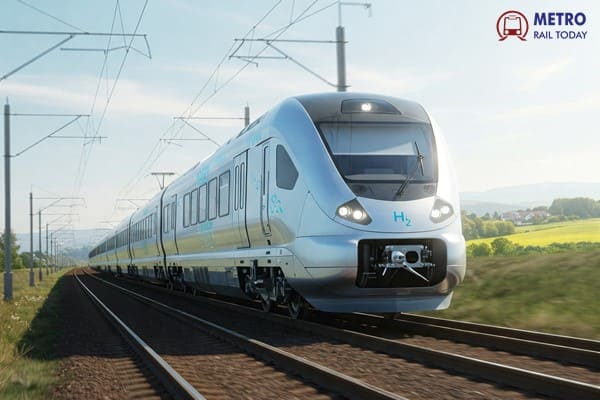 Railway Ministry approves launch of India’s First Hydrogen-Powered Train on Jind–Sonipat Route
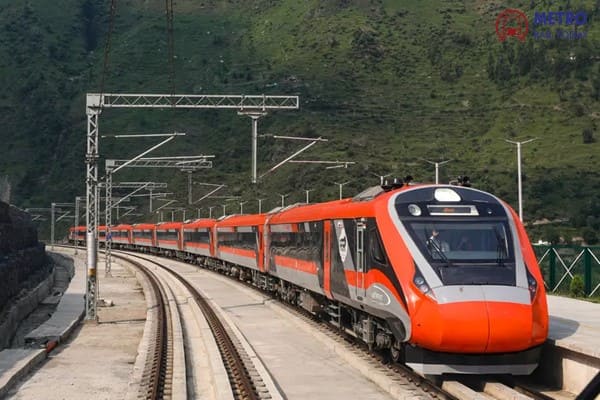 Kineco Global Rail secures Interior Contract for new 100 Vande Bharat Sleeper Trains
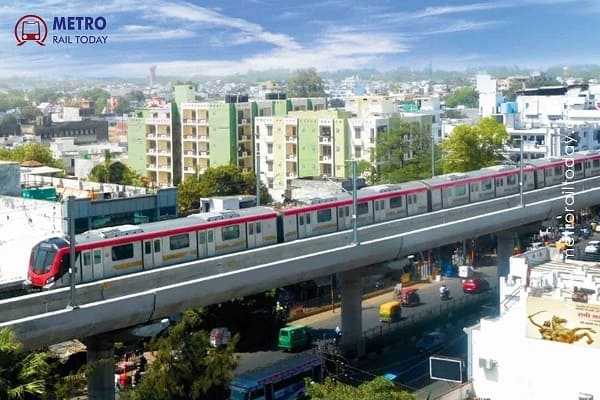 Ranjit Buildcon Wins ₹383.98 Crore Civil Contract for Lucknow Metro Phase 1B
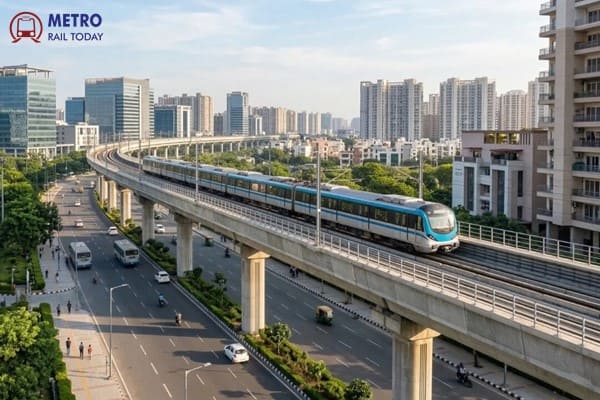 Tamil Nadu seeks Central Support for new Metro Rail Projects in Coimbatore, Hosur and Madurai
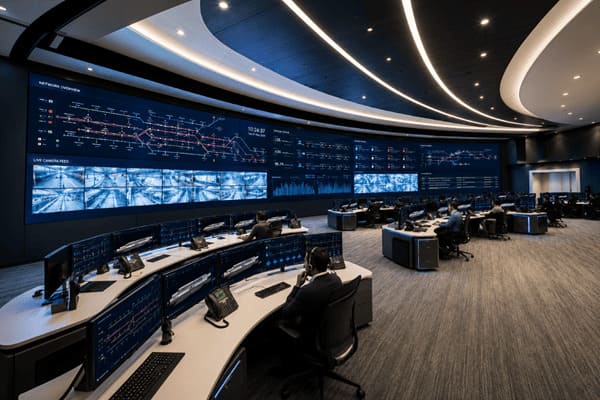 Future Metro Control Centres: ST Engineering Transforms Command Rooms to Intelligent Nerve Centres
CMRL completes 8th Tunnel Breakthrough on Chennai Metro Phase 2
MRT Online Desk
Posted on: 2026-02-10 17:10:00
Viewer: 1,026
Comments: 0
Country: India
City: Chennai
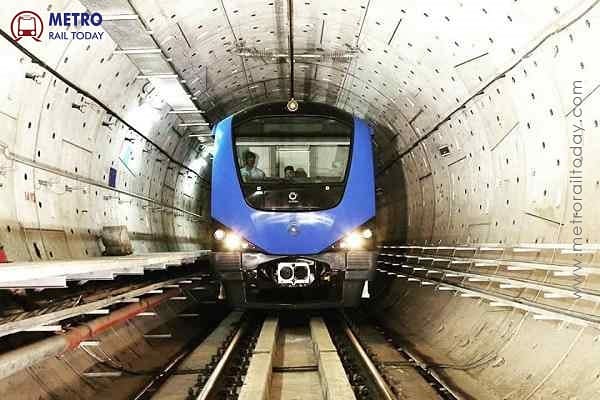
Chennai, India (Metro Rail Today): Chennai Metro Rail Limited (CMRL) has achieved a key milestone in its Phase-2 expansion with the successful breakthrough of Downline Tunnel Boring Machine (TBM) “Noyyal” at Mandaveli Station under Corridor-3. The 763-metre underground stretch between Greenways Road and Mandaveli has now been fully excavated, marking the eighth TBM breakthrough under the TU-02 contract and reinforcing steady progress of Chennai Metro’s ambitious expansion.
The tunnelling drive for this section began in September 2023, with two TBMs deployed for simultaneous excavation of the up-line and down-line tunnels. While the Upline TBM “Vaigai” achieved its breakthrough on 18 October 2025, TBM “Noyyal” completed the down-line breakthrough on 7 February 2026, successfully concluding twin-tunnel works between the two stations.
Constructed by Larsen & Toubro Ltd, the tunnel alignment passed beneath densely built residential and commercial neighbourhoods. The stretch runs below 75 buildings, with overburden depths ranging from 9 to 12 metres, requiring continuous structural monitoring and carefully controlled excavation to safeguard surface infrastructure. The Mandaveli shaft area presented additional engineering complexities due to the presence of critical underground utilities, including sewer lines, water pipelines, and electrical networks. Detailed coordination and phased execution ensured safety and structural stability throughout the tunnelling process.
Geologically, the TBM encountered predominantly silty sand and sandy soil conditions. Excavation was largely carried out in closed-face mode to maintain ground stability. TBM “Noyyal” required 14 cutterhead interventions during the drive, reflecting the challenging subsurface environment. The tunnelling was completed over 449 days, excluding waiting periods linked to shaft readiness.
The breakthrough was witnessed by Shri T. Archunan, Director (Projects), CMRL, along with senior officials, consultants, and representatives of Larsen & Toubro Ltd, highlighting the coordinated efforts behind the milestone.
Simultaneously, significant progress has been recorded under Corridor-4, which spans 26.1 km from Light House to Poonamallee Bypass. A major achievement was registered under the UG-01 package when Upline TBM “Eagle” completed a 1,981-metre drive between Light House and Thirumayilai, achieving breakthrough on 9 February 2026. Under the UG-02 package, TBM “Pelican” has commenced its final drive from Panagal Park towards Boat Club, while TBM “Peacock” earlier completed critical stretches, including a 2 km drive beneath active Indian Railways tracks.
The underground works under Corridor-4 have been divided into two packages covering approximately 4 km of twin tunnels each. Four TBMs with an excavated diameter of 6.67 metres have been deployed to execute nearly 16 km of underground tunnelling. Upcoming works include technically demanding stretches beneath operational Phase-1 Metro tunnels near Nandanam, at depths reaching 30 metres below ground level. Completion of this tunnelling phase is targeted for December 2026.
The alignment across these packages passes beneath several sensitive and landmark structures, including Chennai Lighthouse, All India Radio, the Russian Embassy, Rosary Church, and multiple educational institutions. In total, 151 buildings lie above sections of the alignment, with overburden depths ranging from 4.5 to 23 metres. Geological challenges such as rock strata and instances of gas leakage were addressed through closed-face operations and multiple cutterhead interventions, demonstrating high engineering precision.
Chennai Metro Phase-2 spans 118.9 km across three corridors and includes 128 stations, positioning it among India’s largest metro expansion programmes.
Commenting on the milestone, Mrs. Mamta Shah, MD & CEO, Urban Infra Group, said, “The successful breakthrough of TBM ‘Noyyal’ under dense urban conditions highlights the engineering sophistication and project management excellence driving India’s metro expansion. Executing underground works beneath sensitive structures and active utilities demands precision, coordination, and technological capability. Chennai Metro Phase-2 is setting strong benchmarks in urban tunnelling and sustainable infrastructure delivery.”
With multiple TBMs advancing across Corridors 3 and 4, Chennai Metro Phase-2 continues to gain momentum, steadily shaping a modern, resilient, and future-ready urban mobility network for the city.


MRT Online Desk
Metro Rail Today is an authentic and global news provider for the Rail & Metro industry from and around the world.