


Trending Now
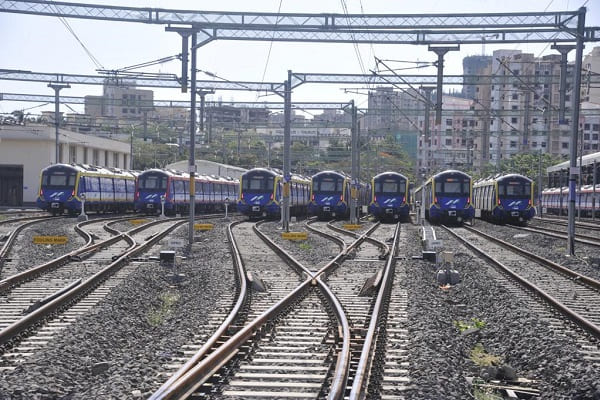 MMRDA issues Track Works Tender for Kasheli Depot of Mumbai Metro Line 5
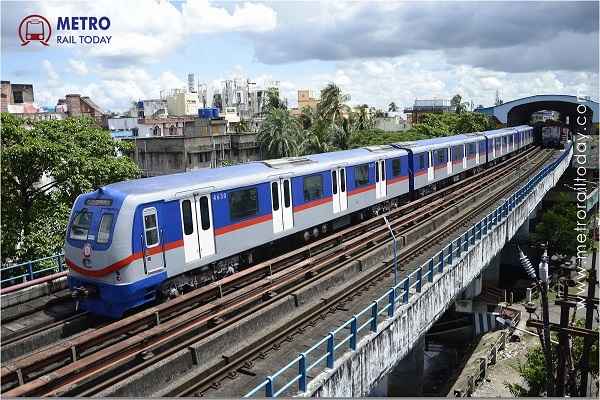 Indian Railways to procure 60 new Rolling Stock Trains for Kolkata Metro in five years
 Kerala forms Expert Committee to evaluate Thiruvananthapuram–Kannur High-Speed Rail Corridor
 Mumbai–Ahmedabad Bullet Train Project achieves third Mountain Tunnel Breakthrough in Maharashtra
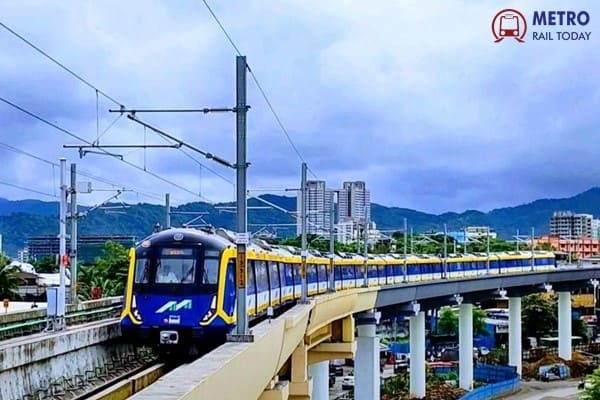 MMRDA invites bids for ₹4,882 Crore Rolling Stock & Systems Contract for Mumbai Metro Line 12
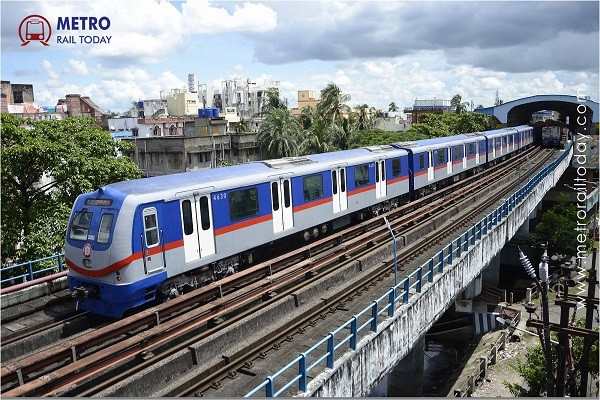 Kolkata Metro completes Aluminium Third Rail Upgrade on Blue Line
- Metroman E. Sreedharan submits new Blueprint for ₹54,000 Crore Kerala High Speed Rail Corridor
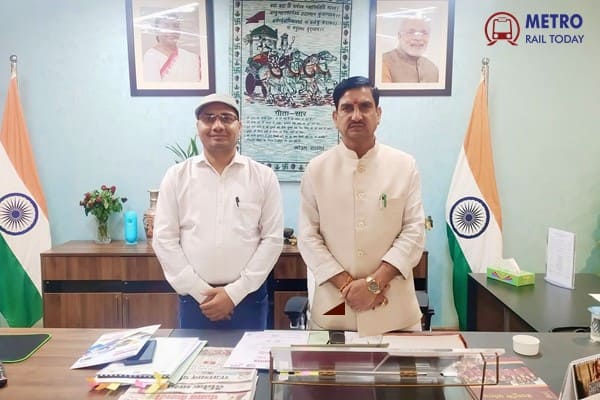 Union Housing & Urban Affairs Minister Tokhan Sahu to inaugurate 6th RailTrans Expo 2026
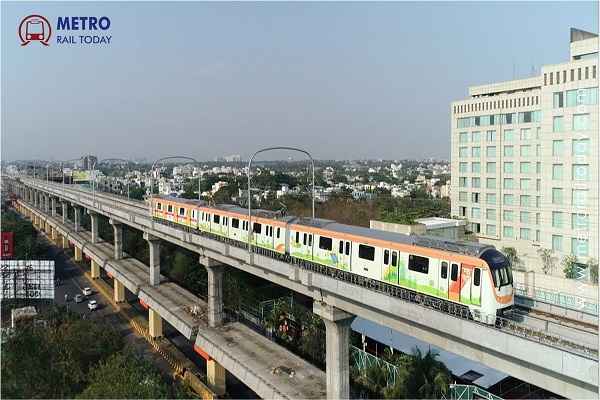 Maha Metro plans Six-Coach Trains ahead of Pune Metro Line 3 Launch
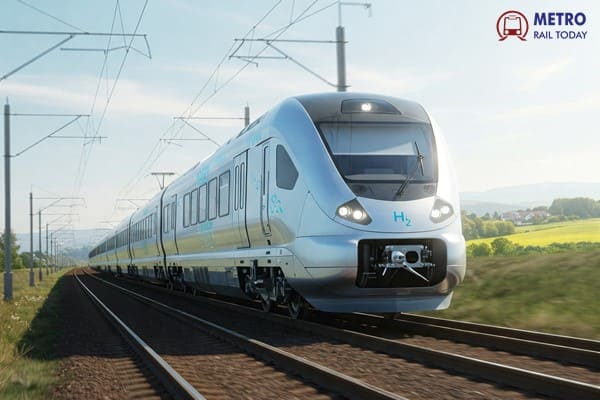 Railway Ministry approves launch of India’s First Hydrogen-Powered Train on Jind–Sonipat Route
CMRL completes longest Twin Tunnel Breakthrough Drive for Chennai Metro Phase 2
MRT Online Desk
Posted on: 2025-10-15 16:45:00
Viewer: 1,909
Comments: 0
Country: India
City: Chennai
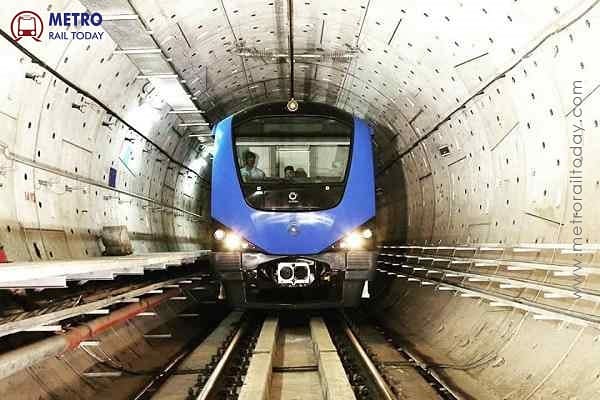
Chennai, India (Metro Rail Today): Chennai Metro Rail Limited (CMRL) has achieved yet another remarkable tunnelling milestone under its ambitious Phase-II project, with Tunnel Boring Machine (TBM) S1075B “PELICAN” successfully breaking through at Kodambakkam Ramp near Meenakshi College. The breakthrough marks the completion of the twin tunnel drive between Panagal Park Station and Kodambakkam Ramp under Corridor-4, Package UG–2, one of the most technically challenging sections of the Chennai Metro Rail Project.
This milestone follows the earlier breakthrough by TBM “Peacock” on July 23, 2025, which completed the parallel tunnel, signifying the full completion of both up and down tunnels along this vital stretch.
Longest Tunnel Completed in Chennai Metro Phase II
TBM “PELICAN” commenced its initial drive on 1 March 2024 and transitioned into the main drive on 14 May 2024, completing a total tunnel length of 2,076 metres over 594 days—making it the longest tunnel completed in Phase-II so far.
The alignment, running between chainage 7266.09 to 9342.29, reached a maximum invert depth of –31.40 metres beneath the Indian Railways track at Kodambakkam, marking one of the deepest tunnelling points along the corridor.
The breakthrough ceremony was graced by T. Archunan, Director (Projects), CMRL, in the presence of R. Ranganathan, General Manager, CMRL, and Murugamoorthy, Team Leader, General Consultant. Senior officials from CMRL, the contractors, and general consultants were also present during the event, celebrating this landmark engineering feat.
Engineering Excellence Amidst Complex Challenges
The TBM drive presented numerous engineering challenges — including excavation through mixed and fractured geological strata, tunnelling beneath densely built-up areas with multi-storey structures, and critical crossings under Indian Railways at Kodambakkam Station and two active flyovers.
Adding to the complexity, the drive involved negotiating a tight S-curve with a 206-metre radius and executing the steepest tunnel gradient of +2.581% across the entire Phase-II network.
Despite these demanding conditions, the CMRL and contractor teams demonstrated exceptional technical expertise, planning precision, and coordination, ensuring safe and successful completion of the tunnelling work without major disruption to the urban environment above.
“This milestone is not just a testament to CMRL’s engineering excellence but also to the meticulous planning and collaboration among our teams and partners. With every successful breakthrough, Chennai moves closer to a world-class, sustainable metro system that will redefine urban mobility in the city,” said Thiru. T. Archunan, Director (Projects), CMRL.
Adding an industry perspective,
Mrs. Mamta Shah, Managing Director & CEO, Urban Infra Group, said, “The successful breakthrough by TBM Pelican underscores India’s growing mastery in complex underground metro construction. Chennai Metro’s Phase-II progress exemplifies how precision engineering and safety-first execution can transform urban transport while inspiring confidence in the nation’s metro-building capabilities.”
With the completion of both tunnels between Panagal Park and Kodambakkam Ramp, Corridor–4 of Chennai Metro Phase–II is one step closer to realization. The project continues to exemplify Chennai’s commitment to developing modern, sustainable, and resilient infrastructure, ensuring safer, faster, and greener mobility for millions of commuters in the years ahead.


MRT Online Desk
Metro Rail Today is an authentic and global news provider for the Rail & Metro industry from and around the world.