

Trending Now
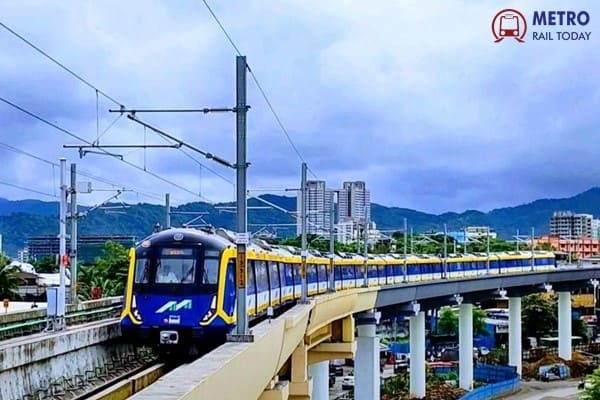 MMRDA seeks ₹14,100 Crore Loan for two upcoming Mumbai Metro Corridors
 Jupiter Wagons Eyes ₹20,000-Crore Mumbai Suburban Mega Rolling Stock Tender
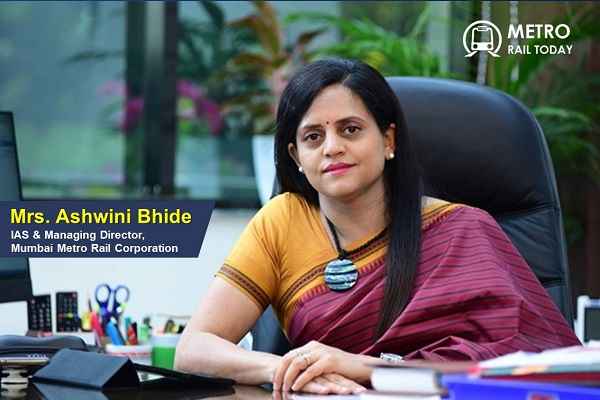 Mumbai Metro Chief Ashwini Bhide appointed as First Woman BMC Commissioner
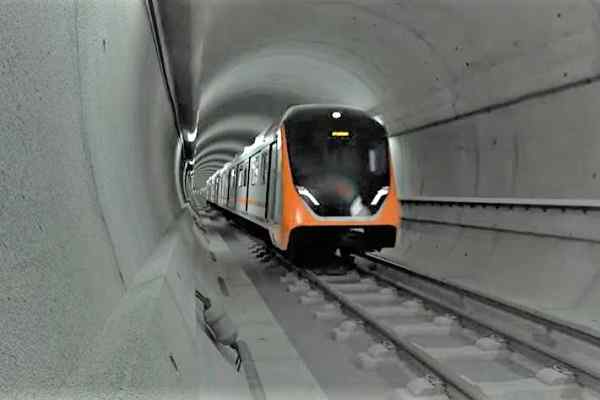 TBM ‘Parvati’ completes Underground Tunnelling on Kanpur Metro Phase 1 Project
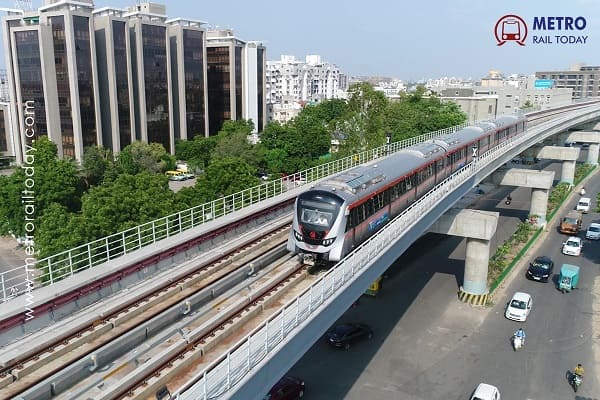 Surat Metro begins First Trial Run on 8.5 km Diamond Corridor between Dream City and Althan Tenement
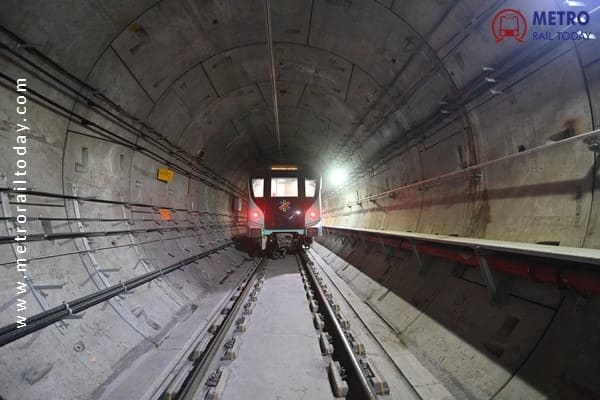 Cemindia wins ₹1,024 crore Civil Contract for Central Vista Tunnel Package of Delhi Metro Phase V
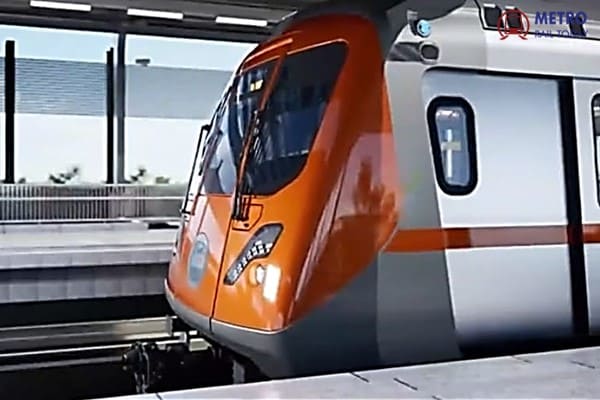 TBM ‘Durgavati’ begins tunneling works on Bhopal Metro Underground Stretch
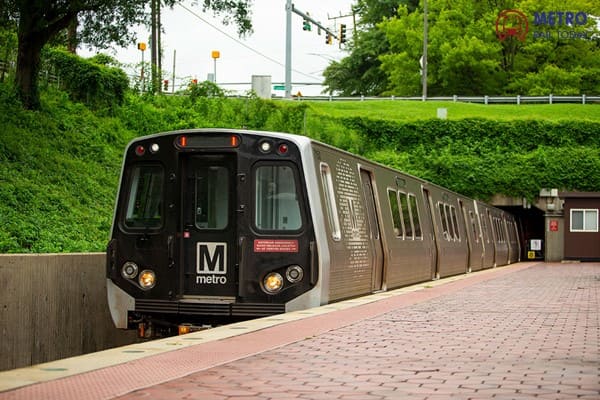 Washington Metro celebrates its Golden Jubilee—50 years of passenger service
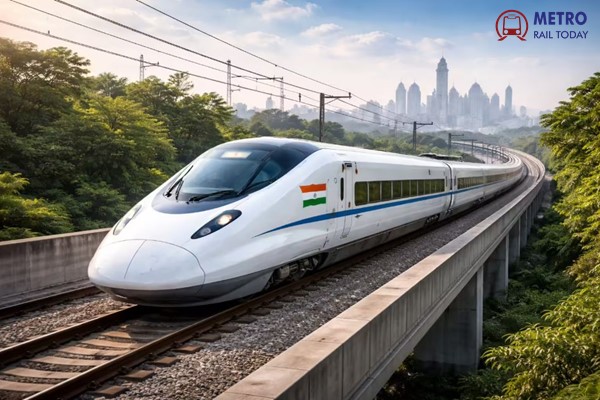 Two TBMs arrive in Mumbai for undersea tunneling on Mumbai-Ahmedabad Bullet Train Project
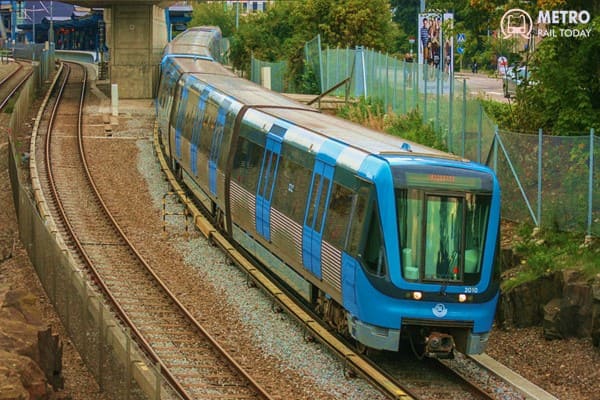 Alstom awarded €915 million Rolling Stock Contract for Belgrade’s First Driverless Metro Line
How Alstom became the Engine of India’s Rail Modernisation?
Inside the technology, factories and strategy powering the country’s biggest mobility transformation
MRT Online Desk
Posted on: 2025-12-02 17:00:00
Viewer: 21,007
Comments: 0
Country: India
City: New Delhi
When India’s rail modernisation journey is written in full, the name Alstom will occupy a prominent place. Few international companies have integrated themselves so deeply into India’s railway ecosystem—across metro corridors, semi-high-speed regional rail, dedicated freight corridors, digital signalling, maintenance systems, and the country’s most powerful locomotives.
Over the last decade, India has not just become one of Alstom’s largest markets—it has become a strategic technology hub, a global engineering centre, and one of the company’s most important manufacturing bases anywhere in the world.
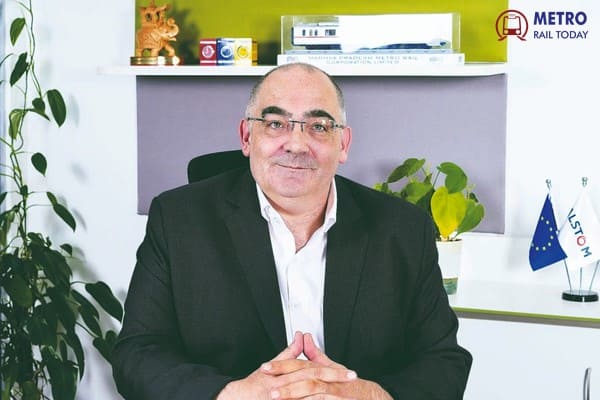
At the heart of this transformation is Olivier Loison, Managing Director, Alstom India, who believes India is now “a global powerhouse” for future mobility solutions. In an exclusive interaction with Financial Express, he outlined how the company is shaping India’s next-generation transport network with breakthroughs in automation, electrification, and digital technologies.
But the bigger story lies in how Alstom has positioned India—not just as a destination for projects, but as a centre for innovation and exports that is influencing mobility standards worldwide.
A Decade of Deep Integration with India’s Rail Network
From Delhi to Chennai, from Mumbai to Indore, and from Kanpur to Kochi, Alstom is present in almost every major metro network in India. The company’s contribution spans the full stack of modern rail systems: rolling stock, signalling, power supply, electrification, depots, and long-term maintenance.
Loison describes it simply:
“We are driving the rail network modernisation in India through advanced manufacturing, maintenance, and signalling technology across urban, regional, and mainline sectors.”
This is not an exaggeration. Alstom’s footprint touches almost every layer of today’s expanding mobility map:
Urban metro systems
Alstom supplies rolling stock, signalling, and maintenance solutions to the largest metro operators in the country—including Delhi, Chennai, Mumbai, Bengaluru, Kochi, Agra, Kanpur, Indore, and Bhopal.
Recent breakthroughs include:
-
Driverless trains for Chennai Metro Phase II
-
Advanced CBTC signalling on Mumbai Metro Line 3 (Aqua Line)
-
Deployment of Urbalis driverless technology on Bengaluru Metro Phase 2
Mainline freight and rail electrification
Alstom’s iconic WAG-12B locomotive—manufactured at its joint-venture plant in Madhepura—is the backbone of India’s heavy-haul freight movement. Over 550 locomotives are now in operation, powering the Dedicated Freight Corridors and redefining Indian Railways’ freight capability.
Additionally, Alstom has delivered 343 km of electrification and signalling on the Eastern DFC.
India’s first Regional Rapid Transit System (RRTS)
One of the most transformative contributions came when Alstom delivered the NaMo Bharat rolling stock to NCRTC, enabling the world’s first operational deployment of ETCS Level 2 signalling on a regional rail system.
This integration has become a global benchmark for fast, reliable, commuter-centric regional mobility.
“The world debut of ETCS on India’s RRTS is a milestone—not just for Alstom, but for the future of global regional mobility.”
The Digital Backbone: AI, IoT, Cybersecurity, and Automation
Alstom’s long-term bet is clear: India’s rail transformation will be digital.
From automated train operations to asset monitoring, the company is embedding digital tools across projects—creating what Loison describes as an “AI-powered rail ecosystem.”
The Rise of Digital Railways
According to Loison:
“AI is integral to every aspect of Alstom’s operations—from predictive maintenance to optimising processes and energy usage.”
Some examples already operating in India:
1. CBTC automation for metros
Used in Mumbai, Bengaluru, Delhi and more, CBTC enables:
-
Minimum time intervals between trains
-
Precise real-time train control
-
Optimal braking and acceleration
-
Reduced energy consumption
-
Higher punctuality and safety
It is the foundation for driverless metros, which India is rapidly adopting.
2. AI-driven predictive maintenance: HealthHub
Alstom’s HealthHub platform uses:
-
IoT sensors
-
High-frequency data capture
-
AI algorithms
-
Automated diagnostics
Deployed on the WAG-12B locomotive fleet, it monitors components at scale, predicts failures early, and ensures high availability—critical for India’s freight corridor operations.
3. Digital twins and virtual reality
These tools are increasingly used for:
-
System simulation
-
Workforce training
-
Operations optimisation
-
Safety monitoring
4. Cybersecurity as a first principle
As Indian railways digitise rapidly, vulnerability increases.
“We remain focused on developing advanced cybersecurity solutions to protect critical data, communication systems, and network infrastructure.”
This includes a newly established cybersecurity centre of excellence in India, part of the Digital Experience Centre.
Why India Matters: A Global Powerhouse for Alstom
Few multinationals mirror Alstom’s scale of localisation in India.
The company has:
-
6 large manufacturing sites
-
5 engineering centres
-
12,800+ employees
-
Nearly 90% localisation in its major manufacturing lines
-
33% of Alstom’s global engineering delivered from India
Loison calls India “one of the most important markets and talent pools” for Alstom.
India’s dual role: local market + export hub
India is unique because it offers:
-
A massive domestic market—metros, semi-high-speed, HSR, freight, signalling
-
A globally cost-competitive manufacturing base
This combination has turned India into an export powerhouse, shipping components, bogies, flat packs, and signalling solutions to five continents.
Government vision drives growth
Loison acknowledges the role of India’s long-term policy direction:
“India is on track to elevate the rail network with sizeable budget allocations and announcement of several new projects. There is a clear vision to give passengers a noteworthy and safe rail experience.”
Metro expansion, Vande Bharat, high-speed rail, and RRTS corridors all point towards the next decade being the most transformative in India’s rail history.
Manufacturing: A Network of Mega-Factories Across India
Alstom’s India operations are anchored by some of the world’s most advanced rolling stock and component factories.
Sri City, Andhra Pradesh – Rolling Stock Hub
-
Manufactures intercity and metro trains
-
Has India’s longest dynamic test track
-
Achieves ~90% localisation
-
Supplies trains to domestic and global markets
Savli, Gujarat – Trains for India & the World
-
Manufactures and tests trainsets for major Indian metros
-
Exports bogie frames and flat packs
-
Supports European and Australian projects
Coimbatore, Tamil Nadu – World’s Largest Component Facility
-
Specialises in converters, traction motors, electrical systems
-
Supplies to 70+ projects across five continents
-
A global nerve centre for component engineering
Madhepura, Bihar – Home of the WAG-12B
-
Joint venture with Ministry of Railways
-
Produces India’s most powerful 12,000 HP locomotives
-
Backbone of the Dedicated Freight Corridor modernisation
Maneja & Kolkata – Supporting global supply chains
-
Maneja handles testing for converters and auxiliaries
-
Kolkata manufactures car-body shells for WAG-12B
This manufacturing ecosystem is deeply integrated with global design centres, making India indispensable for Alstom’s global operations.
India’s Contribution to Global Rail Innovation
The world increasingly looks to India for scalable digital rail technologies.
Loison explains:
“Around 40 metro projects globally—Sydney, Montreal, and others—use signalling designed in India.”
This includes:
-
CBTC systems
-
Wayside software
-
Cybersecurity solutions
-
Automatic train supervision systems
-
Predictive maintenance platforms
Over the last decade, Alstom has invested €40 million to build signalling labs, simulation centres, and a flagship Digital Experience Centre in India.
India is now:
-
A design leader for next-generation signalling
-
A global software development hub
-
A centre for advanced cyber protection
-
A digital maintenance innovation base
These capabilities not only support India’s metro boom but contribute to the global shift toward autonomous and data-driven rail operations.
The Next Big Bet: High-Speed Rail, Advanced Metro, and Lifecycle Maintenance
With the Indian government accelerating high-speed rail ambitions—including the bullet train and future semi-HSR corridors—Alstom sees a major long-term opportunity.
“We are well positioned to take on big-ticket projects in high-speed, urban, and mainline rail space.”
The next frontier is maintenance, a strategic shift already reshaping rail contracts:
-
New tenders include long-term maintenance obligations
-
Operators want predictable lifecycle costs
-
Reliability-based models are replacing conventional procurement
Alstom’s global experience in full lifecycle support positions it strongly as India embraces total-cost-of-ownership models.
Driving India’s Viksit Bharat Vision Through Localisation
Every major step that Alstom has taken in India aligns with the country’s broader industrial priorities:
-
Make in India
-
Viksit Bharat 2047
-
Sustainable transportation
-
Rail electrification & decarbonisation
Loison points out that localisation has unlocked new opportunities:
“We have built a robust local industrial ecosystem. This allows us to meet domestic demand and also significantly contribute to exports.”
Today, India not only consumes but also exports world-class railway technologies, strengthening the country’s role in the global mobility economy.
India’s Rail Leap is Powered by Technology and Partnerships
India’s rail revolution is unfolding faster than most nations have experienced—and companies like Alstom are playing a catalytic role. From the WAG-12B freight locomotives to NaMo Bharat regional trains, and from automated metros to digital maintenance systems, Alstom has built not just assets but institutional capabilities that will support India for decades.
In the words of Mrs. Mamta Shah, MD & CEO, Urban Infra Group, whose perspective frames India’s mobility narrative:
“Alstom’s contribution to India goes far beyond supplying trains. It is helping India build a modern, future-ready mobility ecosystem. The digital technologies, engineering capabilities and manufacturing scale created here will shape the next generation of urban and mainline rail systems across the world.”
As India moves toward the Viksit Bharat vision, the partnership between Indian Railways, metro corporations, and technology leaders like Alstom will remain pivotal. The next decade—defined by high-speed rail, regional mobility expansion, deep automation, and sustainable electrification—will test the strength of this collaboration.
For now, one thing is certain: India is no longer just adopting global mobility technologies—it is helping build them.

MRT Online Desk
Metro Rail Today is an authentic and global news provider for the Rail & Metro industry from and around the world.