

Trending Now
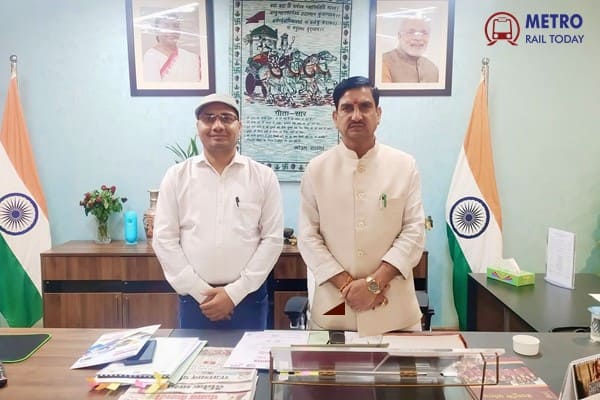 Union Housing & Urban Affairs Minister Tokhan Sahu to inaugurate 6th RailTrans Expo 2026
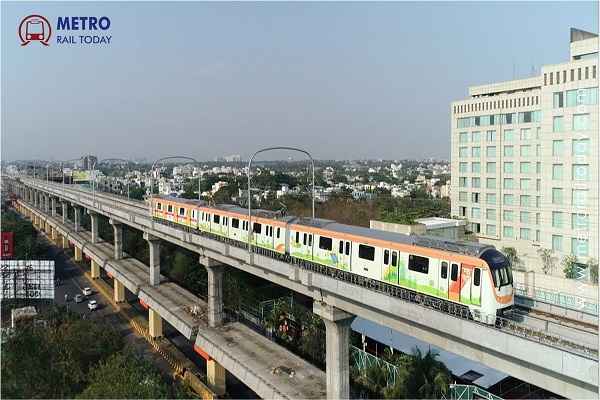 Maha Metro plans Six-Coach Trains ahead of Pune Metro Line 3 Launch
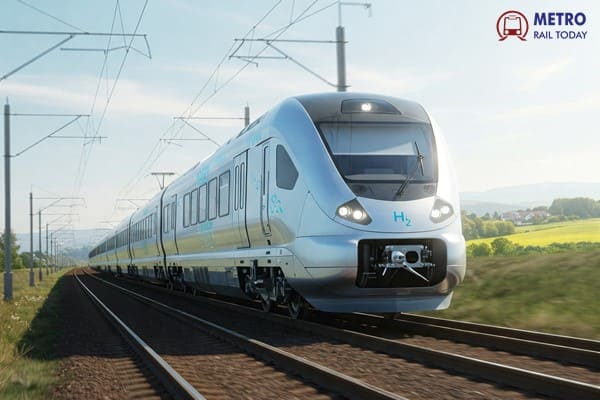 Railway Ministry approves launch of India’s First Hydrogen-Powered Train on Jind–Sonipat Route
 Kineco Global Rail secures Interior Contract for new 100 Vande Bharat Sleeper Trains
 Ranjit Buildcon Wins ₹383.98 Crore Civil Contract for Lucknow Metro Phase 1B
 Tamil Nadu seeks Central Support for new Metro Rail Projects in Coimbatore, Hosur and Madurai
 Future Metro Control Centres: ST Engineering Transforms Command Rooms to Intelligent Nerve Centres
 Kochi Metro unveils Visionary Design for Phase II Pink Line Metro Stations
 Design Consultancy Tenders floated for Ahmedabad Metro Phase 3 Elevated Corridors
 Global Metro Rail Infrastructure Market projected to reach US$ 78.3 billion by 2033
India on right path to become World's second largest Metro Rail Network: Hardeep Singh Puri
Dr. Vinod Shah
Posted on: 2023-09-01 07:00:00
Viewer: 2,056
Comments: 0
Country: India
City: New Delhi
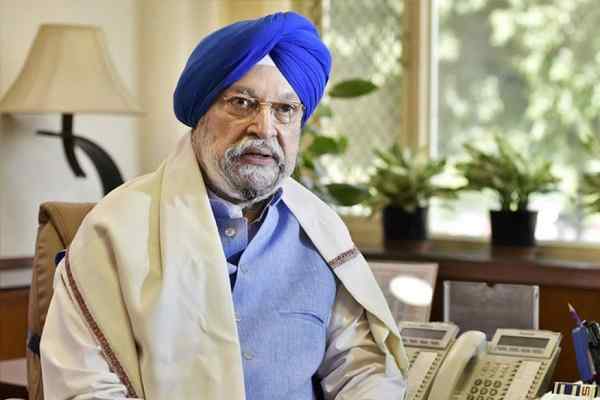 (Hardeep Singh Puri, Union Minister for Housing & Urban Affairs)
New Delhi, India (Metro Rail Today): In a recent announcement, Union Minister for Housing & Urban Affairs, Hardeep Singh Puri, revealed India's ambitious plans to establish itself as the world's second-largest metro network. The minister made this significant statement during a media briefing, shedding light on the outcomes of various urban transport initiatives. This announcement took place at the launch of an updated e-booklet titled "Transforming Urban Landscape," which covers the period from 2014 to 2023.
As part of his statement, Puri highlighted the remarkable progress in India's metro rail network. Currently, there are approximately 872 kilometers of operational metro lines in 20 different cities, including Delhi and seven National Capital Region (NCR) cities, Bangalore, Hyderabad, Kolkata, Chennai, Jaipur, Kochi, Lucknow, Mumbai, Ahmedabad, Nagpur, Kanpur, and Pune. These networks collectively witness an average daily ridership of 85 lakhs. Furthermore, there are around 988 kilometers of metro rail projects, including the Delhi-Meerut Regional Rapid Transit System (RRTS), under construction across various cities in India. These cities include Delhi, Bangalore, Kolkata, Chennai, Kochi, Mumbai, Nagpur, Ahmedabad, Gandhinagar, Pune, Kanpur, Agra, Bhopal, Indore, Patna, Surat, and Meerut.
Puri also emphasized the government's unwavering commitment to the growth and development of the urban sector in India, under the visionary leadership of Prime Minister Narendra Modi. He highlighted the significant increase in investments in the urban sector, which have risen from Rs 1,78,053 crore (2004-2014) to Rs 18,07,101 crore (2014 onwards).
The minister's speech at the event showcased the government's determination to transform urban spaces and create world-class cities that enhance the quality of life for residents. He underscored that urban development was a sector that had been overlooked in the past but was now receiving the attention it deserved.
In summary, India's ambitious plans to become the world's second-largest metro network and its commitment to urban development are indicative of its aspirations for progress and modernization in the urban sector.

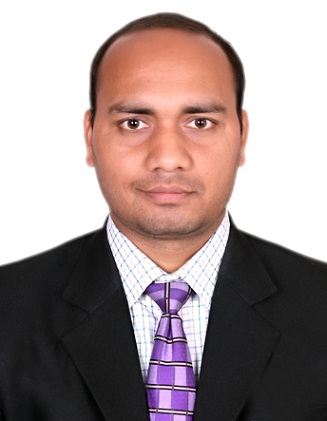
Dr. Vinod Shah
Dr. Vinod Shah is an experienced urban transport journalist, blogger and key opinion leader.