

Trending Now
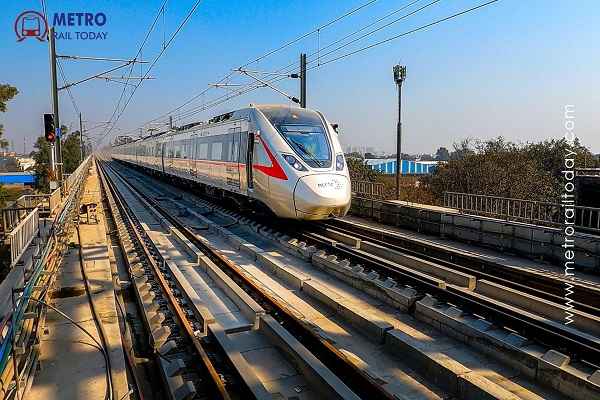
 Siemens Bags Order from Titagarh Rail Systems for Pune Metro Extension Trainsets
 Titagarh Rail Systems becomes Corporate Member of Chamber of Railway Industries (Rail Chamber)
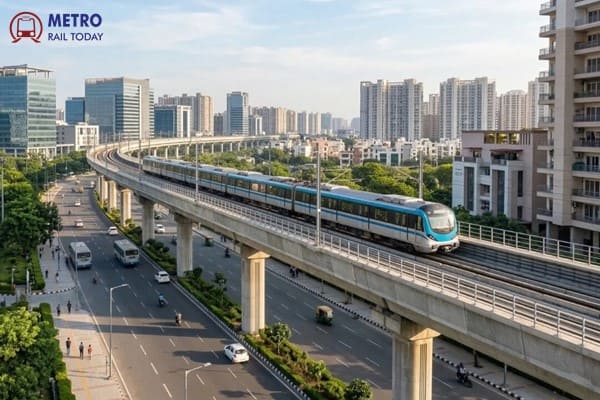
 World Bank approves ₹1,400 crore Civil Tender for Gurugram Metro Phase 2
 Bi-RIDE invites ₹200 crore Tender for Soladevanahalli Depot of Bengaluru Suburban Rail Project
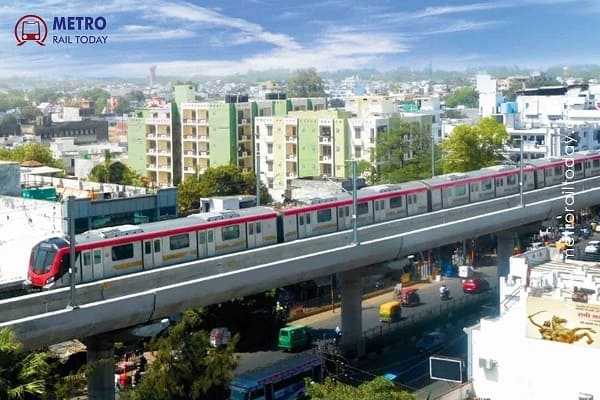 GHV India awarded ₹107.79 crore Civil Contract for Lucknow Metro East-West Corridor
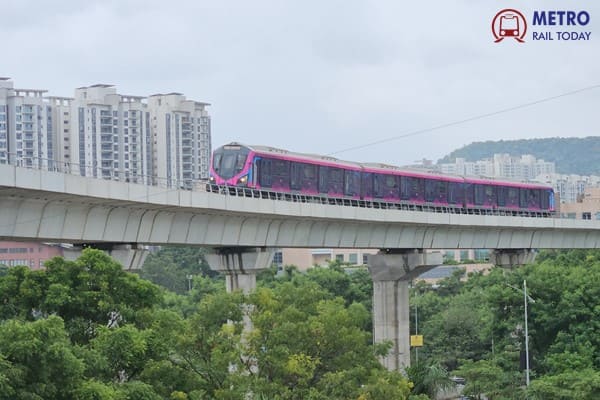 Pune Metro Line 3 set to launch First 12-km Section on 15 July 2026
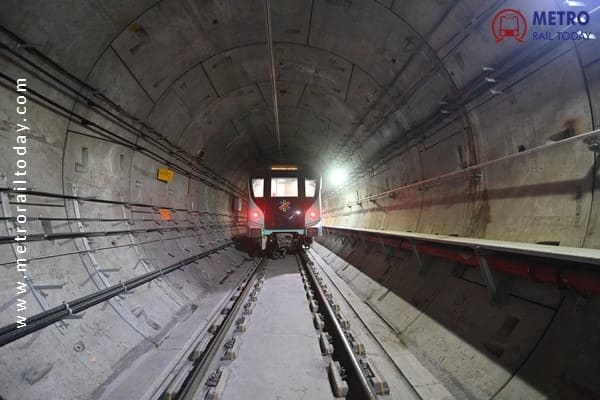 DMRC gets approval to Fell or Transplant 364 Trees for Central Vista Metro Corridor under Phase IV
 ₹4.5 Lakh crore Metro Rail Investment reaches less than 5% of Urban Population in India
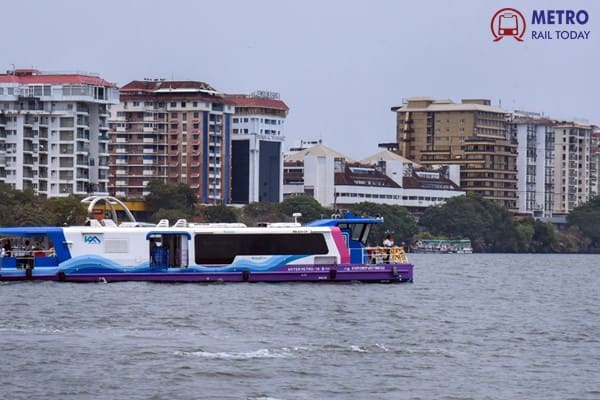 West Bengal plans to launch Water Metro Systems in Kolkata
- Titagarh Rail Systems targets full Indigenous Aluminium Coach Manufacturing by FY2027
India’s First High-Speed, Signalling-Integrated CMV launched for Namo Bharat RRTS Corridor
MRT Online Desk
Posted on: 2025-12-04 13:30:00
Viewer: 2,706
Comments: 0
Country: India
City: New Delhi
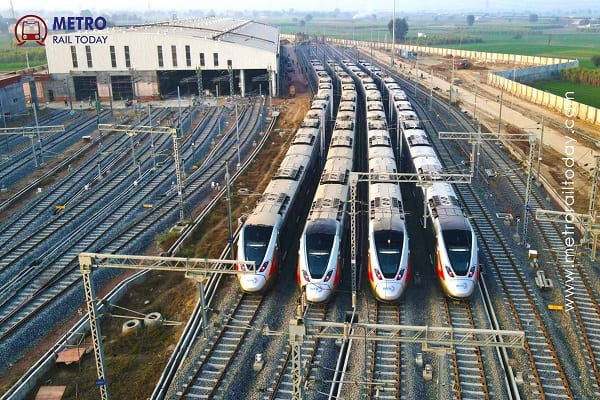
New Delhi, India (Metro Rail Today): In a major technological boost to India’s first Regional Rapid Transit System, the National Capital Region Transport Corporation (NCRTC) has introduced a high-speed Catenary Maintenance Vehicle (CMV) for the 82-km Delhi–Ghaziabad–Meerut Namo Bharat corridor, marking a significant leap in overhead electrification (OHE) maintenance and system reliability.
The indigenously built CMV, manufactured in Uttarakhand, is the first in India to be fully integrated with the ETCS Level 2 and Hybrid Level 3 signalling system, which powers Namo Bharat’s globally pioneering Automatic Train Protection operations. This integration enables the CMV to run safely in ATP mode, allowing fast, protected, and real-time inspection across the entire corridor.
After arriving by road transport, the vehicle was recently placed on the tracks at the Duhai Depot in Ghaziabad, where it will undergo trials before entering operational service.
A High-Speed Asset for Long-Corridor Maintenance
The new CMV is engineered for a maximum speed of 120 kmph and an operational speed of 110 kmph, making it the fastest OHE maintenance vehicle ever deployed on any Indian transit system. With Namo Bharat services operating from early morning to late night, the available maintenance window remains extremely limited. The long regional corridor, with stations spaced 5–10 km apart, further demands rapid deployment capabilities.
The high-speed capability ensures that maintenance teams can reach any location on the 82-km stretch swiftly, improving the pace of fault detection, inspection, and rectification. This directly translates into reduced disruptions and improved punctuality for commuters, particularly during peak-hour operations.
Modern Features for Enhanced Reliability and Safety
The vehicle is designed to maintain both flexible and rigid overhead catenary systems used along the corridor. Its lifting and swivelling working platform, integrated crane with bucket, and pantograph-based wire monitoring system allow maintenance teams to safely access hard-to-reach OHE components. Onboard cameras provide continuous visibility, while multiple interlocks and safety mechanisms ensure secure working conditions.
By enabling faster intervention during OHE-related issues, the CMV strengthens system reliability and helps NCRTC deliver smooth, predictable, and high-frequency regional train services.
Welcoming the development, Mrs. Mamta Shah, MD & CEO, Urban Infra Group, said: “NCRTC’s induction of a high-speed, signalling-integrated CMV is a landmark moment for India’s regional mobility systems. It reflects a strong commitment to safety, reliability, and world-class operational standards. This capability will significantly enhance service continuity on the Namo Bharat corridor and set new benchmarks for future RRTS networks across the country.”
Strengthening India’s Regional Rail Vision
The addition of this advanced CMV positions Namo Bharat among the most technologically modern regional rail systems globally. As passenger ridership continues to grow, NCRTC’s focus on preventive maintenance and rapid-response capability ensures the corridor remains dependable, resilient, and ready to meet rising mobility demands.
The induction of the CMV represents yet another step toward delivering a seamless, comfortable, and high-quality regional rail experience for thousands of daily commuters in the National Capital Region.

MRT Online Desk
Metro Rail Today is an authentic and global news provider for the Rail & Metro industry from and around the world.