

Trending Now
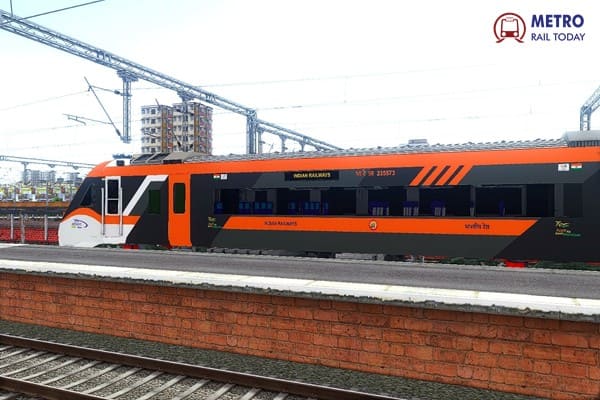 India’s First Vande Bharat Freight EMU hits 145 kmph in Technical Trials in Rajasthan
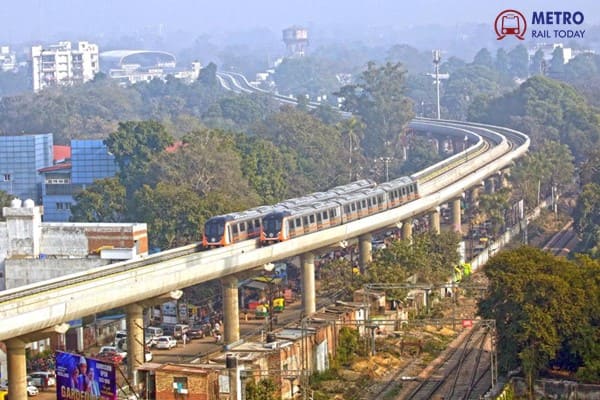 Centre rejects Coimbatore and Madurai Metro proposals again, Suggests BRTS as an alternative mode
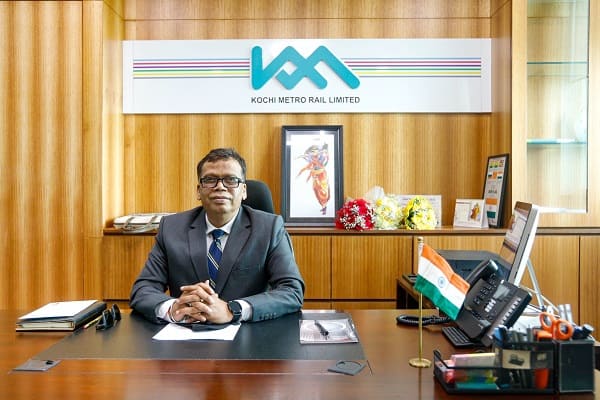 Kochi’s integrated Mobility Model sets New Benchmark for sustainable Urban Transport
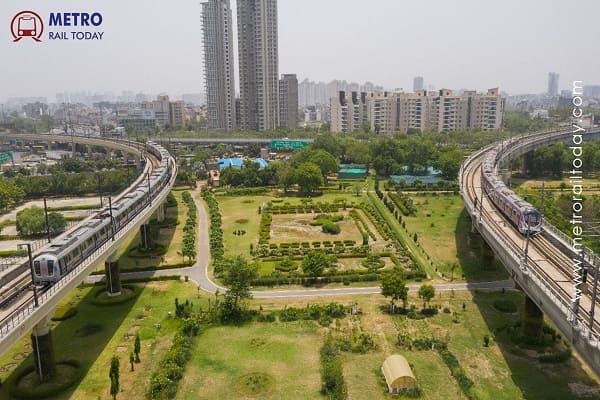 MoHUA creates separate departments for Delhi Capital Development and Urban Development
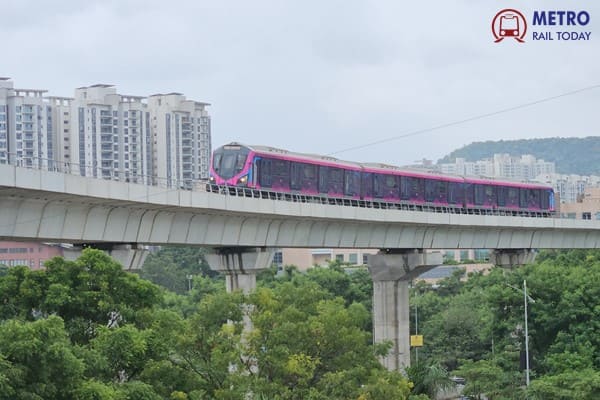 CMRS issues safety clearance for commercial opening of first stretch of Pune Metro Line 3
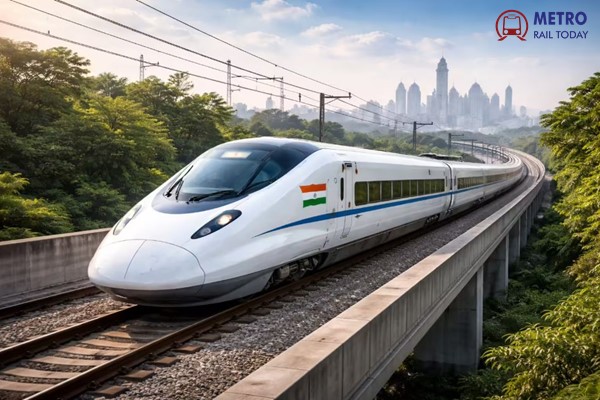 India plans indigenous Bharat Train Control System (BTCS) for future Bullet Train Corridors
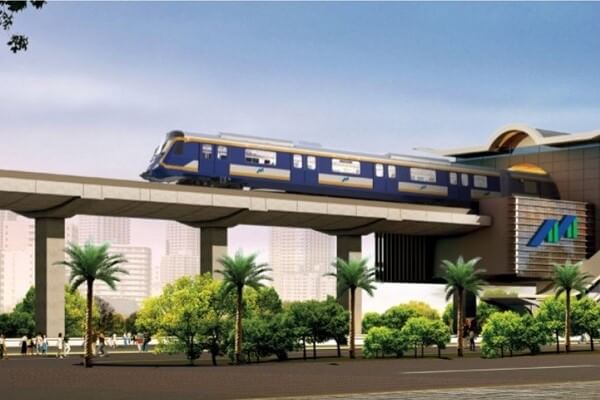 Aurionpro secures ₹50 crore order from MMRDA to deploy AFC Systems on Mumbai Metro Line 5
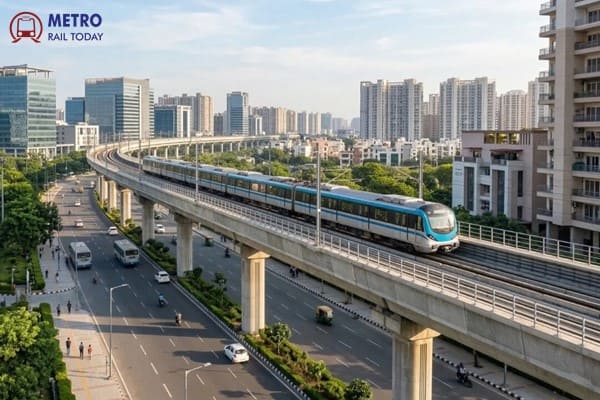 First T-Girder launched on Kanaka Line (Corridor 4A) of Bengaluru Suburban Rail Project
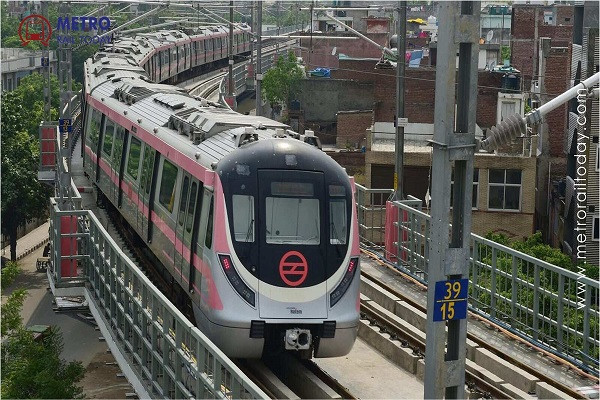 J Kumar Infraprojects completes First Silver Line Tunnel Drive on Delhi Metro Phase IV
 Indian Railways floats ₹18,902 crore EPC Tender for Sarkhej–Dholera Semi High-Speed Rail Project
India’s First Vande Bharat Freight EMU hits 145 kmph in Technical Trials in Rajasthan
MRT Online Desk
Posted on: 2026-08-02 16:50:00
Viewer: 49
Comments: 0
Country: India
City: Kota
Kota, India (Rail & Metro Today): India has taken a major step towards transforming rail freight transportation with the country’s first Vande Bharat platform-based Freight Electric Multiple Unit (EMU) successfully completing its first day of technical trials in the Kota Division of Rajasthan.
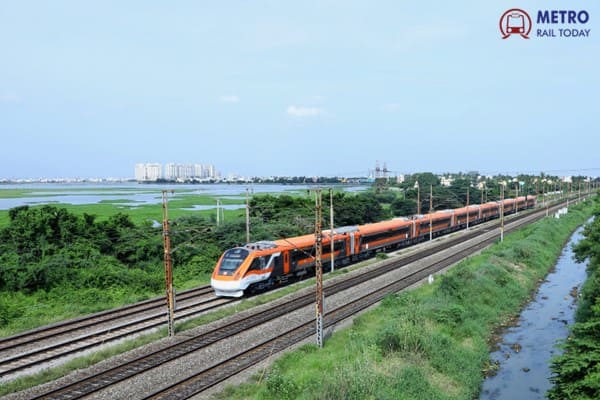
Developed by the Integral Coach Factory (ICF), Chennai, the 16-coach high-speed freight train achieved a maximum speed of 145 kmph during the opening day of trials, marking an important milestone in Indian Railways’ efforts to develop faster and more efficient solutions for time-sensitive cargo transportation.
The prototype is being tested by the Research Designs and Standards Organisation (RDSO) on the Kota–Nagda–Sawai Madhopur section, one of Indian Railways’ key routes for advanced train testing.
Vande Bharat Platform Adapted for High-Speed Freight
The new Freight EMU has been developed using the proven Vande Bharat train platform and is intended primarily for high-value and time-sensitive logistics segments, including e-commerce, parcel transportation and temperature-controlled cold-chain cargo.
The 16-coach formation consists of two refrigerated driving trailer coaches, two non-driving trailer coaches and 12 parcel coaches. The train incorporates Vande Bharat bogies, advanced propulsion and braking systems and specialised cargo-handling equipment.
With a payload capacity exceeding 397 tonnes and an axle load of more than 20 tonnes, the prototype has been designed to combine high-speed operation with efficient freight handling.
Train Reaches 145 kmph on First Trial Day
According to officials, the train departed Kota at around 6 am and travelled towards Mahidpur Road. The initial runs were conducted at 120 kmph without recording data, followed by recorded trials at 120 kmph and 135 kmph between Mahidpur Road and Bhawani Mandi.
During the return journey, the prototype reached its highest speed of 145 kmph, making it the maximum speed recorded during the first day of testing.
The train is expected to undertake at least two round trips every day as part of a month-long testing programme.
The testing programme will cover operating speeds between 120 kmph and 145 kmph, under both loaded and unloaded conditions.
Extensive Testing for Safety and Performance
RDSO engineers will conduct a comprehensive series of tests to evaluate the train's performance and safety before any decision is taken regarding commercial deployment.
The trials will examine braking performance, traction characteristics, regenerative braking and energy recovery, coupler strength, stability on curves and emergency braking distances.
Engineers will also assess the interaction of the train with signalling and telecommunication systems, door operation and other safety-related functions.
Static inspections will cover onboard systems such as lighting, CCTV, electrical protection systems and interior fittings.
The testing programme is intended to establish the train's reliability under different operating conditions and ensure compliance with applicable railway safety standards.
Advanced Features for Express Cargo Movement
The Vande Bharat Freight EMU incorporates several features specifically designed for modern logistics operations.
Refrigerated coaches will support the transportation of temperature-sensitive products, while forced ventilation will help maintain suitable conditions for cargo.
The train also features pneumatic retractable roller flooring, designed to speed up loading and unloading operations and reduce turnaround time at terminals.
The rake is equipped with the KAVACH automatic train protection system, adding another layer of safety during high-speed operations.
Passenger-style safety features have also been incorporated into the freight platform. The doors are designed to automatically lock once the train exceeds 5 kmph, while the train cannot move unless all doors are securely closed.
Potential to Transform Time-Sensitive Rail Logistics
The introduction of a Vande Bharat-based freight EMU could open a new segment for Indian Railways by combining the speed of high-performance electric trains with specialised cargo-handling capabilities.
Traditional freight trains are primarily designed for bulk cargo and heavy haulage, while the new train is targeted at logistics where speed, reliability and predictable delivery times are critical.
E-commerce shipments, pharmaceuticals, perishables, electronics, high-value parcels and other time-sensitive commodities could potentially benefit from faster rail transportation.
The refrigerated coaches could also strengthen India's cold-chain logistics network by providing a dedicated rail-based alternative for temperature-sensitive goods.
Month-Long Trials Before Commercial Deployment
The prototype will continue to undergo intensive testing for approximately one month. Multiple daily trips will allow engineers to evaluate its performance across different operating conditions and loading configurations.
Only after the completion and assessment of the trials will the train be considered for commercial deployment.
The successful first-day performance, including the 145 kmph top speed, represents an important step in Indian Railways' broader effort to modernise freight transportation.
If successfully introduced into regular service, the Vande Bharat Freight EMU could provide a faster rail-based logistics option for India's rapidly expanding express cargo market while improving turnaround times and strengthening the country's e-commerce, parcel and cold-chain supply chains.

MRT Online Desk
Metro Rail Today is an authentic and global news provider for the Rail & Metro industry from and around the world.