

Trending Now
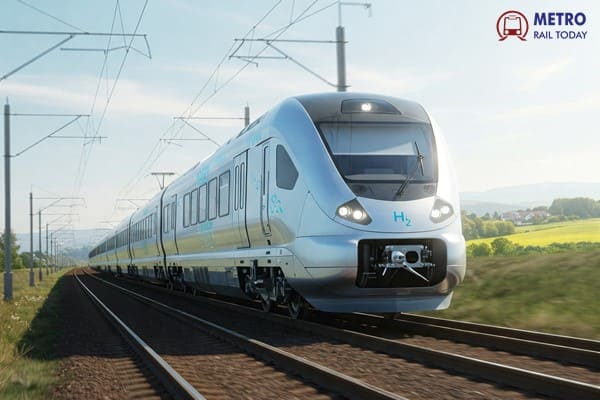
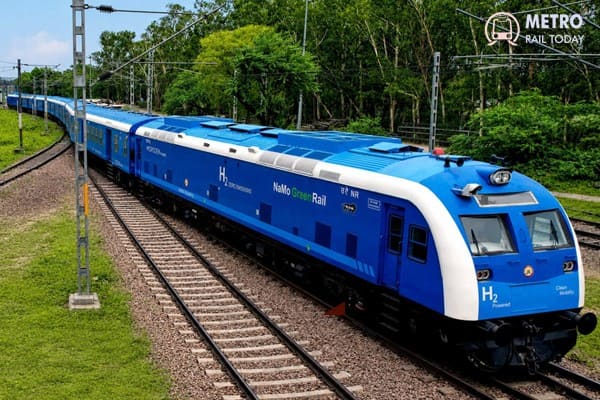 PM Narendra Modi flags off India’s First and World’s most powerful Hydrogen-Powered Rail Service
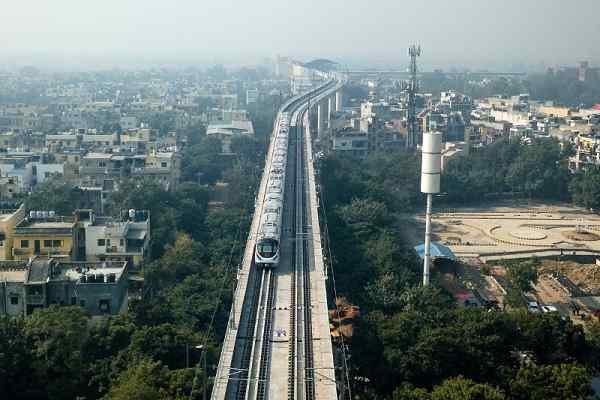 DMRC to study Double-Decker Flyover-cum-Metro Corridor for Delhi Metro Phase V Expansion
 RITES awarded ₹79.22 crore Consultancy Contract for Patna Metro Rail Project
 Pre-construction activities begins for 306 km Chennai–Bengaluru High Speed Bullet Train Corridor
 DMRC floats ₹18.97 crore Electrical Tender for Delhi Metro Red Line Extension to Kundli
 Bangalore Metro to launch ₹1,274 crore tender for Platform Screen Door Upgrade across 191 Stations
 AECOM-led JV bags Design Consultancy Contract for Chennai Metro Phase 1 Capacity Enhancement
 MoHUA proposes Housing above Delhi Metro Stations to promote Transit-Oriented Development
- Enhanced land compensation may increase Mumbai–Ahmedabad Bullet Train Project cost
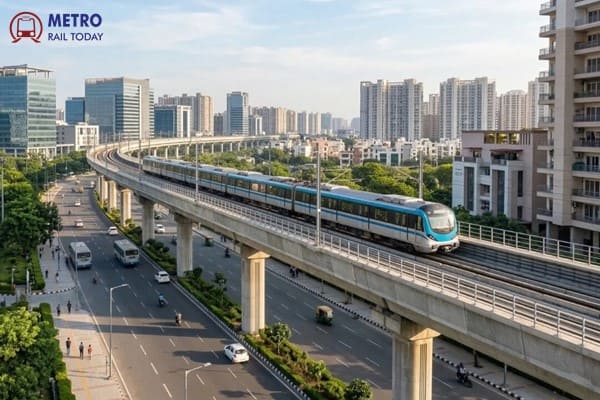 Assam Govt Cabinet approves four-phase Guwahati Metro Rail Project with ₹18,000 crore Investment
PM Narendra Modi flags off India’s First and World’s most powerful Hydrogen-Powered Rail Service
MRT Online Desk
Posted on: 2026-07-17 16:00:00
Viewer: 124
Comments: 0
Country: India
City: Jind
Jind, India (Metro Rail Today): Prime Minister Narendra Modi has inaugurated India's first hydrogen-powered train on the Jind–Sonipat route, marking a historic milestone in the country's transition towards clean and sustainable rail transportation. Describing it as the world's most powerful hydrogen train, the Prime Minister said the launch places India among a select group of nations pioneering hydrogen-powered railway technology.
The launch represents a significant advancement in Indian Railways' decarbonisation strategy and reinforces the government's commitment to adopting green technologies for achieving net-zero emissions and sustainable mobility.
India Joins Global Hydrogen Rail Leaders
Addressing a large public gathering in Jind, Prime Minister Modi noted that hydrogen-powered trains remain an emerging technology worldwide and that only a handful of countries have operational hydrogen rail services.
"Hydrogen trains have only recently arrived on the global stage. They came into existence just seven or eight years ago. Currently, only three or four countries possess the capability to operate hydrogen trains, and even in those nations, the technology is still in its early stages. Hearing about the capabilities of India's hydrogen train will fill every Indian with pride," the Prime Minister said.
The newly launched train is powered by a 3,200-horsepower hydrogen propulsion system, making it the most powerful hydrogen-powered train in the world. It is also India's longest hydrogen-powered train, demonstrating the country's growing capability in developing advanced railway technologies under the 'Make in India' initiative.
A New Era of Green Rail Mobility
Highlighting the evolution of railway technology over the centuries, Prime Minister Modi said the future of rail transportation would increasingly be driven by clean energy solutions.
"The 19th century belonged to steam engines, the 20th century to diesel and electric trains, and the 21st century will be defined by hydrogen-powered rail transport," he remarked.
Hydrogen-powered trains use hydrogen fuel cells to generate electricity, producing only water vapour as a by-product. The technology offers a zero-emission alternative for rail routes where full electrification may not be economically viable, while significantly reducing dependence on fossil fuels and lowering greenhouse gas emissions.
The launch aligns with India's broader National Green Hydrogen Mission, which seeks to position the country as a global leader in hydrogen production and clean energy technologies.
"The inauguration of India's first hydrogen-powered train is a landmark achievement for the country's railway sector and a major step towards sustainable mobility. Hydrogen technology has the potential to revolutionise rail transport by offering a clean, efficient and low-carbon alternative for future operations. This milestone demonstrates India's growing engineering capabilities and reinforces its commitment to developing world-class, environmentally responsible transportation infrastructure," said Mrs. Mamta Shah, MD & CEO of Urban Infra Group.
Indian Railways Nears Complete Electrification
During his address, the Prime Minister also highlighted the remarkable progress made in the electrification of Indian Railways over the past decade.
He noted that while railway electrification began in 1925, only about 30% of India's rail network had been electrified between 1925 and 2014. Over the past 12 years, however, nearly 99% of the Broad Gauge rail network has been electrified, with Haryana achieving 100% railway electrification.
According to the Prime Minister, the extensive electrification programme has significantly reduced India's dependence on imported diesel and enhanced the resilience of railway operations during periods of global geopolitical tensions and disruptions in fuel supply.
"The electrification of Indian Railways began in 1925. From 1925 to 2014, in nearly 90 years, only around 30 per cent of the country's rail network was electrified. In the last 12 years, about 99 per cent of India's rail network has been electrified. Haryana has achieved 100 per cent electrification. Because of this, even during global conflicts and oil crises, India's trains have continued to run without disruption," Modi said.
Driving the Future of Sustainable Rail Transport
The hydrogen train launch marks another important milestone in Indian Railways' modernisation journey, complementing ongoing initiatives such as the deployment of Vande Bharat trains, implementation of the Kavach automatic train protection system, station redevelopment programmes and network electrification.
As countries worldwide explore cleaner transportation technologies to combat climate change, India's successful introduction of hydrogen-powered rail services positions the nation among the global pioneers in next-generation railway innovation.
The Jind–Sonipat hydrogen train is expected to serve as a demonstration platform for future hydrogen-based railway operations, paving the way for wider adoption of zero-emission technologies across the Indian Railways network and contributing to the country's long-term vision of sustainable and energy-efficient transportation.

MRT Online Desk
Metro Rail Today is an authentic and global news provider for the Rail & Metro industry from and around the world.