

Trending Now
 RITES awarded ₹79.22 crore Consultancy Contract for Patna Metro Rail Project
 Pre-construction activities begins for 306 km Chennai–Bengaluru High Speed Bullet Train Corridor
 DMRC floats ₹18.97 crore Electrical Tender for Delhi Metro Red Line Extension to Kundli
 Bangalore Metro to launch ₹1,274 crore tender for Platform Screen Door Upgrade across 191 Stations
 AECOM-led JV bags Design Consultancy Contract for Chennai Metro Phase 1 Capacity Enhancement
 MoHUA proposes Housing above Delhi Metro Stations to promote Transit-Oriented Development
- Enhanced land compensation may increase Mumbai–Ahmedabad Bullet Train Project cost
 Assam Govt Cabinet approves four-phase Guwahati Metro Rail Project with ₹18,000 crore Investment
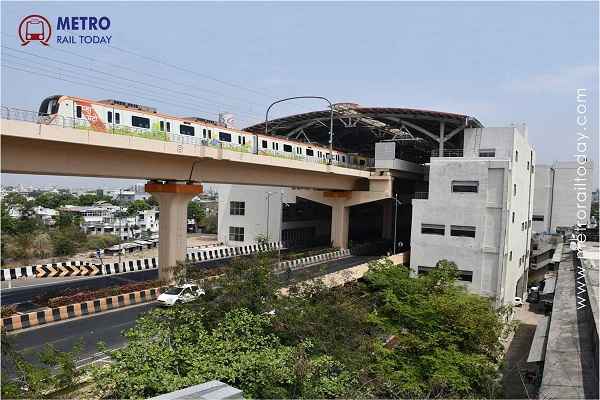 RITES awarded DPR Contract for 55-km Nagpur Metro Phase 3 Expansion with Four New Corridors
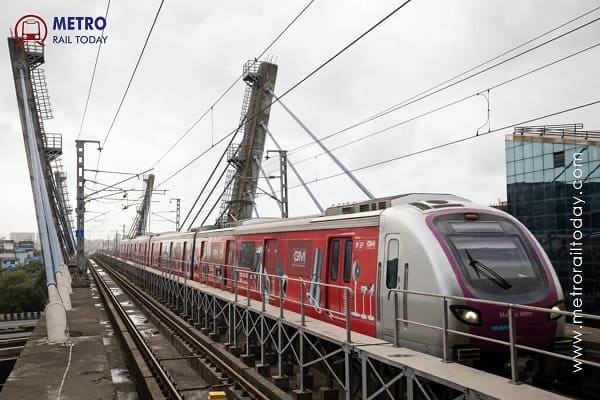 Mumbai Metro One secures ₹2,771 crore Debt Restructuring, Insolvency proceedings set to end
Pre-construction activities begins for 306 km Chennai–Bengaluru High Speed Bullet Train Corridor
MRT Online Desk
Posted on: 2026-07-14 17:00:00
Viewer: 141
Comments: 0
Country: India
City: New Delhi
New Delhi, India (Metro Rail Today): India has taken another significant step towards expanding its high-speed rail network beyond the Mumbai–Ahmedabad Bullet Train project, with the National High Speed Rail Corporation Limited (NHSRCL) inviting bids for pre-construction activities and updating the Detailed Project Report (DPR) for the proposed 306 kilometers long Chennai–Bengaluru High-Speed Rail (CBHSR) Corridor.
The tender marks a key milestone in the development of what is expected to become India's second high-speed rail corridor, reinforcing the country's commitment to building a modern, world-class rail transportation network capable of transforming intercity travel.
Tender Launched for Pre-Construction Studies
Issued under Tender No. NHSRCL/CBHSR/1276, the consultancy contract covers a wide range of technical investigations and engineering activities required before construction can commence.
The selected consultant will undertake alignment modifications, detailed alignment design, hydrology investigations, drone surveys, geotechnical investigations at major crossing locations, tunnel investigations and the preparation of General Arrangement Drawings (GADs) for river crossings, railway crossings, road crossings, tunnels and both elevated and underground stations.
The assignment has been scheduled for completion within 150 days, enabling NHSRCL to refine the project's engineering framework and prepare it for subsequent implementation stages.
The tender carries an earnest money deposit (EMD) of ₹14.50 lakh. An online pre-bid meeting is scheduled for 17 July 2026, while technical bids will be opened on 14 August 2026 following the submission deadline in August.
Strategic Corridor to Connect Chennai and Bengaluru
The proposed 306-kilometre Chennai–Bengaluru High-Speed Rail Corridor aims to provide seamless high-speed connectivity between Chennai, the capital of Tamil Nadu, and Bengaluru, Karnataka's technology and innovation hub.
The corridor is expected to significantly reduce travel time between the two metropolitan cities while strengthening economic integration, business connectivity and regional development across southern India. The project is also expected to support industrial growth along the Chennai–Bengaluru Industrial Corridor, one of India's most important manufacturing and logistics regions.
The Central Government has identified the Chennai–Bengaluru High-Speed Rail project as one of its priority infrastructure corridors in the Union Budget 2026, highlighting its strategic importance in the country's long-term transportation development agenda.
"The expansion of India's high-speed rail network represents a transformative investment in the country's future mobility ecosystem. Corridors such as Chennai–Bengaluru have the potential to strengthen regional economies, reduce travel time, promote sustainable transportation and accelerate industrial development. Comprehensive pre-construction studies and detailed engineering are critical to ensuring that such complex infrastructure projects are executed efficiently, safely and in line with global standards," said Mrs. Mamta Shah, MD & CEO of Urban Infra Group.
Technical Studies to Lay the Foundation
The scope of the consultancy extends beyond updating the existing DPR and includes generating the engineering and geotechnical data necessary for detailed design and future construction. The studies will assess geological conditions, optimise route alignment and evaluate engineering requirements for critical infrastructure such as tunnels, bridges and station structures.
Advanced technologies including drone-based surveys, hydrological assessments and detailed geotechnical investigations will be utilised to improve project planning and minimise construction risks during later phases.
The updated DPR will also help determine the final alignment, engineering specifications, construction methodology and implementation strategy for the proposed corridor.
Building India's High-Speed Rail Future
The Chennai–Bengaluru corridor forms part of India's broader vision to develop a national high-speed rail network connecting major economic centres through next-generation rail infrastructure. While the Mumbai–Ahmedabad High-Speed Rail Project remains under construction, the launch of pre-construction activities for the Chennai–Bengaluru corridor demonstrates the government's intent to expand bullet train connectivity to other high-growth regions.
High-speed rail is expected to play an increasingly important role in supporting economic development, reducing dependence on air and road transport for medium-distance travel and promoting sustainable mobility. Once operational, the Chennai–Bengaluru Bullet Train Corridor is expected to become a vital transportation link between two of South India's largest metropolitan regions, facilitating faster passenger movement, boosting tourism and strengthening industrial and commercial connectivity.
The latest tender represents an important early milestone in transforming the long-envisioned Chennai–Bengaluru High-Speed Rail Corridor from a proposal into a technically mature infrastructure project, bringing India one step closer to expanding its high-speed rail network beyond its first bullet train route.


MRT Online Desk
Metro Rail Today is an authentic and global news provider for the Rail & Metro industry from and around the world.