

Trending Now
 Siemens wins ₹91.65 crore Telecom Contract for Kochi Metro Phase 2 Pink Line
 GHV Infra wins ₹150 crore Civil Contract for Vasantkunj Depot of Lucknow Metro East-West Corridor
 Texmaco Rail wins ₹130 crore Track Contract for Kochi Metro Phase 2 Pink Line
 Indian Railways unveils Alignments and Routes of four new High Speed Bullet Train Corridors
 Telangana pushes for approval of ₹38,595 Crore Hyderabad Metro Phase-II Expansion
 Boston Consulting Group appointed to prepare 10 years Corporate Plan for Delhi Metro
 Exclusive Interview with Champak Panda, Managing Director, Rolling Stock & Components, Alstom India
 Delhi Metro invites Expression of Interests to manufacture Platform Screen Doors in India
 NMRC to appoint General Consultant for Noida-Greater Noida Aqua Line Metro Expansion
- NHSRCL launches Five Heavy Portal Beams on Mumbai-Ahmedabad Bullet Train Project
Kerala proposes RRTS as alternative to K-Rail Silver Line, Eyes faster clearances under Metro Policy
MRT Online Desk
Posted on: 2025-12-11 11:15:00
Viewer: 2,191
Comments: 0
Country: India
City: Thiruvananthapuram
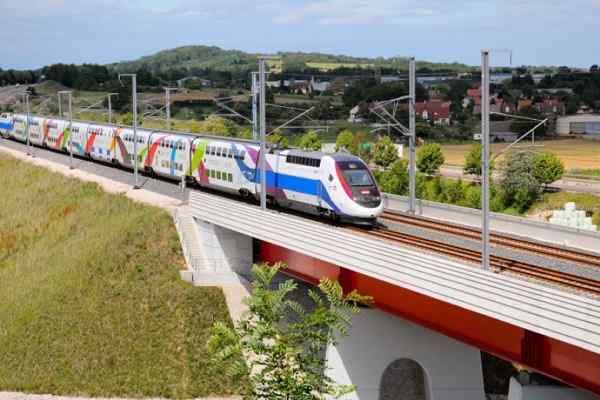
Thiruvananthapuram, India (Metro Rail Today): In a significant shift in its rail infrastructure strategy, the Government of Kerala is exploring a Regional Rapid Transit System (RRTS) as an alternative to the much-debated SilverLine (K-Rail) high-speed rail project. The proposed move signals a preference for a metro-style, semi–high-speed rapid transit system aimed at improving connectivity between major urban centres across the state.
According to officials, approval for RRTS projects falls under the Union Ministry of Housing and Urban Affairs (MoHUA). Since RRTS corridors are governed by the Metro Rail Act, the clearance and appraisal process is expected to be comparatively faster and less complex than projects routed through the Ministry of Railways.
RRTS model seen as more suitable for Kerala
The State Government believes that, instead of a full-fledged high-speed rail corridor, a high-frequency, regional rapid transit system would better suit Kerala’s dense urban fabric and travel patterns. As a result, a fresh Detailed Project Report (DPR) will need to be prepared for the proposed RRTS corridor.
The system is envisioned as a semi–high-speed rail corridor, offering significantly higher speeds than conventional rail but without the cost and complexity of bullet train-type infrastructure. Importantly, unlike the SilverLine project, the RRTS proposal does not require approval from the Railway Board.
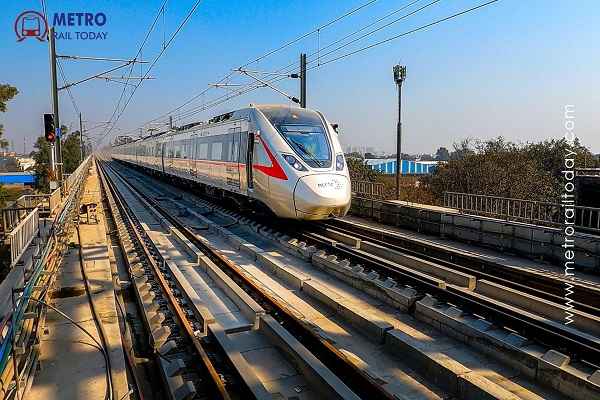
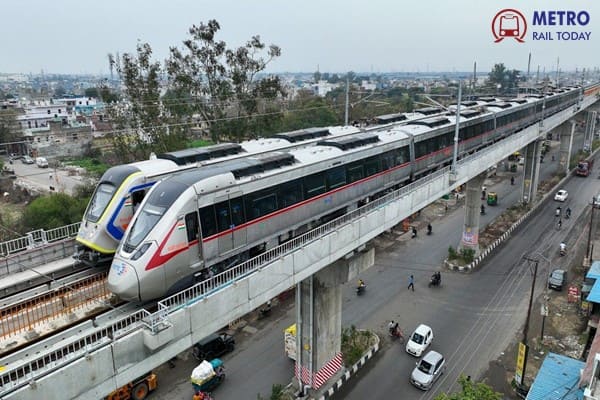
Kerala is closely studying the Delhi–Ghaziabad–Meerut RRTS (Namo Bharat)—an 82-km corridor under implementation by NCRTC—as a reference model for planning, execution, and operational design.
Independent alignment a key requirement
One of the defining features of the RRTS model is that it requires completely independent track infrastructure, separate from existing Indian Railways lines. This marks a departure from the SilverLine proposal, which had envisaged sharing certain sections of railway land.
Under RRTS norms, the entire alignment must avoid railway land, necessitating fresh land acquisition and corridor planning. While this adds challenges, officials believe it offers greater operational flexibility and avoids conflicts with existing rail traffic.
Funding and Central approval
Kerala will need to arrange its own funding for the proposed RRTS project. However, officials note that once Central government approval is obtained under the Metro framework, accessing institutional loans and multilateral funding would become feasible.
Compared to Railway Ministry-led projects, the procedural requirements for RRTS are seen as less cumbersome, with clearer project governance and faster decision-making.
Notably, Tamil Nadu has already initiated preliminary studies for three RRTS corridors, indicating growing interest among states in regional rapid transit solutions beyond conventional metros.
Railways pushes for capacity expansion of existing lines
Meanwhile, the Ministry of Railways has reiterated its focus on expanding existing rail infrastructure in Kerala through line doubling and additional tracks. According to Railways:
-
The DPR for Kasaragod–Shoranur third and fourth lines has been completed
-
Studies are underway for:
-
Shoranur–Palakkad–Coimbatore (3rd & 4th lines)
-
Ernakulam–Kottayam (3rd line)
-
Kayamkulam–Thiruvananthapuram (3rd line)
-
Thiruvananthapuram–Nagercoil (3rd line)
-
However, land acquisition along the existing rail corridor remains a major bottleneck. Railways has maintained that the State Government must provide land for these capacity expansion projects.
Commenting on Kerala’s evolving approach, Mrs. Mamta Shah, MD & CEO, Urban Infra Group, said: “RRTS offers a balanced middle path between conventional rail upgrades and high-speed rail. For a state like Kerala, with closely spaced urban centres and high daily commuter demand, a metro-style regional rapid transit system can deliver faster implementation, better ridership outcomes, and stronger economic returns compared to capital-intensive high-speed rail projects.”
The proposed RRTS for Kerala is still at a conceptual stage, with preparation of a new DPR being the first critical step. If pursued seriously, the project could mark a strategic reset in the state’s rail transport planning—focusing on practicality, phased implementation, and faster execution, while complementing ongoing Indian Railways capacity expansion works.

MRT Online Desk
Metro Rail Today is an authentic and global news provider for the Rail & Metro industry from and around the world.