

Trending Now
 MMRDA invites bids for ₹4,882 Crore Rolling Stock & Systems Contract for Mumbai Metro Line 12
 Kolkata Metro completes Aluminium Third Rail Upgrade on Blue Line
 Metroman E. Sreedharan submits new Blueprint for ₹54,000 Crore Kerala High Speed Rail Corridor
 Union Housing & Urban Affairs Minister Tokhan Sahu to inaugurate 6th RailTrans Expo 2026
 Maha Metro plans Six-Coach Trains ahead of Pune Metro Line 3 Launch
 Railway Ministry approves launch of India’s First Hydrogen-Powered Train on Jind–Sonipat Route
 Kineco Global Rail secures Interior Contract for new 100 Vande Bharat Sleeper Trains
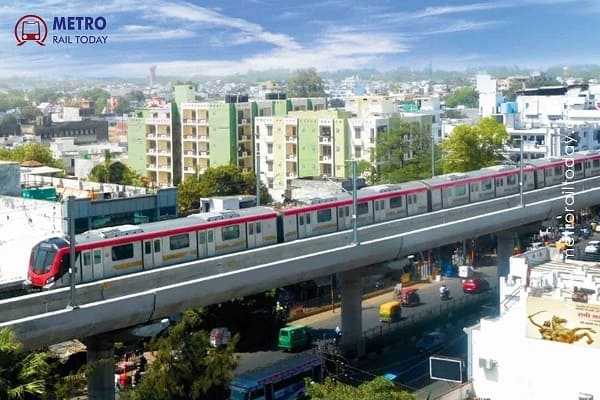 Ranjit Buildcon Wins ₹383.98 Crore Civil Contract for Lucknow Metro Phase 1B
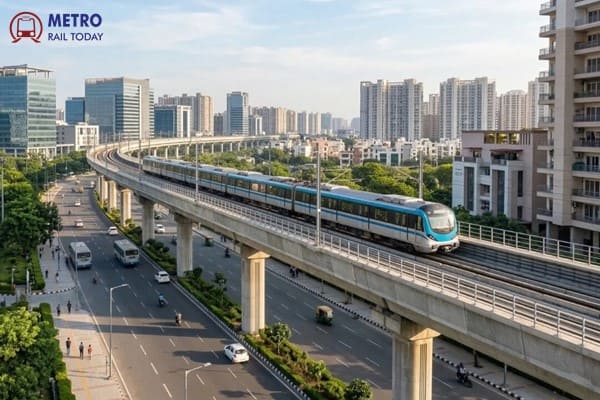 Tamil Nadu seeks Central Support for new Metro Rail Projects in Coimbatore, Hosur and Madurai
 Future Metro Control Centres: ST Engineering Transforms Command Rooms to Intelligent Nerve Centres
Madhya Pradesh plans to expand Indore Metro to Ujjain, Pithampur and Mhow
MRT Online Desk
Posted on: 2026-03-06 15:29:00
Viewer: 1,323
Comments: 0
Country: India
City: Indore
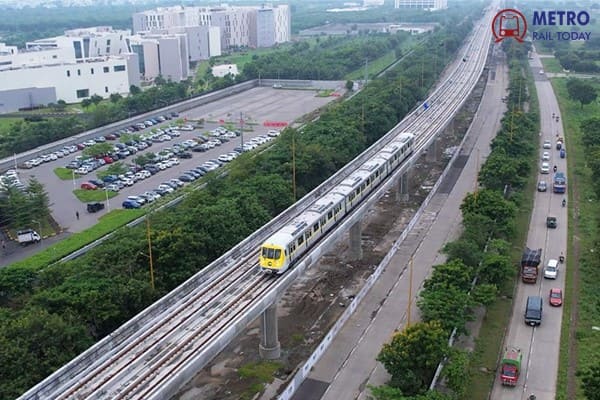
Indore, India (Metro Rail Today): Authorities are moving forward with plans to significantly expand the Indore Metro network to Ujjain, Pithampur, and Mhow, with surveys currently underway and a Detailed Project Report (DPR) being prepared for the proposed regional metro corridors.
According to officials associated with the project, the proposed network could extend around 90–95 kilometres, creating a major regional transit system connecting Indore with the industrial hub of Pithampur, the cantonment town of Mhow, and the religious city of Ujjain.
The Delhi Metro Rail Corporation (DMRC) has been tasked with conducting surveys and assisting in the preparation of the DPR. Several route revisions have reportedly been made during the planning stage following discussions among state and metro authorities.
The initial proposal focused on connecting Indore with Ujjain and Pithampur, but planners have now decided to further extend the network to include Mhow as well.
Under the revised plan, the metro corridor will run from Indore towards Ujjain, while another branch will extend towards Pithampur and Mhow, forming a regional metro system connecting key economic and religious centres in the region.
The expansion was first announced during a metro trial run in Gandhinagar in September 2023, when authorities proposed new metro routes linking Indore–Ujjain and Indore–Pithampur.
However, the preparation of the DPR has taken longer than expected due to multiple route revisions and technical assessments.
According to officials, the proposed metro alignment will be developed in a Y-shaped configuration to serve both Pithampur and Mhow efficiently.
The metro corridor will operate underground through densely populated urban areas of Indore and Ujjain, helping minimise land acquisition requirements and reduce disruption to city traffic.
The underground section in Indore is expected to run from Lavkush Square to Rajendra Nagar via Bada Ganpati.
From Rajendra Nagar to Pithampur, the alignment is planned to transition into an elevated corridor, which would reduce construction costs while enabling faster execution.
The Y-shaped branching from AB Road will allow trains to diverge towards Pithampur and Mhow, improving connectivity to both industrial and residential areas.
The metro extension between Indore and Ujjain was initially expected to be operational before the Simhastha Kumbh Mela in 2028, which draws millions of pilgrims to Ujjain.
However, delays in completing the survey and DPR preparation have pushed the project timeline further.
Officials indicated that even if the DPR is completed soon, the tendering process and contract award could take nearly a year, making it difficult to complete construction before the large-scale religious gathering.
Given the logistical challenges and the massive influx of visitors during Simhastha, authorities are informally considering starting construction on the Indore–Ujjain section only after the 2028 event.
Commenting on the development, Mrs. Mamta Shah, MD & CEO, Urban Infra Group, said that regional metro expansions connecting cities with industrial and religious importance can play a vital role in improving mobility and supporting economic growth.
“Regional metro systems that connect major cities with industrial clusters and pilgrimage destinations can significantly enhance mobility, reduce road congestion, and support tourism and economic development. Strategic planning of such corridors will be essential to ensure efficient integration with existing urban transport networks,” she said.
She added that integrating urban metro networks with regional transit corridors represents a growing trend in India’s evolving urban mobility planning.
While no formal announcement has been made yet, officials acknowledged that initiating major construction works before the event could disrupt city infrastructure and transport systems during the pilgrimage.

MRT Online Desk
Metro Rail Today is an authentic and global news provider for the Rail & Metro industry from and around the world.