


Trending Now
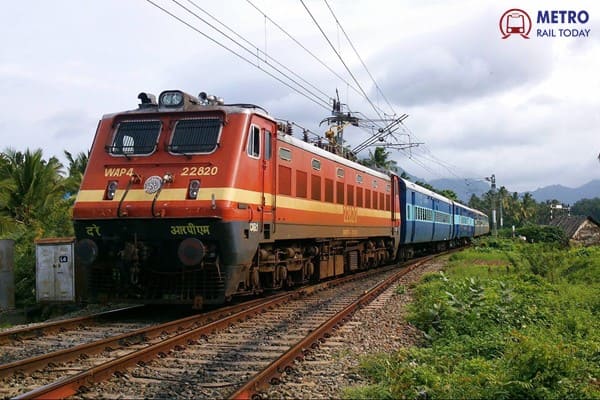 CLW sets Global Benchmark with record 800 Electric Locomotives production in FY 2025–26
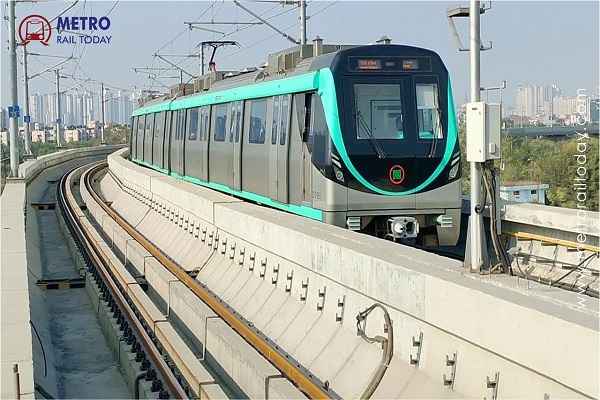 NMRC invites Applications for Key Executive Positions for Noida Metro Rail Project
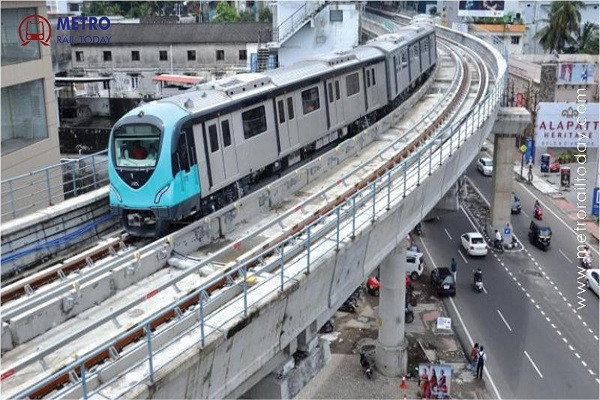 Central Govt rejects revised DPR of 7.5 km Noida-Greater Noida Metro Rail Extension Project
 Revised DPR of Prayagraj Metro focuses on seamless Rail-Air connectivity
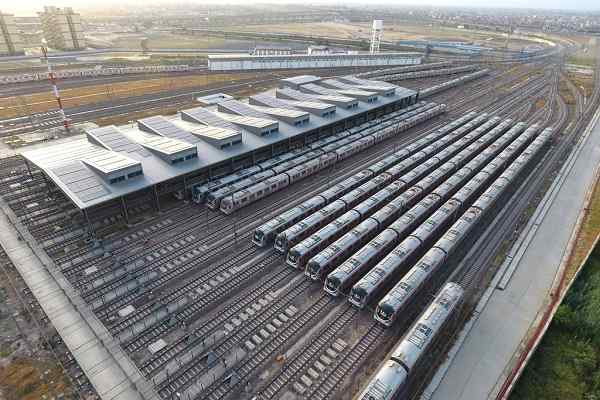 DMRC floats Tender for Central Vista Depot Design in Delhi Metro Phase V Expansion
 MMRDA seeks ₹14,100 Crore Loan for two upcoming Mumbai Metro Corridors
 Jupiter Wagons Eyes ₹20,000-Crore Mumbai Suburban Mega Rolling Stock Tender
 Mumbai Metro Chief Ashwini Bhide appointed as First Woman BMC Commissioner
 TBM ‘Parvati’ completes Underground Tunnelling on Kanpur Metro Phase 1 Project
 Surat Metro begins First Trial Run on 8.5 km Diamond Corridor between Dream City and Althan Tenement
Magenta Line to become longest and most interconnected Corridor of Delhi Metro Rail Network
MRT Online Desk
Posted on: 2026-02-10 14:00:00
Viewer: 539
Comments: 0
Country: India
City: New Delhi
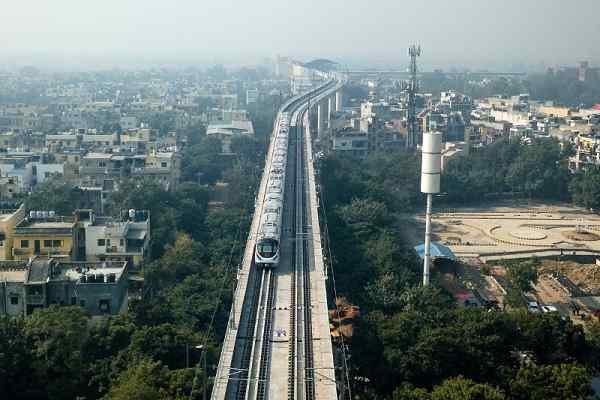
New Delhi, India (Metro Rail Today): The Magenta Line (Line-8) of the Delhi Metro is set to become the longest corridor in the network, featuring the highest number of interchange and underground stations. With the integration of recently sanctioned Phase V(A) works and ongoing Phase IV extensions, the corridor will significantly strengthen cross-city connectivity across the National Capital Region.
Under Phase V(A), the Magenta Line will be extended from Ramakrishna Ashram Marg to Indraprastha via the Central Vista corridor. Additionally, the Indraprastha–Inderlok stretch under Phase IV will now be implemented as an extension of the Magenta Line, consolidating multiple segments into a single, continuous corridor.
Once fully operational, the Magenta Line will span approximately 89 kilometres from Botanical Garden to Inderlok, making it the longest corridor in the Delhi Metro network. The entire stretch will function as a driverless metro line, reinforcing Delhi Metro’s leadership in advanced automation and next-generation urban mobility systems.
Upon completion, the corridor will feature a total of 21 interchange stations, the highest on any Delhi Metro line. Currently, the operational section includes four interchange stations at Kalkaji Mandir, Botanical Garden, Janakpuri West, and Hauz Khas. An additional 17 interchange stations will be added under Phase IV and Phase V(A), including Kalindi Kunj, Chirag Delhi, Terminal-1 IGI Airport, Peeragarhi, Pitampura (Madhuban Chowk), Haiderpur Badli Mor, Majlis Park, Azadpur, Pulbangash, Nabi Karim, Ramakrishna Ashram Marg, Shivaji Stadium, Central Secretariat, Indraprastha, Delhi Gate, New Delhi, and Inderlok. Among these, Central Secretariat, Azadpur, New Delhi, and Inderlok will serve as triple interchange hubs, further strengthening network integration.
The expanded corridor from Botanical Garden to Inderlok will comprise 65 stations, of which 40 will be underground. The high proportion of underground sections reflects the complexity of constructing metro infrastructure through densely built urban areas and heritage-sensitive zones.
The Magenta Line is already distinguished by two major engineering landmarks within the Delhi Metro system. Haiderpur Badli Mor station is the highest elevated station in the network, with a rail level height of approximately 28.362 metres. In contrast, Hauz Khas station stands as the deepest underground metro station at around 29 metres below ground level. These structural extremes highlight the corridor’s engineering sophistication and technical challenges.
The extensive interchange network along the Magenta Line is expected to substantially reduce travel time, decongest key corridors, and enable seamless end-to-end journeys across Delhi and adjoining NCR regions.
Commenting on the development, Mrs. Mamta Shah, MD & CEO, Urban Infra Group, said, “The transformation of the Magenta Line into Delhi Metro’s longest and most interconnected corridor represents a major leap in integrated urban mobility planning. High-density interchange networks combined with driverless operations will significantly enhance commuter convenience while optimising network capacity. Such expansions demonstrate how strategic corridor consolidation can reshape metropolitan connectivity.”
With Phase IV and Phase V(A) moving forward, the Magenta Line is poised to emerge as the backbone of Delhi Metro’s evolving network, setting new benchmarks in scale, automation, and multimodal integration.


MRT Online Desk
Metro Rail Today is an authentic and global news provider for the Rail & Metro industry from and around the world.