

Trending Now
 DMRC seeks opportunity to take up operation and maintenance of the Kochi Metro Rail network
 New Zealand opens country's first Underground City Rail Link in Auckland
 Ireland approves construction of €15.7 billion Dublin MetroLink, tender to be launched soon
 India's Mumbai-Ahmedabad Bullet Train project completes construction of over 365 km Viaduct
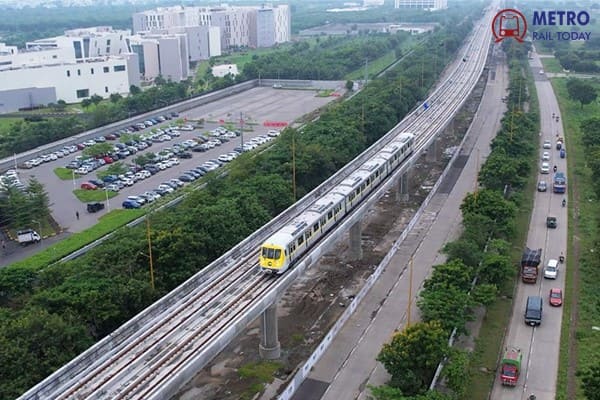 Metro Rail Expansion in India: 1,155 Km Network Across 26 Cities and the Road Ahead
 Mumbai BKC Pod Taxi project faces Architects’ concerns over cost, capacity and environment
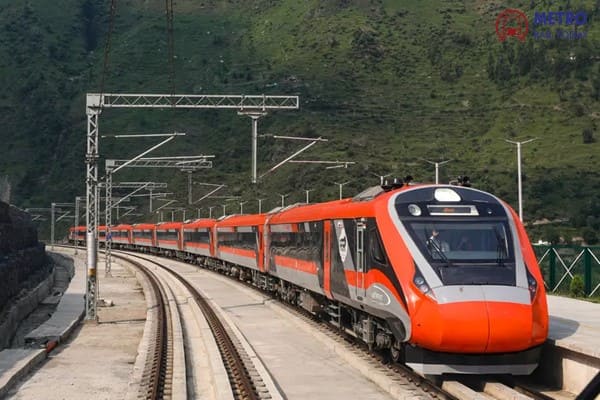 Railway Ministry approves ₹383.78 crore Vande Bharat Maintenance Depot at Tatanagar
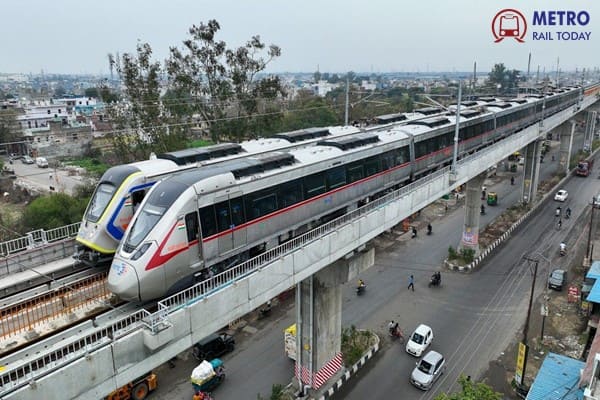 NCRTC announces Mega Recruitment Drive for Supervisors, IT, O&M and Technical Staff
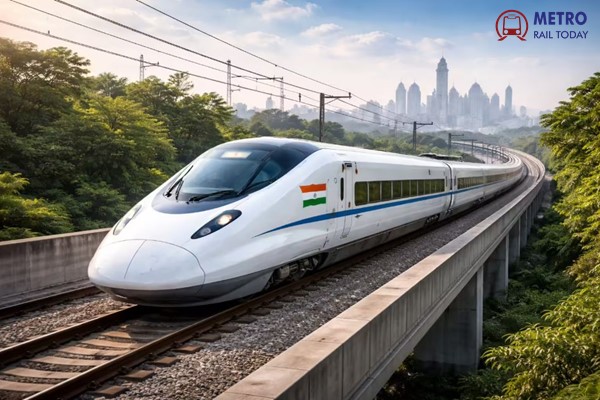 BEML wins ₹5,432 crore Rolling Stock Contract for Mumbai-Ahmedabad Bullet Train Project
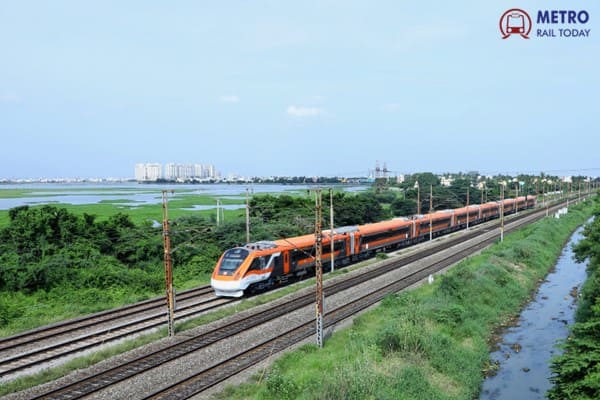 BHEL and Titagarh to create a Joint Venture for 35-year Vande Bharat Sleeper Trainset Maintenance
Metro Rail Expansion in India: 1,155 Km Network Across 26 Cities and the Road Ahead
India’s metro rail network is only 216 km short of United States
Dr. Vinod Shah
Posted on: 2026-09-07 07:25:00
Viewer: 117
Comments: 0
Country: India
City: New Delhi
India’s metro rail sector has undergone a remarkable transformation over the past four decades, evolving from a single urban rail system in Kolkata into a nationwide network spanning more than 1,155 km across 26 cities. With hundreds of kilometres of new corridors under construction, rising passenger numbers and growing adoption of advanced urban mobility solutions, metro rail is emerging as one of the most important pillars of India’s public transport infrastructure.
India’s metro rail journey began in Kolkata in 1984, when the country’s first metro service commenced operations. At that time, metro rail was viewed primarily as a solution for the transport challenges of a handful of India’s largest and most densely populated cities. Four decades later, the sector has become an important component of the country’s broader urban infrastructure strategy.
According to government data cited in recent reports, India had only around 248 km of operational metro network across five cities in 2014. By March 2026, the operational network had expanded to approximately 1,155 km across 26 cities, placing India among the countries with the largest operational metro networks in the world.
The transformation represents not merely an increase in track kilometres but a fundamental change in the way Indian cities approach urban mobility. Metro systems are increasingly being planned as part of integrated public transport networks connecting residential areas, business districts, railway stations, airports, suburban areas and emerging urban centres.
From Kolkata to a National Metro Network
Kolkata's metro was the beginning of India's modern urban rail story. For several years, however, metro development remained concentrated in a limited number of cities. The commissioning and subsequent expansion of the Delhi Metro fundamentally changed the country's approach to urban rail.
Delhi Metro demonstrated that a large-scale, modern rapid transit system could become an integral part of everyday urban life in an Indian city. Its expansion across Delhi and the National Capital Region subsequently provided a model for other cities considering metro rail as a solution to congestion, pollution and increasing travel demand.
By 2014, metro rail operations were present in only five Indian cities, covering approximately 248 km. Since then, the network has expanded rapidly, reaching cities across different geographical regions and economic categories.
Metro systems are now operational in cities including Delhi, Bengaluru, Mumbai, Hyderabad, Chennai, Kolkata, Kochi, Ahmedabad, Jaipur, Lucknow, Nagpur, Pune, Kanpur, Agra, Bhopal and Indore, among others.
The expansion has also increasingly moved beyond India's traditional metropolitan centres. The emergence of metro systems in cities such as Kanpur, Agra, Nagpur, Lucknow, Bhopal and Indore demonstrates the growing role of mass rapid transit in Tier-II and emerging urban centres.
India’s Metro Network Crosses 1,155 Km
The scale of India's metro expansion becomes clearer when the present network is compared with the situation in 2014.
From approximately 248 km across five cities in 2014, the operational network reached around 1,155 km across 26 cities by March 2026. This represents more than a four-fold increase in operational metro length within roughly a dozen years.
The number of cities served has also increased substantially. Metro rail is no longer confined to Delhi, Mumbai, Kolkata, Chennai or Bengaluru. It has become part of the mobility planning of a much wider range of Indian cities.
Bhopal became the 26th Indian city with an operational metro network when passenger services commenced in December 2025. At that point, India's total operational metro network had reached approximately 1,090 km.
The subsequent opening of additional infrastructure, including the latest expansion in Indore, has taken the national network beyond the 1,155-km mark.
This geographical diversification is important because India's urbanisation is no longer concentrated exclusively in the country's largest metropolitan regions. Medium-sized cities are also experiencing rapid population growth, expansion of commercial activity and increasing private vehicle ownership.
Metro rail is therefore increasingly being considered as a long-term infrastructure investment rather than merely a solution for existing congestion.
Metro Construction Pace Accelerates
One of the most significant developments in India's metro story has been the increase in the rate at which new corridors are being commissioned.
Government data indicates that the average rate of metro commissioning increased from around 0.68 km per month before 2014 to nearly 6 km per month during the subsequent period.
This change reflects the increasing institutional and technical capacity of India's urban rail ecosystem.
The country has developed a substantial domestic ecosystem comprising metro rail corporations, engineering companies, rolling stock manufacturers, signalling and telecommunications companies, electrical equipment suppliers, construction firms, consultants and specialised technology providers.
Indian companies have also increasingly participated in the design, manufacture and supply of metro rail equipment, supporting the government's broader objectives of domestic manufacturing and infrastructure development.
The development of standardised technologies, improved project management practices and greater experience among implementing agencies have also contributed to the expansion of metro construction.
Passenger Ridership Crosses 1.15 Crore Daily
The success of metro rail cannot be measured solely by the length of track constructed. Passenger ridership provides another important measure of the sector's growing relevance.
Government figures indicate that India's daily metro ridership has increased from approximately 28 lakh passengers in 2013-14 to more than 1.15 crore passengers in 2026.
This growth reflects the increasing dependence of urban residents on rapid transit systems for daily commuting.
For established systems such as Delhi Metro, metro rail has become an important component of everyday mobility. Millions of passengers use the network to travel between residential areas, employment centres, educational institutions, commercial districts and transport hubs.
Newer metro systems, however, face a different challenge. Passenger demand generally takes time to develop as networks expand, interchange stations become operational and passengers become accustomed to using public transport for regular journeys.
This makes network connectivity particularly important.
A single metro corridor may provide limited utility if it remains isolated from other modes. Its effectiveness increases considerably when passengers can easily transfer between metro, bus, suburban rail, regional rail, walking, cycling, taxis and other forms of transport.
Delhi-NCR Remains India’s Largest Metro Hub
While metro systems have spread across the country, Delhi-NCR remains at the centre of India's urban rail landscape.
The Delhi Metro network extends across Delhi and parts of neighbouring Haryana and Uttar Pradesh, connecting a large number of residential, commercial and employment centres.
Its importance goes beyond the physical length of the network. Delhi Metro has become an example of how a large urban rail system can operate as a regional mobility platform rather than merely as a city-level transport service.
The wider Delhi-NCR region is also witnessing the development of other forms of rapid and regional transit, creating the possibility of a more interconnected urban and regional rail ecosystem.
Other major metropolitan regions are following their own expansion trajectories.
Bengaluru, Mumbai, Chennai, Hyderabad and Kolkata are expanding their networks, while cities such as Pune, Ahmedabad, Nagpur and Lucknow are adding new corridors and extensions.
The overall direction indicates a shift from isolated metro projects towards larger network-based urban mobility systems.
Tier-II Cities Become the New Growth Frontier
Perhaps one of the most important changes in India's metro sector is the increasing participation of Tier-II cities.
Cities such as Kanpur, Agra, Bhopal and Indore represent a new phase of India's metro expansion. These cities do not have the population scale of Delhi or Mumbai, yet they face growing challenges related to urbanisation, traffic congestion and increasing travel demand.
The expansion of metro rail into such cities demonstrates the government's attempt to develop mass transit infrastructure ahead of future urban growth.
However, the experience of Tier-II cities also highlights the importance of appropriate project planning.
Metro systems require significant capital investment, and their long-term effectiveness depends on ridership, network integration, operating efficiency and the ability to connect high-demand corridors.
The objective is therefore not simply to build metro infrastructure but to create sustainable urban mobility systems.
Indore Provides a Snapshot of the Next Phase
The recent expansion of the Indore Metro illustrates the changing geographical profile of India's metro sector.
On September 5, 2026, Union Minister for Housing and Urban Affairs Manohar Lal inaugurated the city's Priority Corridor-2.
The newly opened section is approximately 11 km long with 11 stations and was developed at an estimated cost of around ₹2,850 crore.
Following the opening, Indore's operational metro network expanded to approximately 17 km with 16 stations. The cumulative project cost of the city's metro network is estimated at around ₹4,370 crore, according to government information.
Indore's development is significant because it represents the emergence of a modern rapid transit system in a major Tier-II urban centre.
The city has experienced rapid economic and physical growth over the past several years. A mass rapid transit system can provide an alternative to increasing dependence on private vehicles while supporting connectivity between residential and commercial areas.
The Indore experience could also provide useful lessons for other growing Indian cities considering metro rail investments.
Hundreds of Kilometres Under Construction
India's metro expansion is far from complete.
The Ministry of Housing and Urban Affairs' metro dashboard lists approximately 791 km of metro lines under construction across 27 cities.
This substantial construction pipeline indicates that the country's operational network could expand significantly over the coming years.
Major construction activity is taking place in and around several established metro cities, including Delhi, Bengaluru, Mumbai, Chennai, Pune and Kochi, while projects are also progressing in emerging metro cities such as Bhopal and Indore.
The pipeline includes extensions of existing systems as well as the development of new corridors.
For established networks, extensions can improve network density and create additional interchange opportunities. For newer systems, the construction of additional corridors is essential for moving from isolated lines towards integrated networks.
However, the actual commissioning schedule for individual projects depends on factors including land acquisition, construction progress, utility shifting, financing, statutory approvals, contractor performance and other project-specific conditions.
Budgetary Support Has Increased
The expansion of metro infrastructure has been accompanied by a significant increase in government financial support.
According to government data, annual budgetary support for metro-related infrastructure increased from approximately ₹5,798 crore in 2013-14 to ₹29,550 crore in 2025-26.
This increase reflects the growing importance attached to urban public transport within India's infrastructure development agenda.
Metro projects are capital-intensive and typically require substantial investment in civil structures, stations, depots, rolling stock, signalling, telecommunications, electrical systems and other infrastructure.
The financing structure can vary from one project to another and may involve central government support, state government contributions, multilateral financing institutions, loans and other funding mechanisms.
As India's metro footprint expands, financial sustainability will become increasingly important.
Namo Bharat Adds a Regional Dimension
India's urban rail transformation is no longer limited to conventional metro systems.
The introduction of the Namo Bharat Regional Rapid Transit System (RRTS) has created another layer in the country's public transport ecosystem.
The Delhi-Meerut Namo Bharat corridor, which began operations in October 2023, has introduced a regional rapid transit model intended to connect major urban centres with surrounding cities and towns.
The system is designed for speeds of up to 160 kmph, allowing it to serve a different mobility requirement from conventional urban metro systems.
The distinction is important.
Metro rail primarily serves frequent urban journeys, with stations generally located relatively close together. Regional rapid transit is intended to facilitate faster movement between major urban centres and surrounding settlements.
Together, these systems can form a hierarchy of urban and regional mobility, with different rail modes serving different journey lengths and travel patterns.
India’s Urban Mobility Ecosystem Is Becoming More Diverse
India's transport transformation is also extending beyond conventional metro rail.
In 2024, Kolkata Metro opened India's first underwater metro tunnel beneath the Hooghly River, creating a major engineering milestone for the country's urban rail sector.
At the same time, Kochi Water Metro introduced a water-based public transport model connecting islands and mainland areas through a network of passenger ferry services integrated with the city's broader mobility system.
These developments illustrate the increasing diversity of India's urban transport solutions.
The future of urban mobility may not depend on one mode alone. Metro rail, regional rapid transit, suburban rail, buses, water transport, walking and cycling can complement one another when properly integrated.
The objective should be to create a seamless mobility ecosystem in which passengers can choose the most appropriate mode for different stages of their journey.
Metro Rail and the Changing Face of Urban Infrastructure
The expansion of metro rail is also influencing the development pattern of Indian cities.
Metro corridors can improve accessibility to employment centres, educational institutions, commercial districts and major transport hubs. Transit-oriented development around stations can further encourage higher-density development and reduce dependence on private vehicles when supported by appropriate urban planning.
Metro stations are increasingly being conceived not merely as boarding and alighting points but as important nodes within the urban environment.
The integration of commercial development, pedestrian infrastructure, feeder buses, parking facilities and other mobility services can improve the overall passenger experience.
However, this requires coordination between metro agencies, municipal corporations, development authorities, transport departments and other stakeholders.
The Importance of Last-Mile Connectivity
One of the biggest challenges facing India's metro expansion is the journey between the passenger's origin or destination and the metro station.
A passenger may be willing to use a metro for a 15-km journey but may avoid it if reaching the station requires an inconvenient or expensive additional trip.
This makes last-mile connectivity a critical component of metro planning.
Feeder buses, e-rickshaws, shared mobility, cycling infrastructure, pedestrian-friendly streets and integrated parking can help increase the catchment area of metro stations.
Station-area planning is therefore as important as the construction of the railway itself.
The future success of India's metro networks will depend increasingly on how effectively these systems are connected with the rest of the urban transport ecosystem.
Digital Technology and Modern Metro Operations
Technology is another important dimension of India's metro expansion.
Modern metro systems increasingly rely on advanced signalling, automated fare collection, passenger information systems, platform safety technologies, telecommunications, surveillance systems and data-driven operations.
The continued development of indigenous railway and metro technologies can potentially reduce dependence on imported systems while creating opportunities for Indian manufacturers and technology companies.
The growing domestic metro market also provides a large-scale environment for testing and deploying new technologies.
Artificial intelligence, predictive maintenance, digital twins, automated inspection, energy management and data analytics could play an increasing role in future metro operations.
Sustainability Becomes Increasingly Important
Metro rail is generally positioned as a mass public transport solution capable of moving large numbers of passengers more efficiently than individual private vehicles.
As Indian cities become more densely populated, the environmental dimension of urban transport is becoming increasingly important.
Metro systems can help reduce dependence on private vehicles when they offer convenient, reliable and affordable alternatives.
Energy-efficient rolling stock, regenerative braking, renewable energy, efficient station systems and improved operational practices can further strengthen the sustainability profile of metro networks.
However, sustainability must also be considered from a project lifecycle perspective, including construction materials, energy consumption, maintenance requirements and financial viability.
India’s Metro Industry Is Creating a Larger Domestic Ecosystem
The rapid growth of metro infrastructure is creating opportunities across the wider rail and urban mobility supply chain.
The demand extends beyond rolling stock to include bogies, wheelsets, traction systems, signalling, telecommunications, platform screen doors, escalators, elevators, track systems, electrical equipment, station systems, civil engineering, tunnel construction, consultancy, project management and maintenance services.
This expanding ecosystem is also aligned with India's broader push towards domestic manufacturing and infrastructure localisation.
Indian companies are increasingly participating in metro projects not only as contractors but also as technology providers, equipment manufacturers and system integrators.
The growth of the domestic market can potentially strengthen India's capabilities for exporting rail and metro expertise to international markets.
The Challenge Is No Longer Only Building More Kilometres
India's metro transformation is impressive in terms of physical expansion, but the next stage will require a broader definition of success.
Adding kilometres remains important, particularly in rapidly growing cities. But the value of those kilometres ultimately depends on whether passengers use the system, whether the network connects important destinations and whether it integrates effectively with other forms of transport.
Ridership, network connectivity, affordability, reliability, accessibility, safety, last-mile connectivity and financial sustainability will become increasingly important measures of metro performance.
There is also a need to balance ambitious expansion with realistic demand assessments and sustainable financing.
A metro system is a long-term infrastructure asset. Its planning horizon extends well beyond the date on which a particular corridor is inaugurated.
Towards Integrated Urban Mobility
India's urban transport landscape is moving towards a multi-layered system.
Conventional metro systems are serving intra-city travel. Namo Bharat RRTS is addressing regional connectivity. Suburban rail continues to serve high-volume commuter corridors. Water Metro provides an alternative in geographically fragmented urban areas. Bus rapid transit, electric buses, walking and cycling can complement rail-based modes.
The challenge is to integrate these systems.
Passengers should ideally be able to move between different modes through convenient interchanges, integrated ticketing, coordinated schedules and easily accessible passenger information.
The concept of Mobility as a Service (MaaS) could become increasingly relevant as digital platforms bring different transport modes together.
A New Chapter in India’s Metro Story
India's metro rail journey has travelled a remarkable distance since the first train ran in Kolkata in 1984.
From a modest network of approximately 248 km across five cities in 2014, India has developed an operational metro network of around 1,155 km across 26 cities by 2026. Daily ridership has grown from approximately 28 lakh passengers in 2013-14 to more than 1.15 crore, while hundreds of kilometres of additional lines remain under construction.
The numbers demonstrate the scale of India's urban rail transformation.
But the next chapter will be defined by more than the length of the network.
The central challenge for India's metro sector will be to make each kilometre more productive, better connected and more useful to passengers. Metro stations will need to connect seamlessly with buses and other modes. New corridors will need to generate sustainable ridership. Cities will need to plan development around public transport rather than treating rail infrastructure as an isolated project.
India has already demonstrated that it can build metro networks at a much faster pace than in the past. The next opportunity is to create integrated, accessible, passenger-focused and financially sustainable urban mobility systems.
From Kolkata's first metro line to today's nationwide network, India's metro story has evolved from an experiment in urban transportation into a central element of the country's infrastructure and urban development strategy.
With major projects under construction and new cities entering the metro map, the country's urban rail transformation is still in its relatively early stages. The coming decade could therefore prove just as significant as the remarkable expansion witnessed since 2014.


Dr. Vinod Shah
Dr. Vinod Shah is an experienced urban transport journalist, blogger and key opinion leader.