

Trending Now
 Alstom to deploy DTG Signalling System for Jaipur Metro’s 5.2-km Phase-1 Extension
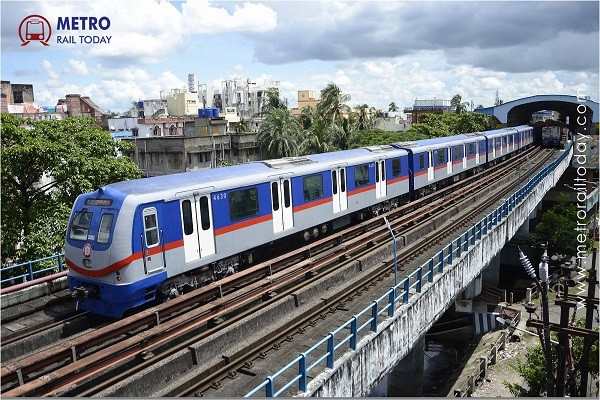 RVNL floats ₹297.45-crore Power Systems Tender for Kolkata Metro Purple Line
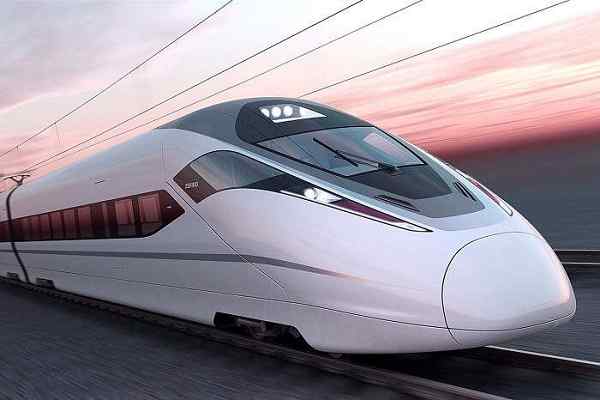 Siemens Mobility awarded $772 million Trainset Contract for California High-Speed Rail Project
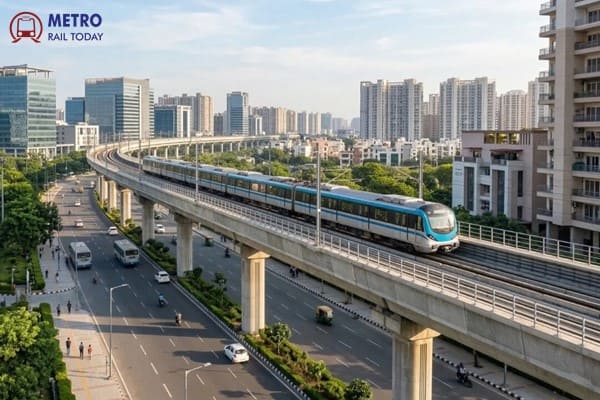 RITES submits fresh DPR to UPMRC for ₹12,000 crore Prayagraj Metro Rail Project
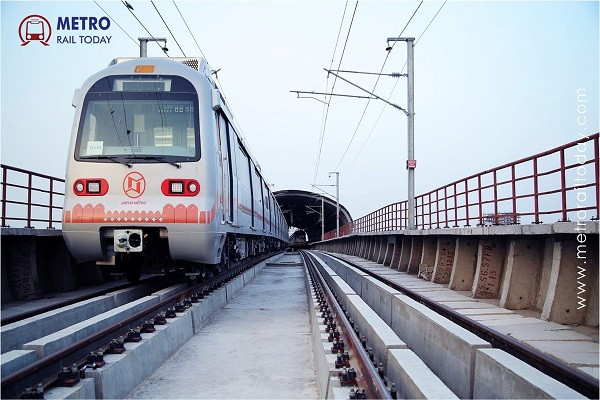 Paras Railtech wins ₹84.72 crore Ballastless Track Contract for Jaipur Metro Rail Project
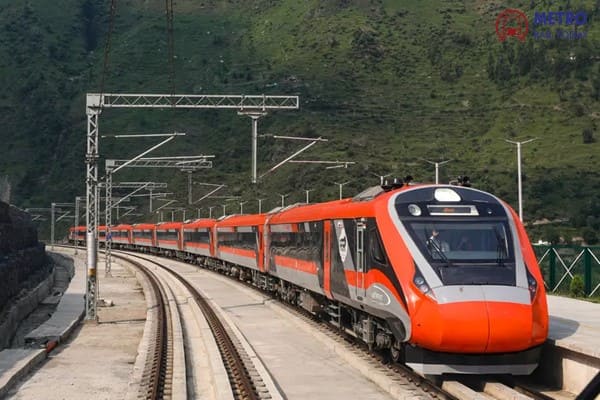 Indian Railways announces 3,548 Graduate-Level Vacancies under NTPC Recruitment 2026
 European Union sanctions €10 million to support extension of Hanoi Metro Line 3
 GMRC issues ₹683 crore Tender for construction of 8.68 km stretch for Ahmedabad Metro
- GMRC launches ₹439 crore Tender for construction of 5 New Ahmedabad Metro Stations
 Global tender issued for procurement of 60 Rolling Stock coaches for Hyderabad Metro Rail Project
BHEL and Titagarh to create a Joint Venture for 35-year Vande Bharat Sleeper Trainset Maintenance
MRT Online Desk
Posted on: 2026-09-15 16:45:00
Viewer: 1,139
Comments: 0
Country: India
City: New Delhi
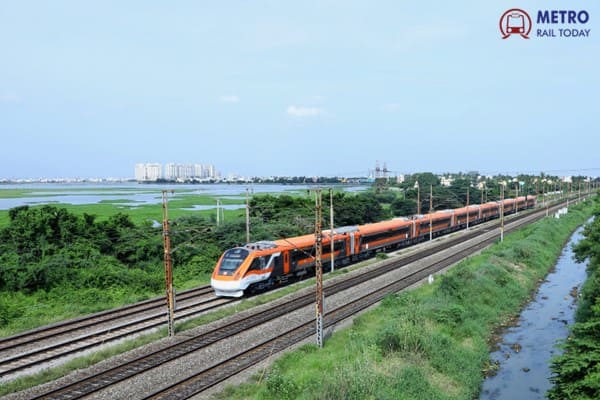
New Delhi, India (Rail & Metro Today): Bharat Heavy Electricals Limited (BHEL) and Titagarh Rail Systems Limited (TRSL) have signed a Joint Venture Agreement to establish a dedicated company for the comprehensive maintenance of Vande Bharat Sleeper trainsets for 35 years.
The agreement was signed on September 15, 2026, according to a regulatory filing by BHEL. The proposed joint venture will combine the technical and operational capabilities of both companies to provide long-term lifecycle support for the Vande Bharat Sleeper trainsets supplied under their associated programme.
The partnership represents another development in India's expanding railway rolling stock ecosystem, where long-term maintenance, reliability and lifecycle management are becoming increasingly important alongside train manufacturing.
50:50 Joint Venture to Be Established
The proposed joint venture company will be equally owned by BHEL and Titagarh Rail Systems, with each company holding a 50% stake.
The JVC is yet to be incorporated and is proposed to be established as a private limited company with an initial paid-up share capital of ₹50 lakh. Its registered office will be located in Delhi.
Under the proposed governance structure, BHEL and TRSL will each nominate two directors to the board of the joint venture company.
Once incorporated, the JVC will undertake comprehensive maintenance activities for the supplied Vande Bharat Sleeper trainsets throughout their contractual service period.
35-Year Lifecycle Maintenance Commitment
The long-term maintenance arrangement is a significant element of the Vande Bharat Sleeper trainset programme. Instead of focusing solely on manufacturing and delivery, the partnership establishes a framework for supporting the trains throughout their operational lifecycle.
Comprehensive maintenance is expected to cover activities required to maintain the operational readiness, safety, reliability and performance of the trainsets over the 35-year period.
Such long-duration maintenance contracts require manufacturers and technology partners to maintain a sustained capability for inspection, preventive maintenance, repair, component management and technical support.
According to Titagarh Rail Systems, the agreement strengthens its association with the Vande Bharat programme and reflects its focus on supporting rolling stock throughout its operational lifecycle.
“This agreement marks an important milestone in Titagarh's journey and further strengthens our association with the Vande Bharat programme. Our commitment goes beyond designing and manufacturing modern rolling stock, as we believe in supporting our customers and our products throughout their operational lifecycle. This 35-year maintenance commitment reflects the trust placed in our people, capabilities and processes, and our readiness to provide long-term lifecycle support across our rolling stock programmes,” Titagarh Rail Systems said.
BHEL and Titagarh Combine Technical Capabilities
The proposed JV brings together two Indian engineering and railway manufacturing companies with complementary capabilities.
BHEL has extensive experience in electrical equipment, traction systems, power electronics and railway applications, while Titagarh Rail Systems has established capabilities in passenger coaches, railway rolling stock and metro systems.
The combination of these capabilities could support a comprehensive approach to trainset maintenance, particularly as Vande Bharat Sleeper trains incorporate advanced propulsion, electrical, passenger information, braking, safety and onboard systems.
According to Mrs. Mamta Shah, MD & CEO, Urban Infra Group, long-term maintenance arrangements are becoming increasingly important as India expands its modern rolling stock fleet.
“The proposed BHEL-Titagarh joint venture highlights an important shift in India's railway industry from asset manufacturing towards complete lifecycle management. A 35-year maintenance commitment places strong emphasis on reliability, preventive maintenance, spare-parts planning and long-term technical capability. Such arrangements can help ensure that modern trainsets deliver consistent performance throughout their operational life while strengthening India's domestic railway service ecosystem.”
Supporting the Vande Bharat Sleeper Programme
The Vande Bharat Sleeper programme is being developed to extend the Vande Bharat platform to longer-distance overnight passenger services.
Compared with the chair-car configuration, sleeper trainsets are designed to provide berths and facilities suited to longer journeys. The programme forms part of Indian Railways' wider effort to modernise passenger rolling stock and improve onboard comfort, safety and operational performance.
The maintenance capability created through the BHEL-Titagarh partnership will therefore be important as sleeper trainsets enter regular service and accumulate substantial operational mileage.
Long-term maintenance also provides manufacturers with valuable operational data that can be used to improve reliability, component life and maintenance planning over time.
Growing Importance of Lifecycle Support
Modern railway systems increasingly depend on lifecycle support rather than simply the initial delivery of rolling stock. Trainsets incorporate sophisticated propulsion equipment, braking systems, control electronics, communication systems and passenger amenities, all of which require systematic maintenance.
A 35-year maintenance period will require the proposed JV to establish robust processes for condition monitoring, preventive maintenance, diagnostics, component replacement and technical support.
The arrangement can also support better lifecycle cost management by creating a long-term framework for maintaining train performance and availability.
For Indian Railways, such capabilities can become increasingly valuable as the fleet of modern trainsets expands across the national network.
Strengthening India's Domestic Rail Manufacturing Ecosystem
The BHEL-Titagarh partnership also reflects the growing role of Indian companies in advanced railway rolling stock manufacturing and lifecycle support.
The development of Vande Bharat trainsets has created opportunities across a wide domestic supply chain involving propulsion equipment, electrical systems, interiors, braking systems, bogies, control systems and other railway components.
Long-term maintenance contracts can further strengthen this ecosystem by creating sustained demand for engineering expertise, components, diagnostics and specialised railway services.
The proposed JV is yet to be incorporated, and its operational activities will follow the completion of the necessary corporate and contractual processes.
Focus on Reliability and Long-Term Performance
The formation of the BHEL-Titagarh joint venture marks a new stage in the development of India's Vande Bharat Sleeper ecosystem. While the immediate objective is comprehensive maintenance of the supplied trainsets, the partnership also demonstrates the increasing importance of long-term asset management in modern rail transportation.
With a 50:50 ownership structure, an initial paid-up capital of ₹50 lakh and a proposed 35-year maintenance responsibility, the JVC will provide a dedicated platform for supporting the trainsets throughout their service life.
As India's modern passenger rail fleet continues to expand, the ability to maintain advanced rolling stock safely, reliably and efficiently will be as important as the manufacturing of the trains themselves. The BHEL-Titagarh partnership therefore adds another layer to India's evolving Vande Bharat and indigenous railway manufacturing ecosystem, linking train production with long-term lifecycle support.


MRT Online Desk
Metro Rail Today is an authentic and global news provider for the Rail & Metro industry from and around the world.