

Trending Now
 Global tender issued for procurement of 60 Rolling Stock coaches for Hyderabad Metro Rail Project
 Global tender issued for procurement of 102 Rolling Stock coaches for Patna Metro Rail Project
 Gamuda awarded RM3.7 billion contract to build Keelung Mass Rapid Transit in Taiwan
 Maharashtra forms special Task Force to plan Rail, Metro and RRTS expansion
 Govt. of India approves ₹12,200 crore, 29-km Thane Integral Ring Metro project in Maharashtra
 World’s Top 20 Metro Systems: Engineering Marvels Transforming the Future of Urban Mobility
 NCRTC celebrates Three Years of Namo Bharat, Highlights 4.5 crore Passenger Journeys
 Alstom eyes ₹2,000 crore Chennai Metro tender for supply of 168 Train Coaches
 SYSTRA India emerges as lowest bidder for Thane Metro Design Consultancy Contract
 Adani Group's Cemindia Projects wins ₹921.63 crore Underground Package for Jaipur Metro
Hyundai Rotem Targets Fully Autonomous Hydrogen Trams by 2031
MRT Online Desk
Posted on: 2026-09-25 16:15:00
Viewer: 1,934
Comments: 0
Country: Germany
City: Berlin
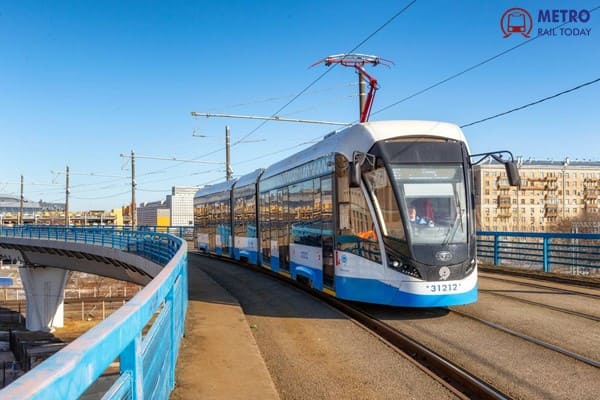
Berlin, Germany (Rail & Metro Today): Hyundai Rotem Co. has unveiled an ambitious roadmap to develop fully autonomous tram technology by 2031, combining physical artificial intelligence (AI), autonomous driving and hydrogen-powered rail vehicles. The company presented its future rail technology vision at InnoTrans 2026 in Berlin, showcasing a hydrogen tram equipped with AI-based systems designed to support traffic detection, speed control and emergency response.
The proposed technology aims to extend autonomous operation beyond train driving, using AI to analyse operating conditions and coordinate different elements of the urban rail ecosystem.
AI to Plan Tram Operations Before Departure
Under Hyundai Rotem's envisioned autonomous operating system, AI would assess multiple parameters before a tram begins its journey. These would include passenger demand, vehicle condition, hydrogen levels and traffic conditions.
Based on this information, the system would generate a proposed operating plan, which would then be reviewed and approved by a control centre before the service begins.
Once the tram is in operation, onboard sensors would continuously monitor the surrounding environment. LiDAR, cameras and other sensors would be used to detect pedestrians, vehicles and other potential obstacles, enabling the system to adjust speed and braking according to prevailing conditions.
This approach is intended to combine autonomous train control with real-time environmental awareness, creating a technology platform capable of supporting safer and more responsive tram operations.
Hyundai Rotem Developing Rail ADAS Technology
Hyundai Rotem completed development of its own advanced driver assistance system (ADAS) for rail vehicles this year and is now working on connecting the system with its train control technology.
The autonomous tram operation demonstrated at InnoTrans 2026 represents a future technology scenario rather than a commercialised driverless tram system. Hyundai Rotem's 2031 target reflects its longer-term development roadmap for integrating AI and autonomous technologies into rail vehicles.
The company is also looking beyond train operation, with plans to apply AI and digital twin technologies to vehicle manufacturing and predictive maintenance.
Integrated Hydrogen Rail Infrastructure
Hyundai Rotem's vision also includes connecting AI-based control centres with depots and hydrogen production and refuelling facilities. Such integration could create a digitally connected urban rail ecosystem in which train operations, maintenance and energy infrastructure are coordinated through a common technology framework.
The use of hydrogen-powered trams forms an important part of this vision, combining alternative-energy propulsion with increasingly automated train operations.
By integrating vehicle data, infrastructure information and operational conditions, the company aims to support predictive maintenance and improve the efficiency of future urban rail systems.
Next-Generation High-Speed Train Concept Unveiled
Alongside its autonomous hydrogen tram technology, Hyundai Rotem also unveiled a next-generation high-speed train concept jointly developed with Hyundai Motor Group.
Aerodynamic testing of the concept showed a drag coefficient approximately 36% lower than that of Hyundai Rotem's KTX-Cheongryong. The improvement highlights the company's focus on aerodynamic efficiency as it explores the next generation of high-speed rail technology.
The combination of autonomous operation, hydrogen propulsion, AI, digital twins and advanced high-speed train design demonstrates Hyundai Rotem's broader technology roadmap for future rail mobility. The technologies presented at InnoTrans 2026 indicate a development direction in which rail vehicles are increasingly connected with intelligent control, energy and maintenance systems.

MRT Online Desk
Metro Rail Today is an authentic and global news provider for the Rail & Metro industry from and around the world.