

Trending Now
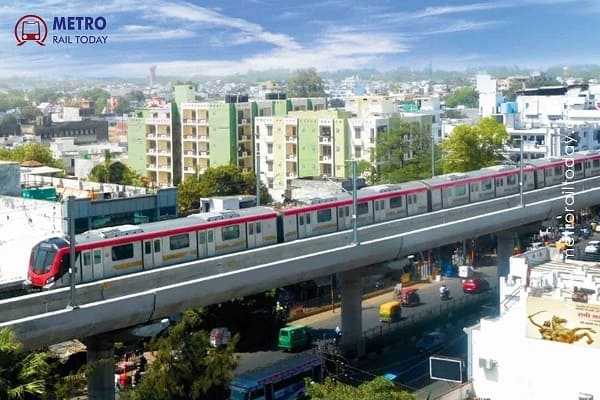 UPMRC floats ₹670 Crore Rolling Stock Tender for 45 Metro Cars for Lucknow Metro Phase 1B
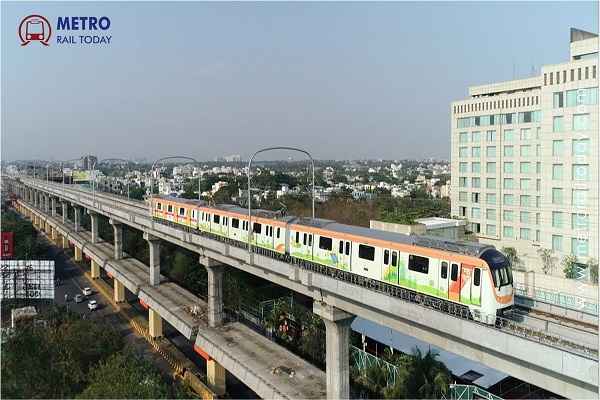 Maha Metro launches ₹994.78 crore Rolling Stock Tender for Nagpur and Pune Metro Phase 2
 Afcons Infrastructure wins ₹1,045 crore Civil Contract for Ramwadi–Wagholi Metro Corridor in Pune
 Keralam High-Speed Rail proposal is technically feasible but project cost may double: Expert Panel
 DMRC begins Construction work on Inderlok–Indraprastha Corridor under Delhi Metro Phase 4 Expansion
 Bihar approves RRTS Plan to connect Patna with Gaya, Muzaffarpur, Ara and Begusarai
 Indian Prime Minister Narendra Modi to Flag Off Asia's First Hydrogen-Powered Train on July 17
 DMRC launches Delhi Metro International Limited to expand Urban Transit Expertise Globally
 Prime Minister Narendra Modi lays Foundation Stone for ₹13,037 Crore Jaipur Metro Phase 2 Project
 MRVC seeks Capital Infusion to Fast-Track ₹64,644 crore Railway Infrastructure Pipeline in Mumbai
Metro Rail Transit Line (MRT-7): A New Way Forward for the North
MRT Online Desk
Posted on: 2025-12-10 07:00:00
Viewer: 15,548
Comments: 0
Country: Philippines
City:
Every day, thousands move between Bulacan and Metro Manila, tracing the same crowded roads, juggling the same delays, and losing hours that should never have been sacrificed to traffic.
The long, slow crawl along Commonwealth Avenue has become a quiet symbol of daily endurance, an accepted cost of living near the capital.
MRT-7 arrives as a direct response to that reality, not as a promise of perfection, but as an overdue shift toward a better way of moving.
Stretching 22–23 kilometers from North Avenue in Quezon City to San Jose del Monte, Bulacan, the line brings together 14 stations, modern elevated infrastructure, and full integration with the unified North Avenue common station.
Once operational, it is expected to cut travel time from 2–3 hours to 35–40 minutes, a difference that reshapes not just commutes but routines, opportunities, and quality of life.
With construction now beyond 83%, the project signals that the long-wished-for expansion of Manila’s rail network is finally taking shape.
More than a technical upgrade, MRT-7 reflects a growing ambition to connect regions more thoughtfully and distribute economic growth beyond Metro Manila’s center.
It’s a train line, yes, but also a chapter in a larger story about access, mobility, and the future of the northern corridor.
A Long, Winding Journey to Reality
MRT-7’s path to construction spans decades, shaped by shifting plans, political transitions, and the evolving needs of a rapidly expanding metropolitan region.
Originally conceived in the 1990s as LRT-4, the proposal envisioned a light-rail system running along Commonwealth Avenue.
But as ridership projections grew and congestion worsened, planners saw the need for a heavier, faster, higher-capacity system, one better suited to the scale of daily movement between Bulacan and Quezon City.
This redesign pushed the project into new territory, including a reclassification that led to its current name: MRT-7.
The “7” reflects planning codes rather than numerical order, which is why Metro Manila has LRT-1 and LRT-2, MRT-3, and then MRT-7. It’s less a sequence and more a reflection of how transport planning evolved.
The project’s early years were marked by delays, most notably right-of-way complications in Bulacan and technical hurdles around aligning the system with the future North Avenue common station.
Still, the project persisted, gaining momentum after 2016 when construction formally began.
Today, with its superstructure visible across Commonwealth and its depot nearing completion, MRT-7 stands as proof of what long-term transport commitments can eventually deliver.
Building the Backbone of the Northern Region
MRT-7’s design reflects a more modern era of Philippine rail development. The line features 14 fully elevated stations, minimizing interference with roads while ensuring consistent travel speeds across the entire route.
From North Avenue, the line moves through major points like Tandang Sora, Mindanao Avenue, Fairview, and Quirino, before extending beyond Metro Manila into San Jose del Monte, anchoring new urban growth in Bulacan.
This corridor serves a mix of students, government workers, private employees, and families who have long relied on buses, UVs, and jeepneys, modes vulnerable to gridlock.
By offering predictable travel times and high-capacity movement, MRT-7 is positioned to ease pressure on Commonwealth Avenue while strengthening the transport link to Northern Luzon.
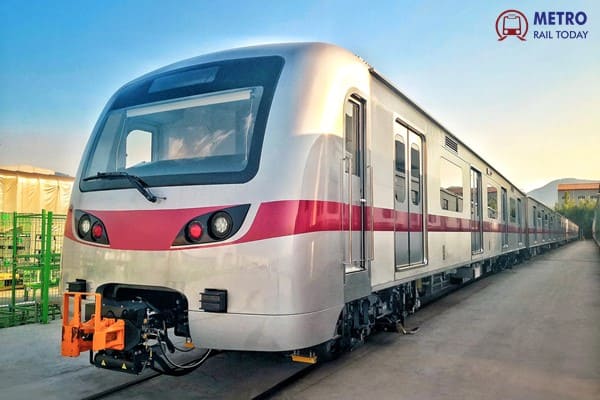
Its trains, built with modern signaling and safety systems, are designed for quick turnaround and frequent departures.
Beyond mobility, the project forms part of a larger shift toward rail-based solutions that aim to balance Metro Manila’s strained road network.
Integration with the North Avenue common station is central to this plan, finally creating a seamless connection across LRT-1, MRT-3, and MRT-7, something commuters have waited years to experience.
As northern development accelerates, MRT-7 becomes not just infrastructure but an economic catalyst that expands where people can live, work, and invest.
What Commuters Can Expect in the Coming Years
With construction now reported at around 83%, MRT-7 is entering the final stages of systems installation, signaling, and operational testing.
The Department of Transportation and San Miguel Corporation, its private partner, have indicated that partial operations may begin by late 2025 or 2026, while full operations, including integration with the common station, are expected by 2027.
These timelines reflect both the remaining technical work and the stringent safety checks required for modern metro systems.
For commuters, the impact could be transformative. A journey that once consumed long stretches of the morning could become a predictable, sub-one-hour ride.
The convenience of moving from Bulacan to Quezon City without traffic creates new possibilities: more jobs accessible to northern residents, more balanced urban growth, and a commuting experience less defined by stress or delay.
Living in the far north no longer means that you can’t kick your feet back and play a game of Tongits Go while you’re worrying about the long trip.
Daily ridership is projected to exceed 300,000 passengers, with room to scale as demand grows. The shift toward rail doesn’t erase the region’s transport challenges, but it offers a tangible improvement, one that commuters can feel, measure, and rely on.
In a metropolis where mobility often dictates opportunity, MRT-7 represents a hopeful recalibration. It is a signal that long travel times need not be the norm and that investments in infrastructure can meaningfully change the shape of daily life.
Will It Solve All Our Problems?
MRT-7 arrives at a moment when the region urgently needs relief from congestion and a clearer path toward balanced growth.
Its value extends beyond faster travel; it reshapes how communities connect, how cities expand, and how workers manage the rhythm of everyday life.
The line embodies a larger truth: that mobility is not just about movement but access to time, choices, and opportunities that geography once limited.
By linking Bulacan and Quezon City through reliable, high-capacity rail, MRT-7 becomes a bridge between two rapidly developing landscapes.
It supports new economic zones, encourages investment, and allows families to reclaim hours once lost to gridlock. For the national economy, its contribution lies in reduced productivity losses and a more efficient flow of people and goods.
As it inches toward full operation, MRT-7 stands as both a symbol and a solution, a reminder that long-term planning can bear meaningful results and that modern infrastructure can recalibrate the future of urban life.
The north has waited a long time for a rail line built at this scale. Now, with concrete pillars rising and trains preparing for testing, the horizon looks closer than ever.
MRT-7 won’t solve every transport problem, but it marks a significant, measurable step forward. And for many commuters, that step may be enough to change the way their days, and futures, unfold.


MRT Online Desk
Metro Rail Today is an authentic and global news provider for the Rail & Metro industry from and around the world.