


Trending Now
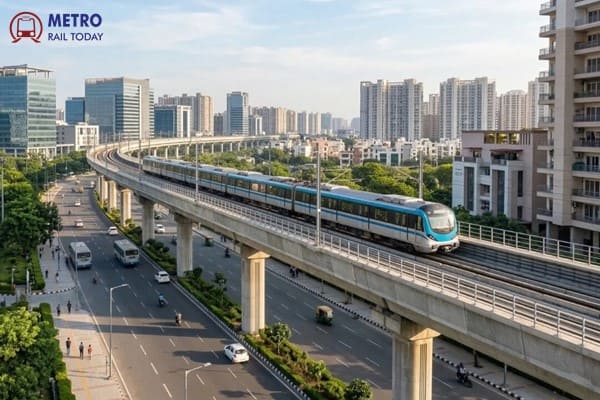 RITES submits fresh DPR to UPMRC for ₹12,000 crore Prayagraj Metro Rail Project
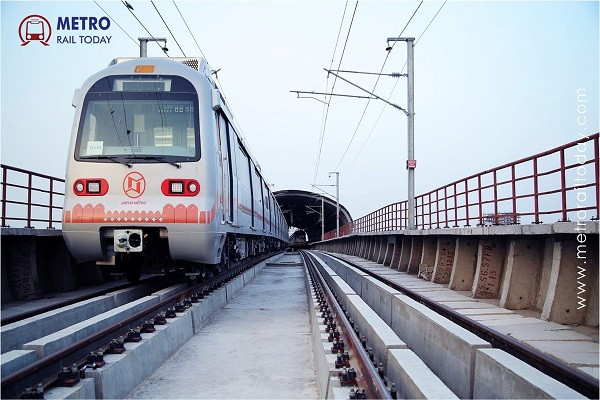 Paras Railtech wins ₹84.72 crore Ballastless Track Contract for Jaipur Metro Rail Project
 Indian Railways announces 3,548 Graduate-Level Vacancies under NTPC Recruitment 2026
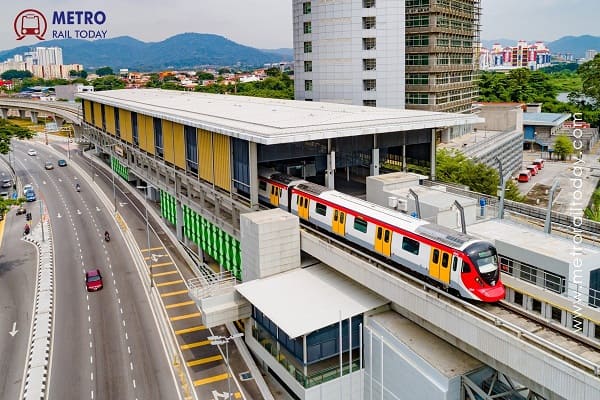 European Union sanctions €10 million to support extension of Hanoi Metro Line 3
 GMRC issues ₹683 crore Tender for construction of 8.68 km stretch for Ahmedabad Metro
- GMRC launches ₹439 crore Tender for construction of 5 New Ahmedabad Metro Stations
 Global tender issued for procurement of 60 Rolling Stock coaches for Hyderabad Metro Rail Project
 Global tender issued for procurement of 102 Rolling Stock coaches for Patna Metro Rail Project
 Gamuda awarded RM3.7 billion contract to build Keelung Mass Rapid Transit in Taiwan
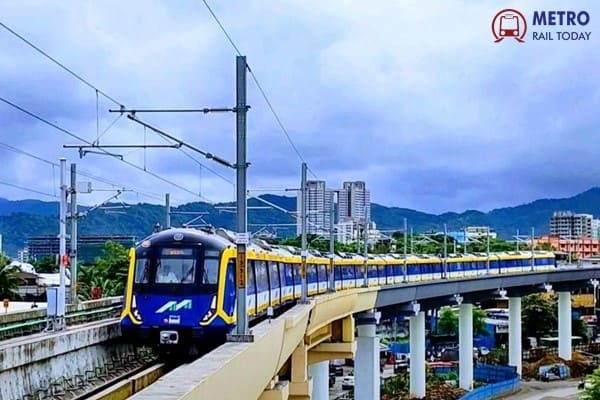 Maharashtra forms special Task Force to plan Rail, Metro and RRTS expansion
Mumbai Metro deploys Indigenous AI-Based Wheel Profile Monitoring System in Charkop Depot
MRT Online Desk
Posted on: 2025-12-15 07:10:00
Viewer: 1,578
Comments: 0
Country: India
City: Mumbai
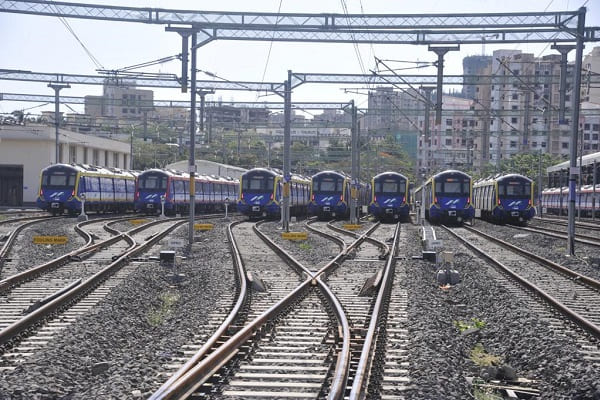
Mumbai, India (Metro Rail Today): In a significant step towards predictive maintenance and smarter metro operations, Mumbai Metro has installed an indigenously developed AI-based Wheel Profile Measurement System (AWPMS) on Metro Lines 2A and 7. This marks the first deployment of such a system on Mumbai’s metro network, strengthening safety oversight and asset management.
Developed and supplied by IntelliRail, the advanced system is designed to detect wheel wear, deformation, or damage in real time, and recommend timely repair or replacement. The initiative aims to improve operational safety, extend wheel life, reduce track stress, and minimise unplanned service disruptions.
According to IntelliRail, the IntelliWPMS is a trackside diagnostic system comprising a network of sensors, lasers, and high-speed cameras that capture detailed wheel parameters as trains pass over the monitoring zone. Using machine vision and AI-driven analytics, the system evaluates wheel profiles with high precision while significantly reducing manual inspection requirements.
The company stated that the system delivers non-contact measurements, ensuring both equipment safety and uninterrupted operations. Reported accuracy levels are around 0.5 mm for wheel profile measurements and 1.0 mm for wheel diameter, enabling early detection of irregularities that could otherwise compromise ride quality or safety.
Installed at the Charkop Depot, the system generates diagnostic results instantly through edge computing, eliminating delays and allowing maintenance teams to act proactively.
The AWPMS installation forms part of a broader modernisation initiative by Maha Mumbai Metro Operation Corporation Limited (MMMOCL). The deployment is included in a diagnostic systems package supplied by BEML, with technical guidance from the Delhi Metro Rail Corporation (DMRC).
IntelliRail noted that the system supports India’s shift from periodic maintenance to condition-based maintenance, where real-time data and analytics drive maintenance decisions. Such systems are becoming increasingly important as Indian metro networks prepare for higher automation levels and unmanned train operations (UTO), which depend heavily on continuous asset health monitoring.
Commenting on the milestone, Piyush Nigam, CEO, IntelliRail, said the deployment aligns strongly with the Make in India initiative. He noted that railway and metro plans to deploy wheel profile monitoring systems had been under discussion for nearly five years, and Mumbai Metro’s adoption represents a major breakthrough for indigenous rail technology.
Sharing an industry perspective, Mrs. Mamta Shah, MD & CEO, Urban Infra Group, said, “The deployment of AI-based wheel monitoring systems in Mumbai Metro reflects the rapid digital transformation underway in India’s urban rail sector. Indigenous solutions like these not only enhance safety and reliability but also significantly reduce lifecycle maintenance costs—an essential factor as metro networks expand and move towards higher automation.”
Experts note that AI-driven diagnostics, remote monitoring, and data analytics are becoming central to modern metro systems worldwide. The installation of AWPMS on Mumbai Metro Lines 2A and 7 underscores the city’s commitment to technology-led, safe, and sustainable urban mobility, while reinforcing India’s growing capability to develop and deploy world-class rail technologies domestically.


MRT Online Desk
Metro Rail Today is an authentic and global news provider for the Rail & Metro industry from and around the world.