


Trending Now
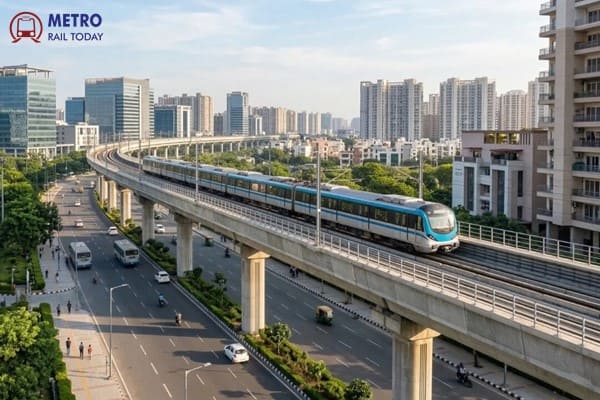 STUP Consultants Wins Station Design Consultancy Contract for Thane Metro Rail Project
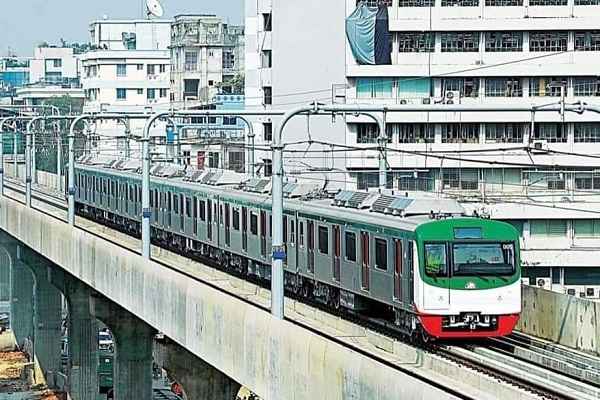 Larsen & Toubro bags Design-and-Build Contracts for Bangladesh’s Dhaka Metro Line 1 Project
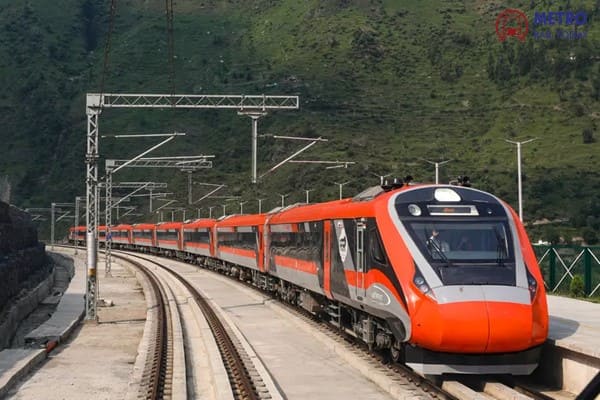 Wabtec Corporation awarded ₹839 crore contract for India's Vande Bharat Sleeper Train Project
 How Indigenous Engineering and Japanese Technology are transforming India's first Bullet Train?
 India's Metro Rail Network set to cross 2000-km mark soon, become second largest in World
 Alstom to deploy DTG Signalling System for Jaipur Metro’s 5.2-km Phase-1 Extension
 RVNL floats ₹297.45-crore Power Systems Tender for Kolkata Metro Purple Line
 Siemens Mobility awarded $772 million Trainset Contract for California High-Speed Rail Project
- RITES submits fresh DPR to UPMRC for ₹12,000 crore Prayagraj Metro Rail Project
 Paras Railtech wins ₹84.72 crore Ballastless Track Contract for Jaipur Metro Rail Project
Mumbai–Ahmedabad Bullet Train project cost escalated from ₹1.1 lakh crore to ₹1.98 lakh crore
MRT Online Desk
Posted on: 2026-01-02 07:15:00
Viewer: 4,803
Comments: 0
Country: India
City: New Delhi
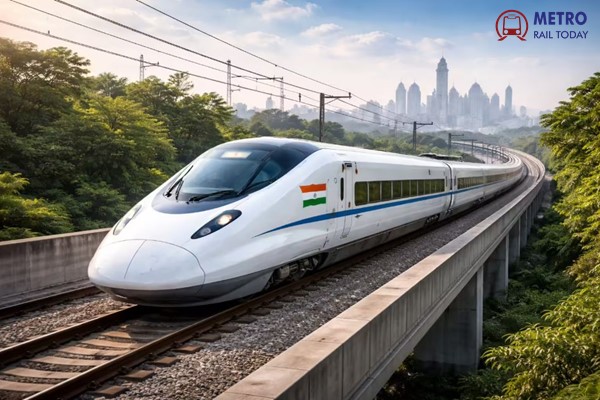
New Delhi, India (Metro Rail Today): India’s first high-speed rail project between Mumbai and Ahmedabad has recorded a sharp escalation in project cost, rising by nearly 83 percent due to prolonged delays. The revised cost of the Mumbai–Ahmedabad High-Speed Rail (MAHSR) corridor is expected to touch approximately ₹1.98 lakh crore, compared to the initial sanctioned estimate of about ₹1.1 lakh crore. The project, being implemented by National High Speed Rail Corporation Limited (NHSRCL), has seen time and cost overruns arising from land acquisition issues, regulatory approvals, and the finalisation of rolling stock and key contracts.
Revised deadline and phased opening plan
According to senior railway officials, the first operational section between Surat and Bilimora is targeted for inauguration in August 2027. The entire 508 km corridor from Mumbai to Ahmedabad is likely to be completed and commissioned by December 2029, marking a new era of high-speed passenger mobility in India. The corridor is designed for trains running at 320 kmph, slashing travel time between the two major cities to around two hours and seventeen minutes.
Railway Board Chairman and CEO Satish Kumar confirmed that the final approval for the revised project cost is under consideration. He stated that the sanction process is expected to be completed within the next couple of months following internal approvals. Prime Minister Narendra Modi has also reviewed progress recently and urged the ministry to accelerate execution to avoid further escalation and delays.
Physical and financial progress
Despite the cost revision, construction activity continues to advance across multiple fronts in Gujarat and Maharashtra. Until November end, the project had achieved approximately 55.6 percent physical progress, while financial progress stood at 69.6 percent. About ₹85,801 crore has already been spent toward land acquisition, civil structures, bridges, station building and allied works. In Maharashtra’s Palghar district, the corridor also includes some of the longest tunnels, including those between Virar and Boisar.
Commenting on the development, Mrs. Mamta Shah, MD and CEO of Urban Infra Group, said, “Cost escalations in mega infrastructure projects are not unusual, especially when they involve cutting-edge technology and complex clearances. What is more important is the long-term value creation. High-speed rail will transform regional economies, improve connectivity and catalyse advanced manufacturing and skill development in India’s rail sector.”
Looking ahead
The bullet train project remains India’s flagship high-speed rail initiative, incorporating Japanese Shinkansen technology and advanced safety systems. Once operational, it is expected to set benchmarks for future corridors such as Delhi–Varanasi and Mumbai–Nagpur. With tunnelling breakthroughs, viaduct installations and station works progressing, authorities are focusing on maintaining momentum to meet commissioning targets.
While the revised cost estimate marks a significant financial challenge, the project continues to be viewed as a transformational investment in modern transportation infrastructure. The coming months will be crucial as approvals for revised costs are finalised and construction accelerates to deliver India’s first bullet train corridor.

MRT Online Desk
Metro Rail Today is an authentic and global news provider for the Rail & Metro industry from and around the world.