

Trending Now
 CMRL achieves second Tunnel Breakthrough at Thirumayilai for Chennai Metro Phase 2 Corridor 4
 NHSRCL invites Single Tender from BEML for Bullet Train Rolling Stock Package
 Railway Minister reviews progress of Ahmedabad–Dholera Semi High-Speed Rail Project
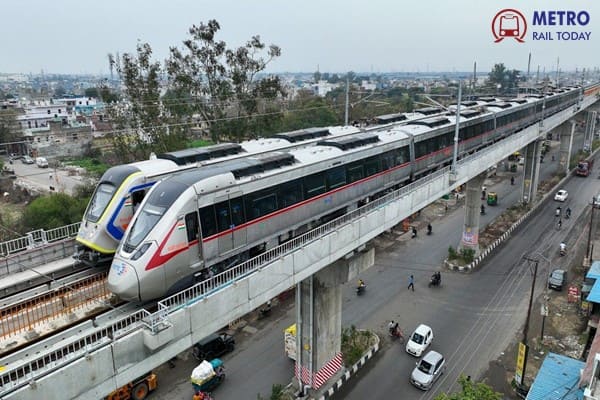 National Planning Group reviews key Rail & Metro projects under PM GatiShakti
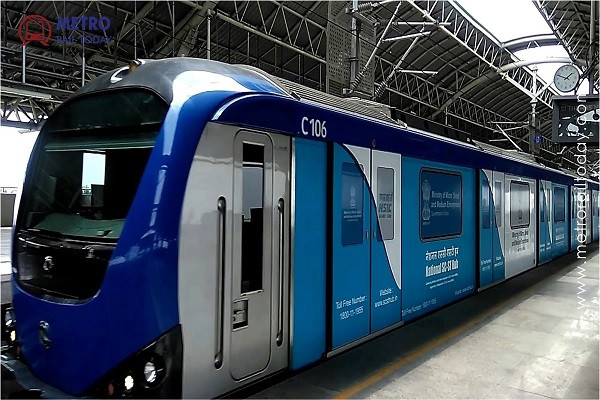 CMRS approves Driverless Metro Operations on first stretch of Chennai Metro Phase 2 Corridor 4
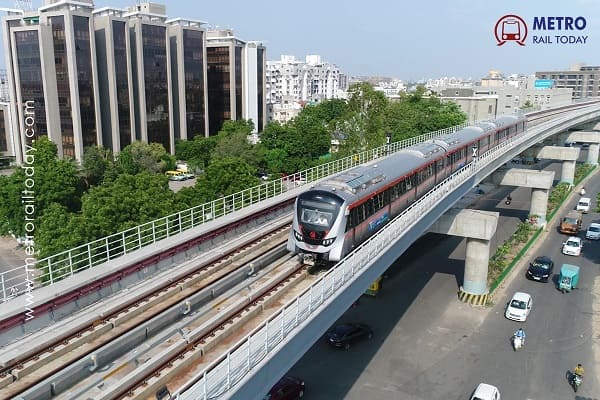 J Kumar Infraprojects completes Final Tunnel Breakthrough for Surat Metro Phase 1 Project
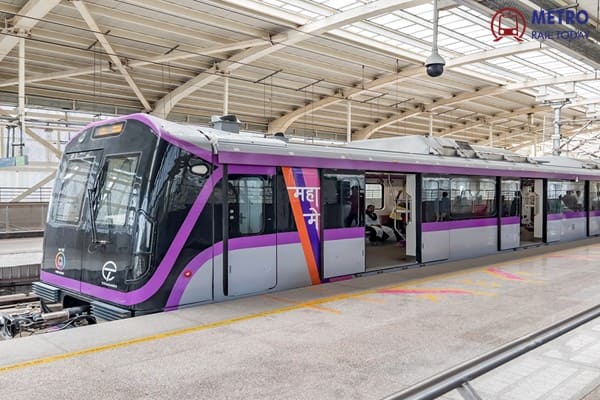 Apurvakriti Infrastructure awarded Ballastless Track Contract for Pune Metro Reach-1 Extension
 SAM India Builtwell bags first ₹222.76 Crore Civil Contract for Delhi Metro Phase V
 HRIDC conducts Investors Pre-Bid Meeting for Haryana Orbital Rail Corridor
 NCRTC Chief Shalabh Goel appointed as General Manager of Central Railway
NCRTC Introduces Drone-Based OHE Monitoring on Delhi-Meerut Namo Bharat RRTS Corridor
MRT Online Desk
Posted on: 2025-09-26 14:31:00
Viewer: 3,058
Comments: 0
Country: India
City: New Delhi
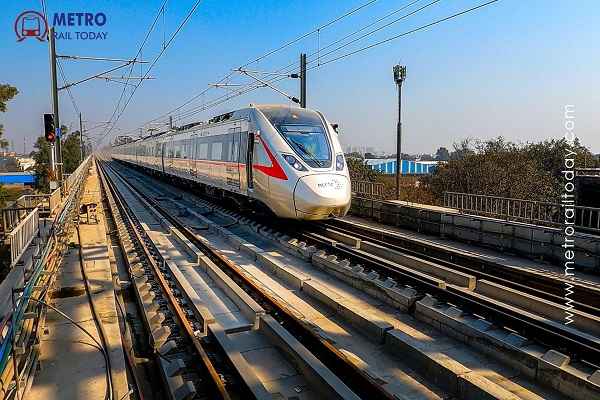
New Delhi, India (Metro Rail Today): In a major step towards predictive, technology-enabled rail operations, the National Capital Region Transport Corporation (NCRTC) has deployed a drone-based Overhead Equipment (OHE) monitoring system on the Delhi–Ghaziabad–Meerut Namo Bharat corridor, marking a new era in India's railway maintenance practices.
The initiative, executed in partnership with DB RRTS Operations India Pvt. Ltd., leverages high-resolution imaging, thermal sensors, and AI-powered analytics to conduct intelligent, non-intrusive inspections of OHE infrastructure. This upgrade replaces traditional manual inspections—often manpower-intensive and disruptive—with smarter, safer, and faster diagnostics that strengthen asset health, reduce service interruptions, and enhance passenger experience.
Intelligent Maintenance for India’s Fastest Regional Rail
Drones will scan and analyze the entire OHE system—identifying insulation flaws, loose fittings, hotspots, and early signs of component fatigue. The data-driven approach ensures preventive maintenance before issues escalate, supporting NCRTC’s mission to offer uninterrupted, high-speed travel on the Namo Bharat network.
Previously, such checks involved large teams, service blocks, or temporary line shutdowns. The drone-based approach mitigates these challenges, offering real-time visibility, operational efficiency, and enhanced worker safety, particularly under live-line conditions.
Leadership Commend the Innovation
Mr. Shalabh Goel, Managing Director, NCRTC, said:
“The launch of drone-based OHE monitoring further strengthens the safety and reliability of Namo Bharat services. By enabling predictive and technology-driven maintenance, it ensures uninterrupted, comfortable, and dependable journeys for our commuters while setting new industry benchmarks.”
Mr. Niko Warbanoff, CEO, DB E.C.O. Group & DB International Operations, stated:
“The use of drones exemplifies our joint commitment to safety, innovation, and foresight. Together with NCRTC, we are shaping India’s most advanced rail system with precision-driven solutions.”
Mrs. Mamta Shah, MD & CEO, Urban Infra Group, welcomed the initiative:
“This is exactly the kind of smart, scalable innovation that India’s rail sector needs. Drone-based inspections represent a convergence of safety, speed, and sustainability. It is heartening to see NCRTC once again lead from the front, proving that modern mobility is not just about fast trains, but intelligent infrastructure too.”
A Global-First System with Made-in-India Ambition
Namo Bharat, India’s first Regional Rapid Transit System (RRTS), is also the world’s first to deploy ETCS Hybrid Level 3 signaling over a 4G LTE communication backbone. Designed for speeds of up to 180 km/h, with operational speeds capped at 160 km/h, the system offers international-grade reliability with Indian innovation at its core.
By adopting AI-driven maintenance, NCRTC is ensuring that its operational edge is matched by sustainability and safety. The drone-OHE initiative reaffirms Namo Bharat as India’s most technologically advanced rail corridor and positions it as a model for upcoming regional rail networks across the country.

MRT Online Desk
Metro Rail Today is an authentic and global news provider for the Rail & Metro industry from and around the world.