


Trending Now
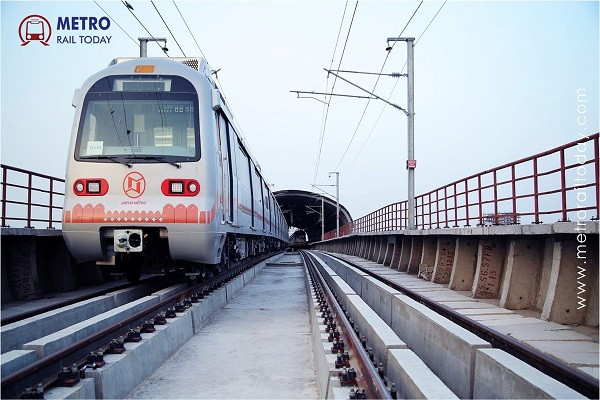 Paras Railtech wins ₹84.72 crore Ballastless Track Contract for Jaipur Metro Rail Project
 Indian Railways announces 3,548 Graduate-Level Vacancies under NTPC Recruitment 2026
 European Union sanctions €10 million to support extension of Hanoi Metro Line 3
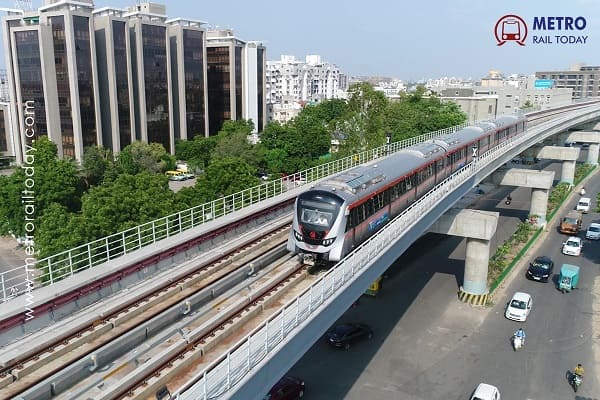 GMRC issues ₹683 crore Tender for construction of 8.68 km stretch for Ahmedabad Metro
- GMRC launches ₹439 crore Tender for construction of 5 New Ahmedabad Metro Stations
 Global tender issued for procurement of 60 Rolling Stock coaches for Hyderabad Metro Rail Project
 Global tender issued for procurement of 102 Rolling Stock coaches for Patna Metro Rail Project
 Gamuda awarded RM3.7 billion contract to build Keelung Mass Rapid Transit in Taiwan
 Maharashtra forms special Task Force to plan Rail, Metro and RRTS expansion
 Govt. of India approves ₹12,200 crore, 29-km Thane Integral Ring Metro project in Maharashtra
PM Narendra Modi inaugurates Bangalore Metro Yellow Line, Network expands to 76 km
MRT Online Desk
Posted on: 2025-08-10 16:31:00
Viewer: 3,147
Comments: 0
Country: India
City: Bengaluru
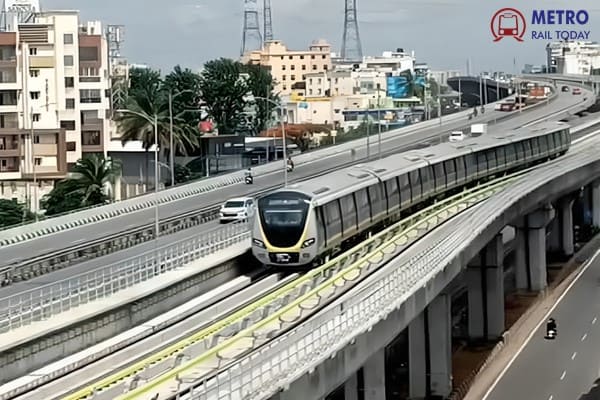
Bengaluru, India (Metro Rail Today): Prime Minister Narendra Modi today inaugurated the much-awaited 19.14 km Yellow Line of the Namma Metro, significantly expanding Bengaluru’s metro network and offering a major boost to the city’s public transport capacity.
The Yellow Line, built at a cost of approximately ₹8,300 crore, runs from R V Road in the south to Bommasandra in the city’s industrial belt, connecting 16 stations. This corridor will serve thousands of daily commuters in the tech and manufacturing hubs of Electronics City, Bommasandra, and surrounding residential areas.
The inauguration ceremony was attended by Karnataka Chief Minister Siddaramaiah, Union Minister for Housing and Urban Affairs, Manohar Lal Khattar and senior officials from the Bangalore Metro Rail Corporation Limited (BMRCL).
"Bengaluru is a city of dreams for millions of youth from across India. With this Yellow Line, we are taking another step towards making their daily commute faster, greener, and more convenient," PM Modi said while addressing the gathering.
Key Highlights of Bengaluru Metro Yellow Line
-
Length: 19.14 km
-
Stations: 16, including Electronics City, Bommasandra, HSR Layout, and Silk Board
-
Cost: ₹8,300 crore
-
Depot: Hebbagodi Depot for maintenance and operations
-
Integration: Seamless interchange at R V Road with the Green Line
The new corridor is expected to ease traffic congestion on some of Bengaluru’s busiest arterial roads like Hosur Road, particularly benefiting IT employees and industrial workers. Travel time between R V Road and Bommasandra is estimated to be just 30 minutes compared to over an hour by road during peak traffic.
With the commissioning of the Yellow Line, Bengaluru’s operational metro network has grown to 76 km, making it the second-largest in India after Delhi. The line also marks a critical phase in BMRCL’s Phase 2 expansion, which aims to take the city’s network to 175 km by 2028.
Officials estimate the Yellow Line will carry 2–3 lakh passengers daily, reducing vehicular emissions and promoting the use of mass rapid transit. BMRCL is also rolling out smart ticketing and app-based payments for greater commuter convenience.
Mrs. Mamta Shah, MD & CEO at Urban Infra Group, welcomed the development, saying:
"The Yellow Line is not just an infrastructure achievement; it is an urban transformation project. By connecting industrial hubs like Bommasandra with residential and commercial nodes, Bengaluru has taken a major step towards reducing its traffic burden, cutting emissions, and improving the quality of urban life. This is the kind of connectivity blueprint that other cities should replicate."
CM Siddaramaiah added, "This line will not only improve connectivity to Electronics City but will also spur economic growth and real estate development along the corridor."
The next major milestone for BMRCL will be the opening of the Pink Line connecting Kalena Agrahara to Nagawara via the city centre, expected by 2027.


MRT Online Desk
Metro Rail Today is an authentic and global news provider for the Rail & Metro industry from and around the world.