


Trending Now
 ₹4.5 Lakh crore Metro Rail Investment reaches less than 5% of Urban Population in India
 West Bengal plans to launch Water Metro Systems in Kolkata
 Titagarh Rail Systems targets full Indigenous Aluminium Coach Manufacturing by FY2027
 MMRDA issues Track Works Tender for Kasheli Depot of Mumbai Metro Line 5
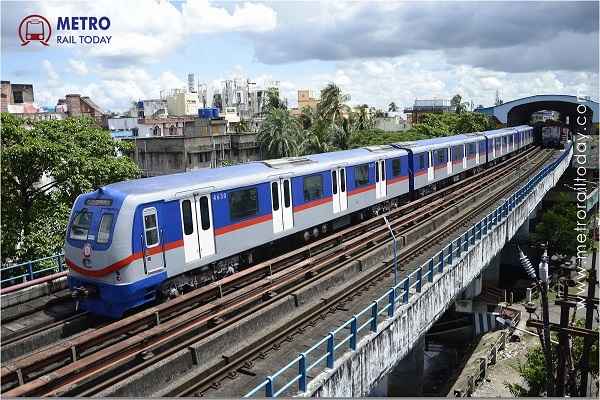 Indian Railways to procure 60 new Rolling Stock Trains for Kolkata Metro in five years
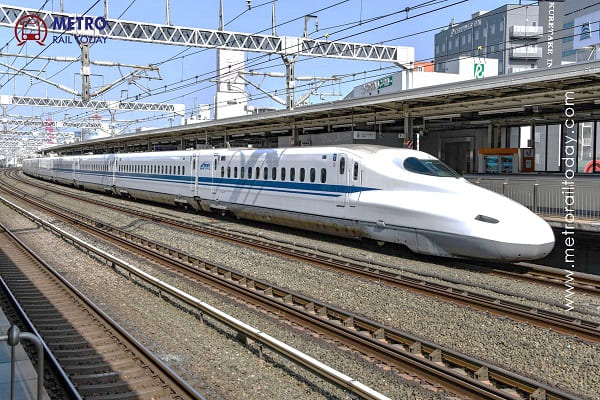 Kerala forms Expert Committee to evaluate Thiruvananthapuram–Kannur High-Speed Rail Corridor
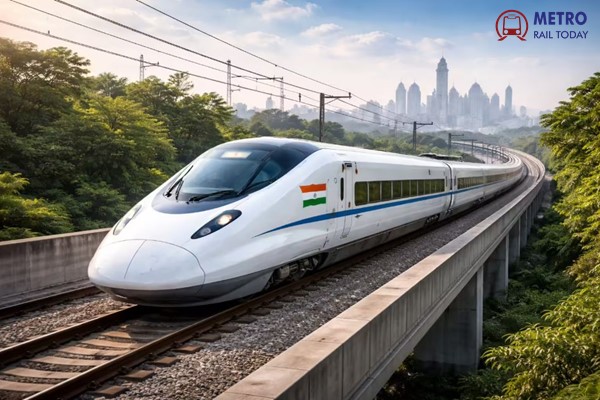 Mumbai–Ahmedabad Bullet Train Project achieves third Mountain Tunnel Breakthrough in Maharashtra
 MMRDA invites bids for ₹4,882 Crore Rolling Stock & Systems Contract for Mumbai Metro Line 12
 Kolkata Metro completes Aluminium Third Rail Upgrade on Blue Line
- Metroman E. Sreedharan submits new Blueprint for ₹54,000 Crore Kerala High Speed Rail Corridor
Preliminary survey completed for four new metro rail projects in Bihar
MRT Online Desk
Posted on: 2025-02-20 14:30:00
Viewer: 10,507
Comments: 0
Country: India
City: Patna
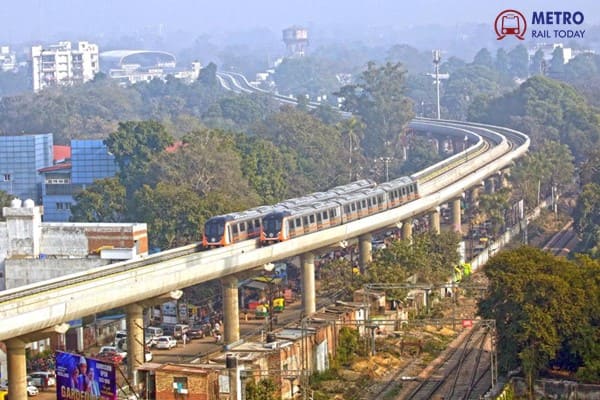
Patna, India (Metro Rail Today): Bihar is set to witness a transformative boost in its urban transportation infrastructure as the state's metro network expands to four major cities: Gaya, Darbhanga, Muzaffarpur, and Bhagalpur. The completion of the survey work for these projects has paved the way for significant advancements in public transport across the state.
The metro expansion is part of the Bihar government's ambitious plan to replicate the success of the ongoing Patna Metro project, further enhancing the connectivity and convenience for residents of key urban centers. The Urban Development and Housing Department has received detailed feasibility reports from RITES, the agency tasked with conducting the in-depth studies.
Key Details of Bihar's Metro Rail Projects
The metro routes will vary in length and design, tailored to the needs of each city. Among the four cities, Gaya will feature the longest metro route at 36 km, while Darbhanga will have the shortest at 18.8 km. All cities will have two dedicated metro corridors aimed at improving local mobility and reducing traffic congestion.
1. Gaya: Longest Metro Route at 36 km
- Total Length: 36 km
- Number of Stations: 28
- North-South Corridor: Connecting the Airport, Bodh Gaya, and the Railway Station (22.60 km, 18 stations)
- East-West Corridor: Connecting BIPARD, Vishnupad Temple, and Manpur Bus Stand (13.48 km, 10 stations)
Gaya's metro system will be the largest in the state, with extensive coverage that includes vital locations such as the Bodh Gaya temple and the international airport.
2. Darbhanga: 18.8 km Metro with 18 Stations
- Total Length: 18.8 km
- Number of Stations: 18
- Corridor 1: From the Airport to Darbhanga Medical College & Hospital (DMCH) (8.90 km, 8 stations)
- Corridor 2: From Polytechnic to Bijuli (9.90 km, 10 stations)
Darbhanga's metro will directly connect key areas, including the airport and medical facilities, easing access for both residents and visitors.
3. Muzaffarpur: 21.25 km Metro Network with 20 Stations
- Total Length: 21.25 km
- Number of Stations: 20
- Corridor 1: Connecting Harpur Bakhri to Ramdayalu (13.85 km, 13 stations)
- Corridor 2: From SKMCH to the Railway Junction (7.40 km, 7 stations)
Muzaffarpur will benefit from metro routes that link crucial locations like the Shree Krishna Medical College and the Railway Junction, enhancing connectivity for residents and commuters alike.
4. Bhagalpur: 24 km Metro Network with 24 Stations
- Total Length: 24 km
- Number of Stations: 24
- Phase 1: From Saidpur to Champanagar (12 km, 12 stations)
- Phase 2: From Bhagalpur Station to Vastu Vihar (7 km, 6 stations)
- Phase 3: Connecting Bhagalpur Station to Champanagar (5 km, 4 stations)
Bhagalpur's metro expansion will include multiple phases, ensuring comprehensive coverage across the city and linking key destinations.
Next Steps and Future Plans
With survey work now complete, the Bihar government is set to review the feasibility reports and move forward with planning and approval processes for each city’s metro route. While the initial proposals called for metro routes of around 20 km per city, public feedback has led to the extension of these routes to better serve the needs of local residents.
At the same time, the Patna Metro project, with a total length of 32 km and 24 stations, is progressing rapidly. The expansion of metro services across Bihar is expected to revolutionize urban mobility, reduce traffic congestion, and provide a modern, efficient transportation solution for the state’s growing population.
As the state moves ahead with these ambitious projects, the metro expansion will play a critical role in transforming Bihar’s urban infrastructure, offering a sustainable and fast alternative to traditional transport methods.


MRT Online Desk
Metro Rail Today is an authentic and global news provider for the Rail & Metro industry from and around the world.