

Trending Now
 Ranjit Buildcon Wins ₹383.98 Crore Civil Contract for Lucknow Metro Phase 1B
 Tamil Nadu seeks Central Support for new Metro Rail Projects in Coimbatore, Hosur and Madurai
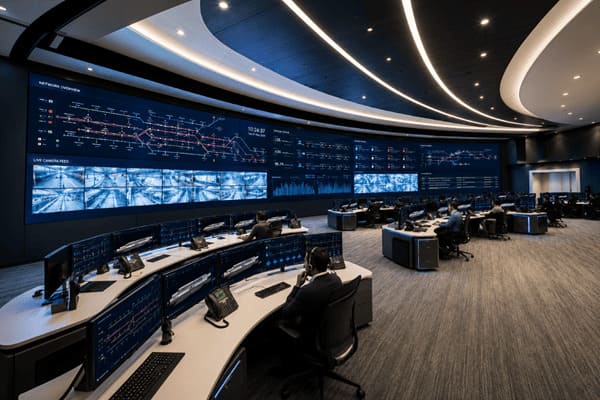 Future Metro Control Centres: ST Engineering Transforms Command Rooms to Intelligent Nerve Centres
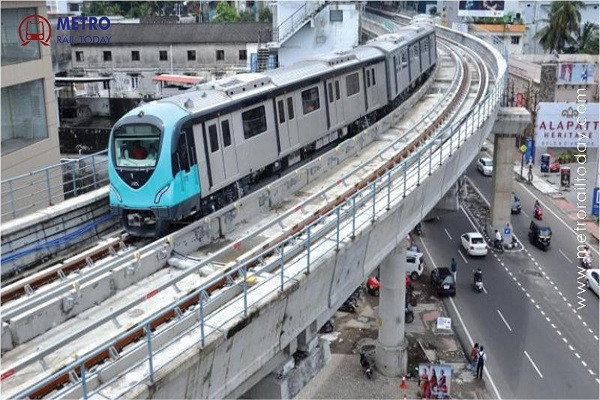 Kochi Metro unveils Visionary Design for Phase II Pink Line Metro Stations
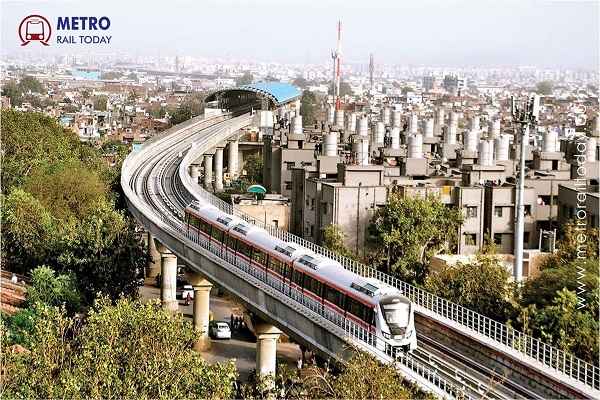 Design Consultancy Tenders floated for Ahmedabad Metro Phase 3 Elevated Corridors
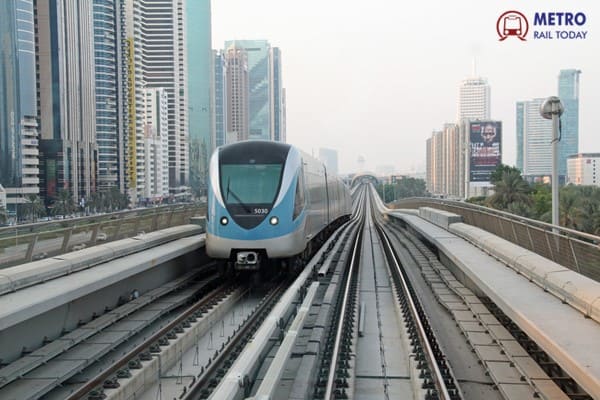 Global Metro Rail Infrastructure Market projected to reach US$ 78.3 billion by 2033
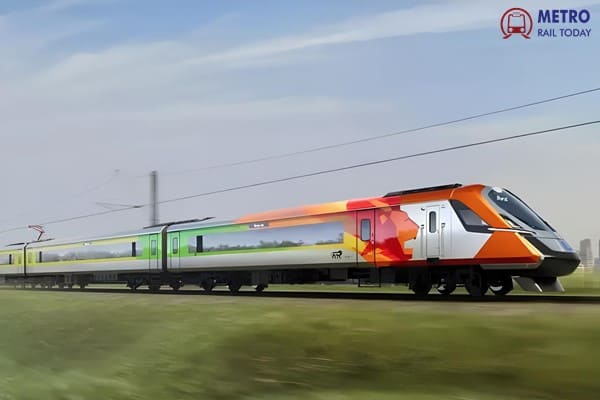 Kinet’s Vande Bharat Sleeper Concept wins prestigious Italian A’ Design Award
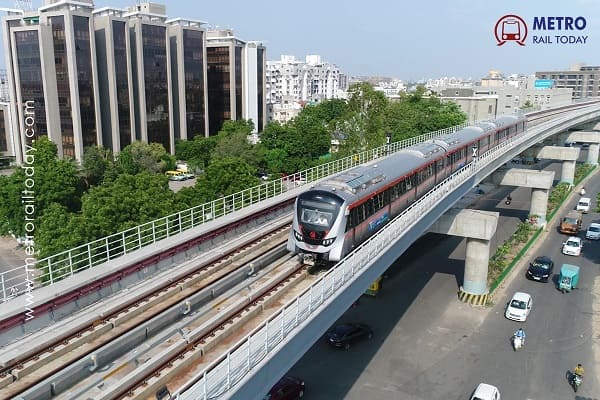 SYSTRA awarded Design Consultancy Contract for Ahmedabad Metro Phase 2 Extensions
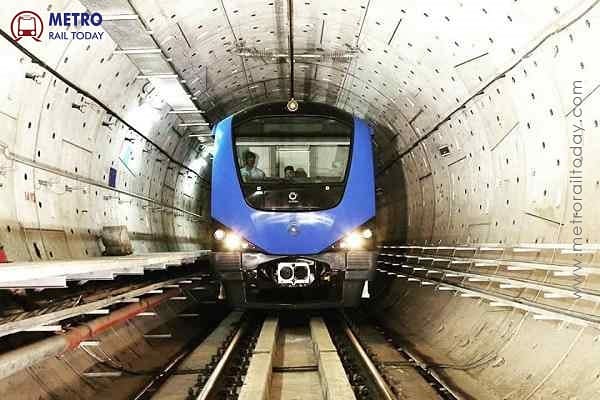 TBM Servarayan achieves Tunnel Breakthrough on Corridor 3 of Chennai Metro Phase 2
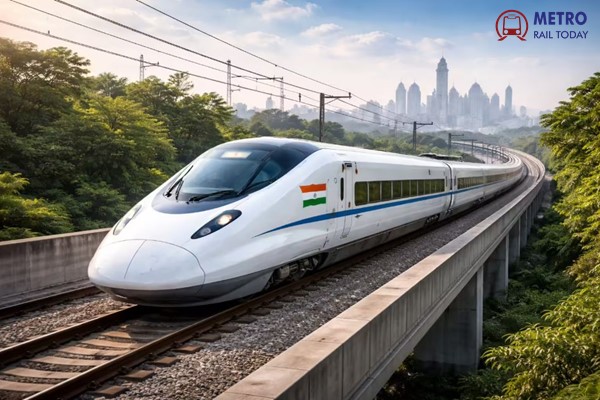 India targets 350 kmph Indigenous Bullet Train to accelerate High-Speed Rail ambitions
RCF Kapurthala rolls out First Vande Bharat Trainset, Expanding India’s coach manufacturing base
MRT Online Desk
Posted on: 2026-04-03 09:15:00
Viewer: 1,498
Comments: 0
Country: India
City: Kapurthala
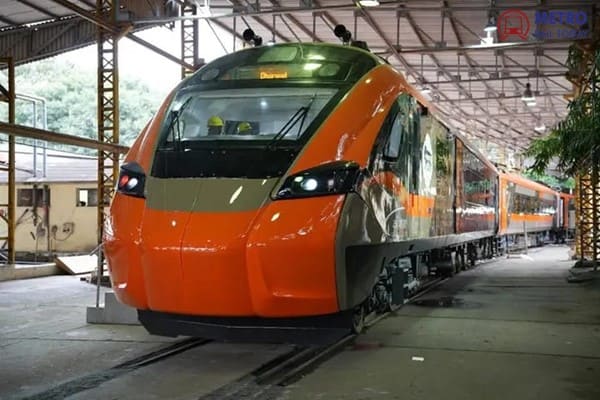
Kapurthala, India (Metro Rail Today): In a significant boost to India’s semi-high-speed rail programme, the Rail Coach Factory (RCF) in Kapurthala has rolled out its first Vande Bharat trainset, marking its entry into the manufacturing network for these flagship trains. The development is expected to accelerate production capacity as Indian Railways ramps up deployment of Vande Bharat services across the country.
The newly manufactured 16-car chair car trainset will now undergo oscillation trials, a crucial phase of testing to evaluate the train’s stability, ride quality, and safety at high speeds. Only after successfully completing these trials will the train be cleared for passenger operations, ensuring it meets the stringent safety and performance standards required for semi-high-speed services.
Until now, the Integral Coach Factory (ICF) in Chennai had been the sole production unit for Vande Bharat trains, having manufactured 97 trainsets since 2018. With demand for these trains rising steadily across key intercity corridors, Indian Railways has strategically expanded production to additional units such as RCF to speed up manufacturing and reduce deployment timelines.
The entry of RCF into the Vande Bharat production ecosystem reflects a broader push to enhance domestic rolling stock manufacturing capacity and reduce dependence on a single production hub. This move is aligned with the government’s focus on strengthening indigenous capabilities under the Make in India initiative, particularly in advanced rail technologies.
Responding to the milestone, the Ministry of Railways reiterated that the Vande Bharat trains are a symbol of India’s growing technological prowess, having been designed and developed indigenously by ICF. From initial concept and prototyping to large-scale production, the programme represents a successful example of homegrown innovation delivering modern, efficient, and passenger-friendly rail solutions.
The Vande Bharat Express was first launched on February 15, 2019, on the New Delhi–Varanasi route via Kanpur and Prayagraj. Since then, the network has expanded rapidly, with services now operational on multiple routes across India. As of December 2025, a total of 164 Vande Bharat services were running across 274 districts, collectively carrying over 7.5 crore passengers, reflecting strong demand for faster and more comfortable train travel.
Commenting on the development, Mrs. Mamta Shah, MD & CEO, Urban Infra Group, said, “Expanding Vande Bharat production beyond a single manufacturing unit is a critical step toward scaling up India’s semi-high-speed rail network. Strengthening domestic manufacturing ecosystems will not only accelerate deployment but also enhance resilience and innovation in rolling stock development.”
With RCF now joining the production network, Indian Railways is poised to further expand the reach of Vande Bharat trains, reinforcing their role as a cornerstone of India’s modern rail transformation.

MRT Online Desk
Metro Rail Today is an authentic and global news provider for the Rail & Metro industry from and around the world.