

Trending Now
 Alstom and Siemens sign $1.5 billion Rolling Stock contract for Riyadh Metro Rail Project
 Bangladesh approves Tk 58,477 crore contracts for Dhaka Metro Lines 1 and 5
 RATP Dev–ComfortDelGro JV signs Operations & Maintenance Contract for Copenhagen Metro
 Rail Chamber explores India–Czech Railway Industry Partnerships at New Delhi Business Forum
 India must prove Safety before running different Bullet Train Systems on One Corridor: JTTRI Chief
 Tender issued for Feasibility Study to Transition Hubballi-Dharwad BRTS to Modern Tram System
 Tamil Nadu Chief Minister seeks Centre’s approval for Bengaluru–Hosur Metro Link
 K-RIDE to appoint Detailed Design Consultant for Bengaluru Suburban Rail Project
 Prime Minister Narendra Modi inaugurates first 15-km stretch of Chennai Metro Phase 2
 Karnataka proposes 270-km RRTS Network linking Bengaluru with Tumakuru, Mysuru and KGF
Tec4 Ingenieros-led JV appointed as Independent Engineer for ₹1,016 Crore BKC Pod Taxi Project
MRT Online Desk
Posted on: 2026-03-09 11:10:00
Viewer: 3,312
Comments: 0
Country: India
City: Mumbai

Mumbai, India (Metro Rail Today): The Mumbai Metropolitan Region Development Authority (MMRDA) has issued a Letter of Intent (LoI) to a consortium led by Tec4 Ingenieros India Pvt. Ltd., in joint venture with Salzmann Ingenieure ZT GmbH and Bernard Consultants Pvt. Ltd., for appointment as the Independent Engineer for the Automated Rapid Transit System (ARTS) project in Bandra Kurla Complex (BKC).
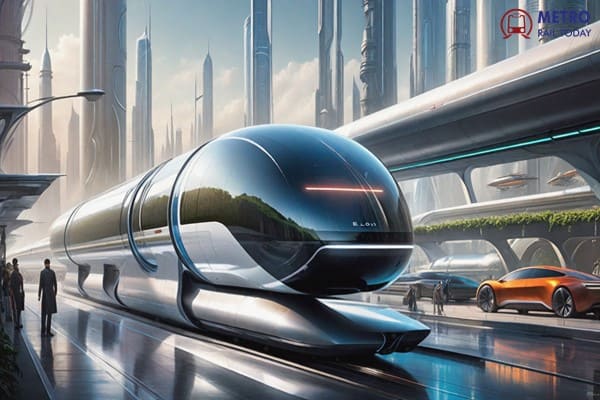
The project marks a significant milestone in introducing Automated Rapid Transit (ARTS), commonly known as a pod taxi system, in India, aimed at improving last-mile connectivity within one of Mumbai’s most important commercial districts.
Under the assignment, the consortium will act as the Independent Engineer, responsible for design review, technical oversight, and monitoring the implementation of the project throughout its development and execution phases.
The initiative reflects MMRDA’s efforts to deploy advanced driverless mobility systems to improve connectivity within dense urban environments such as BKC, which hosts major financial institutions, corporate offices, and international business hubs.
The Automated Rapid Transit System (ARTS) is a ₹1,016.34 crore project designed to provide seamless internal connectivity across the Bandra Kurla Complex business district while linking it with nearby suburban railway stations.
The driverless system will operate electric pods running on an elevated guideway, connecting BKC with Bandra and Kurla railway stations and key commercial destinations within the area.
Construction of the project is expected to begin soon, with drone mapping activities already undertaken in late 2025. The project received clearance from the Maharashtra Coastal Zone Management Authority in August 2025.
The ARTS network is planned with an initial route length of approximately 8.01 to 8.8 kilometres, featuring 38 strategically located stations in Phase 1.
Important locations along the corridor will include major commercial hubs such as the National Stock Exchange (NSE), Jio World Centre, and Bharat Diamond Bourse.
Each autonomous pod will be capable of carrying up to six passengers, operating at a maximum speed of around 40 km/h.
The proposed fare structure is expected to begin at ₹21 per kilometre, with an annual adjustment mechanism of approximately 4 percent to account for inflation and operational costs.
The project is being developed under a Public-Private Partnership (PPP) model, with Sai Green Mobility Pvt. Ltd. leading project implementation in partnership with Ultra PRT, the technology provider known for developing the pod taxi system at London Heathrow Airport.
A key objective of the ARTS system is to provide efficient last-mile connectivity with major transit infrastructure projects in the Mumbai Metropolitan Region.
The system is expected to integrate with Metro Line 2B and Metro Line 3 (Aqua Line), which includes an operational metro station at BKC.
It will also connect with the Mumbai–Ahmedabad High-Speed Rail (Bullet Train) station, currently under construction beneath BKC at a depth of approximately 32 metres underground.
Commenting on the development, Mrs. Mamta Shah, MD & CEO, Urban Infra Group, said that innovative mobility solutions such as automated pod systems can play an important role in addressing last-mile connectivity challenges in dense urban business districts.
“Automated Rapid Transit systems offer a flexible and efficient solution for last-mile connectivity, particularly in high-density commercial zones like Bandra Kurla Complex. Integrating such systems with metro networks, suburban railways, and high-speed rail infrastructure can significantly enhance the overall urban mobility ecosystem,” she said.
She added that the adoption of automated and sustainable transport technologies reflects a growing trend among global cities seeking to improve mobility efficiency while reducing congestion and emissions.
The project is being implemented in phases, with Phase 1 expected to be completed by 2027, while the full network of 54 stations is planned to be developed by 2041.

MRT Online Desk
Metro Rail Today is an authentic and global news provider for the Rail & Metro industry from and around the world.