

Trending Now
 Modern Trainlines and the End of Coal Trains: Why Rail Networks Have Moved Forward
 Siemens Bags Order from Titagarh Rail Systems for Pune Metro Extension Trainsets
 Titagarh Rail Systems becomes Corporate Member of Chamber of Railway Industries (Rail Chamber)
 World Bank approves ₹1,400 crore Civil Tender for Gurugram Metro Phase 2
 Bi-RIDE invites ₹200 crore Tender for Soladevanahalli Depot of Bengaluru Suburban Rail Project
 GHV India awarded ₹107.79 crore Civil Contract for Lucknow Metro East-West Corridor
 Pune Metro Line 3 set to launch First 12-km Section on 15 July 2026
 DMRC gets approval to Fell or Transplant 364 Trees for Central Vista Metro Corridor under Phase IV
 ₹4.5 Lakh crore Metro Rail Investment reaches less than 5% of Urban Population in India
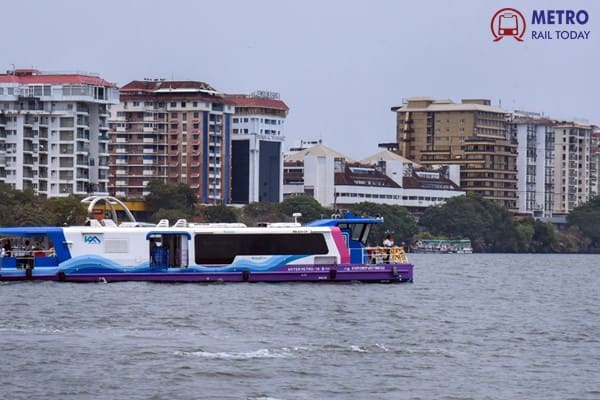 West Bengal plans to launch Water Metro Systems in Kolkata
UPMRC to prepare DPR for 67-km Lucknow-Kanpur Semi-High-Speed RRTS Corridor
MRT Online Desk
Posted on: 2025-07-04 07:00:00
Viewer: 5,964
Comments: 0
Country: India
City: Lucknow
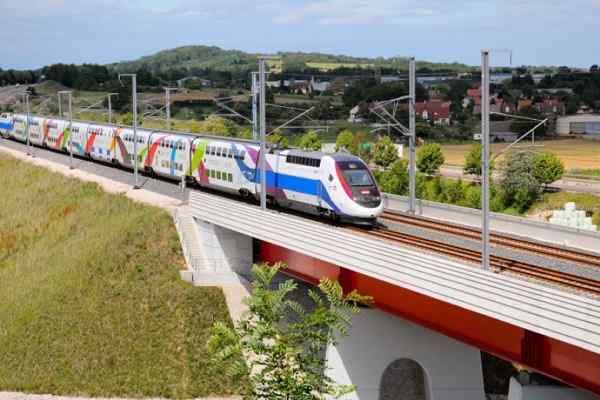
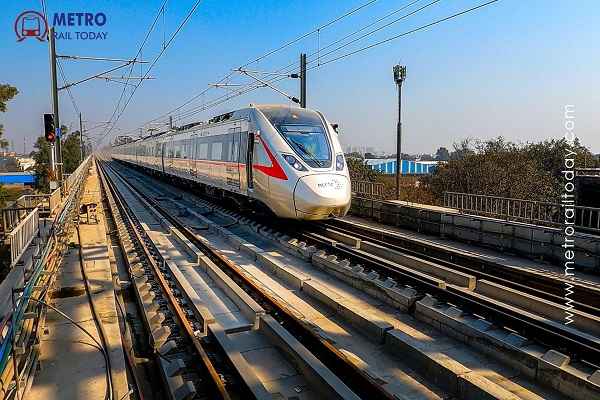
Lucknow, India (Metro Rail Today): In a major infrastructure push modeled after the successful Delhi-Ghaziabad-Meerut Namo Bharat RRTS, the Uttar Pradesh government is fast-tracking plans for a high-speed rapid rail corridor between Lucknow and Kanpur. The project aims to significantly cut travel time between the two major cities from nearly two hours to just 50 minutes.
The Uttar Pradesh Housing Department has directed the Uttar Pradesh Metro Rail Corporation (UPMRC) and the Unnao-Shuklaganj Development Authority to begin preparing a Detailed Project Report (DPR). The DPR will assess the project's financial feasibility, expected ridership, revenue potential, and land acquisition requirements.
Once in-principle approval is granted by the state government, a private consultancy firm will be selected via a tender process to prepare the comprehensive DPR. The central government is also expected to fund a significant portion of the project, highlighting its national importance.
According to the initial proposal, the Lucknow-Kanpur Rapid Rail Corridor will span 67 kilometers, starting from Naya Ganj in Kanpur and terminating at Amausi in Lucknow. Both terminal points are strategically chosen due to their connectivity with existing metro rail networks, ensuring seamless intercity and intracity travel.
The DPR will provide clarity on project cost, daily passenger volume, and land compensation figures. If approved, the high-speed rail will not only enhance public transport efficiency but also serve as a catalyst for regional development, creating job opportunities and boosting economic growth in the region.
This ambitious project reflects the government’s commitment to building a fast, safe, and accessible transport system in Uttar Pradesh, strengthening links between two of the state’s largest urban centers.

MRT Online Desk
Metro Rail Today is an authentic and global news provider for the Rail & Metro industry from and around the world.