

Trending Now
 MMRDA invites bids for ₹4,882 Crore Rolling Stock & Systems Contract for Mumbai Metro Line 12
 Kolkata Metro completes Aluminium Third Rail Upgrade on Blue Line
 Metroman E. Sreedharan submits new Blueprint for ₹54,000 Crore Kerala High Speed Rail Corridor
 Union Housing & Urban Affairs Minister Tokhan Sahu to inaugurate 6th RailTrans Expo 2026
 Maha Metro plans Six-Coach Trains ahead of Pune Metro Line 3 Launch
 Railway Ministry approves launch of India’s First Hydrogen-Powered Train on Jind–Sonipat Route
 Kineco Global Rail secures Interior Contract for new 100 Vande Bharat Sleeper Trains
 Ranjit Buildcon Wins ₹383.98 Crore Civil Contract for Lucknow Metro Phase 1B
 Tamil Nadu seeks Central Support for new Metro Rail Projects in Coimbatore, Hosur and Madurai
 Future Metro Control Centres: ST Engineering Transforms Command Rooms to Intelligent Nerve Centres
Uttarakhand seeks Pre-Feasibility Study for Meerut-Haridwar-Rishikesh RRTS Corridor
MRT Online Desk
Posted on: 2025-12-01 10:15:00
Viewer: 3,217
Comments: 0
Country: India
City: Rishikesh
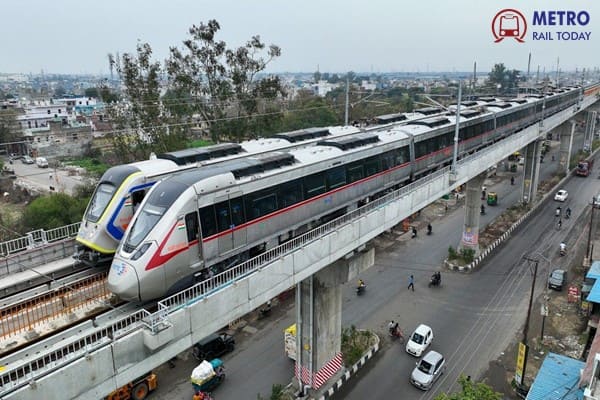
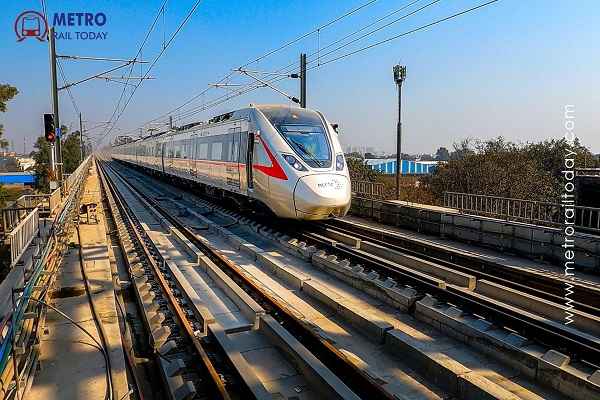
Dehradun, India (Metro Rail Today): In a significant step toward reshaping regional mobility in North India, the Government of Uttarakhand has formally requested the National Capital Region Transport Corporation (NCRTC) to conduct a pre-feasibility study for extending the Delhi–Meerut Regional Rapid Transit System (RRTS) corridor to Haridwar and eventually Rishikesh. The proposal, conveyed through a letter dated November 27, 2025, signals the state’s ambitions to bring high-speed, low-emission transit to the Himalayan foothills.
Unlike suggestions of a standalone new RRTS line, Uttarakhand is advocating for an extension of the existing 82 km Delhi–Ghaziabad–Meerut corridor, operational up to Modipuram. The extended route would stretch from Modipuram to Rishikesh via Haridwar, enabling passengers to travel from Delhi to the twin spiritual hubs on a single, continuous fast-track system. Such an alignment would elevate the efficiency, reliability and inter-state connectivity of one of India’s busiest travel axes.
Why the Extension is Crucial for Uttarakhand
The Meerut–Haridwar-Rishikesh belt experiences heavy year-round traffic from commuters, tourists, pilgrims, traders and logistics operators. A high-speed link is expected to sharply cut travel time between the National Capital Region and Uttarakhand, relieving pressure on overburdened highways that routinely witness jams and accidents. The initiative also aligns with Uttarakhand’s emphasis on sustainable mobility in an ecologically fragile region by reducing vehicle emissions and promoting cleaner transport.
Tourism, the lifeblood of the state’s economy, stands to gain significantly. Haridwar and Rishikesh together serve as gateways to Char Dham pilgrimages, yoga and wellness circuits and seasonal tourist peaks. Improved connectivity is expected to boost footfall, strengthen local businesses and enhance disaster-response capabilities across the corridor.
Welcoming the proposal, Mrs. Mamta Shah, MD & CEO of Urban Infra Group, said the initiative reflects the future of regional mobility in India. “Extending the Delhi–Meerut RRTS to Haridwar and Rishikesh will be a defining milestone for North India’s mobility landscape. This corridor will not only decongest one of the country’s busiest travel routes but also support sustainable tourism and climate-sensitive development in Uttarakhand. Such forward-looking initiatives are essential for building a resilient and interconnected India.”
Uttarakhand Offers to Fund the Study
Demonstrating strong commitment, the Uttarakhand government has expressed willingness to fully finance the pre-feasibility study. The study will examine alignment possibilities, ridership estimates, environmental considerations, cost evaluations and potential Central–State partnership models. NCRTC has been asked to nominate a nodal officer and share a detailed proposal at the earliest. The communication was also shared with the Uttar Pradesh government and the Centre, highlighting a broader collaborative vision.
This proposed extension is separate from ongoing infrastructure initiatives such as the Rishikesh–Karnaprayag rail line and the upcoming metro and neo-metro systems in Dehradun, Haridwar and Rishikesh. Instead of overlapping, the RRTS extension would complement these projects, creating a more layered, efficient and future-ready mobility framework for Uttarakhand.
If approved, the Delhi–Meerut–Haridwar–Rishikesh RRTS corridor could become the first high-speed regional rail extension into a Himalayan state—marking a transformative leap for mobility, tourism and inter-state integration in North India.


MRT Online Desk
Metro Rail Today is an authentic and global news provider for the Rail & Metro industry from and around the world.