

Trending Now
 Siemens Bags Order from Titagarh Rail Systems for Pune Metro Extension Trainsets
 Titagarh Rail Systems becomes Corporate Member of Chamber of Railway Industries (Rail Chamber)
 World Bank approves ₹1,400 crore Civil Tender for Gurugram Metro Phase 2
 Bi-RIDE invites ₹200 crore Tender for Soladevanahalli Depot of Bengaluru Suburban Rail Project
 GHV India awarded ₹107.79 crore Civil Contract for Lucknow Metro East-West Corridor
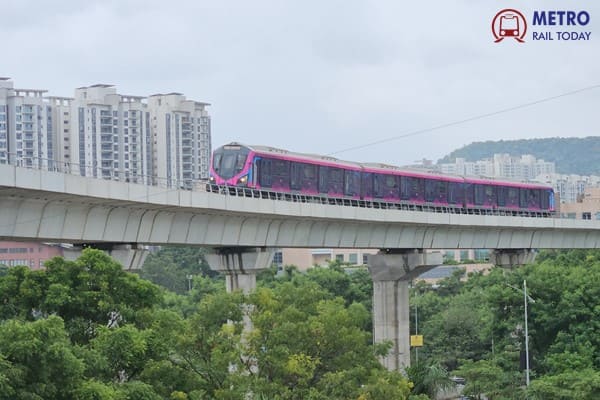 Pune Metro Line 3 set to launch First 12-km Section on 15 July 2026
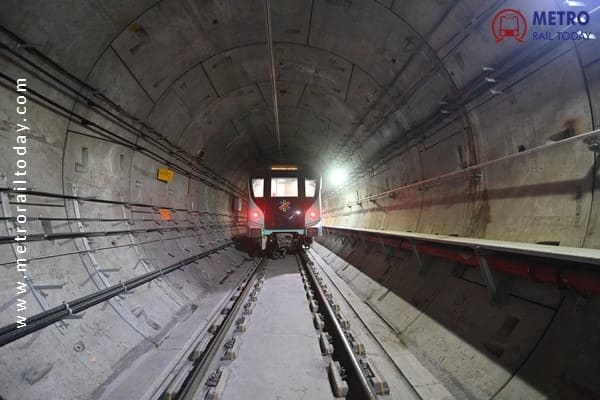 DMRC gets approval to Fell or Transplant 364 Trees for Central Vista Metro Corridor under Phase IV
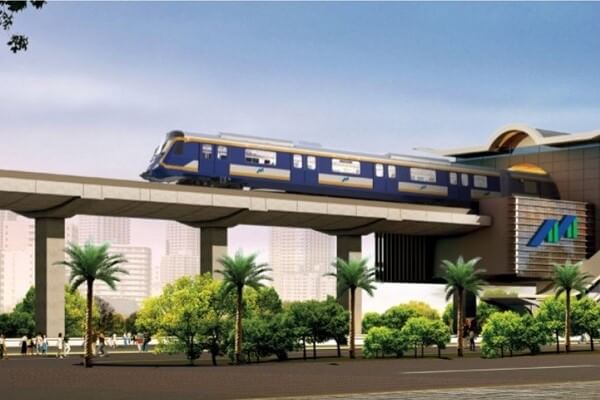 ₹4.5 Lakh crore Metro Rail Investment reaches less than 5% of Urban Population in India
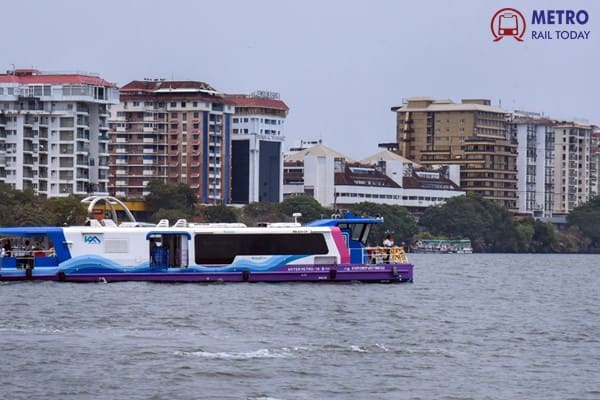 West Bengal plans to launch Water Metro Systems in Kolkata
- Titagarh Rail Systems targets full Indigenous Aluminium Coach Manufacturing by FY2027
Global hydrogen fuel cell train market to reach $26.41 billion by 2035
Dr. Vinod Shah
Posted on: 2024-04-17 15:50:00
Viewer: 3,099
Comments: 0
Country: India
City: New Delhi
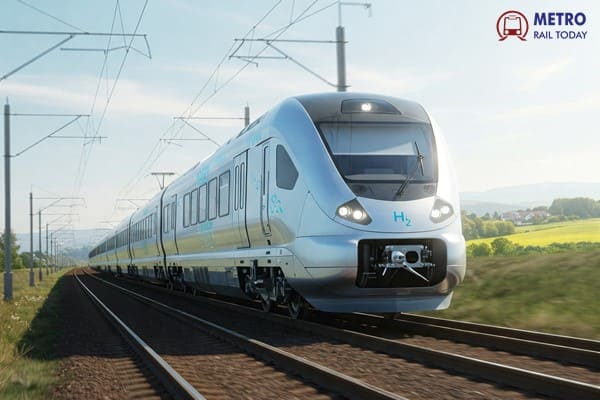
Hydrogen fuel cell trains, leveraging hydrogen as a power source for propulsion and auxiliary functions, have emerged as a promising solution in the pursuit of zero-emission rail transport. Recent years have witnessed a surge in research focused on harnessing hydrogen as a viable fuel for powering trains, as the rail sector endeavors to address challenges related to hydrogen storage infrastructure and public perceptions regarding safety and cost.
The global hydrogen fuel cell train market is poised for substantial growth, propelled by several key factors. Investments in railway infrastructure development are on the rise, driven by the imperative to modernize transportation networks and curb environmental impact. Growing environmental concerns, coupled with an increasing demand for sustainable public transport options, further bolster the prospects of hydrogen fuel cell trains.
However, the industry faces significant hurdles, notably the high capital requirements for developing hydrogen fuel cell trains and the refurbishment of existing rolling stock. Overcoming these challenges necessitates concerted efforts in research and development to optimize hydrogen fuel cell technology and enhance cost-efficiency.
Amidst these challenges lie opportunities for innovation and expansion. R&D activities focused on advancing hydrogen fuel cell technology are gaining momentum, promising breakthroughs in efficiency and affordability. Moreover, the rising demand for passenger trains, particularly in urban and suburban areas, presents a fertile ground for the proliferation of hydrogen fuel cell trains.
The hydrogen fuel cell train market is segmented across various parameters, including application, technology, component, rail type, and region. Passenger trains, freight trains, and other applications constitute key segments, alongside differentiating technologies such as proton exchange membrane fuel cells and phosphoric acid fuel cells. Components encompass hydrogen fuel cell packs, batteries, electric traction motors, among others, catering to diverse rail types spanning passenger, commuter, light rail, trams, freight, and more.
Leading players in the hydrogen fuel cell train market include renowned names such as Progress Rail, Alstom, CRRC Corporation Limited, Stadler, IHI Corporation, ENGIE, Talgo, Kawasaki Heavy Industries, Siemens Mobility, Hitachi, Wabtec, PESA, Ballard Power Systems, Toyota, BNSF, Hyundai Corporation, and CAF Group. These industry giants drive innovation and collaboration, shaping the trajectory of sustainable rail transport worldwide.
Forecasts indicate robust growth prospects for the global hydrogen fuel cell train market, with anticipated valuation reaching $2.67 billion by 2025 and projected expansion to $26.41 billion by 2035. This exponential growth trajectory, marked by a compound annual growth rate (CAGR) of 28.2% from 2026 to 2035, underscores the transformative potential of hydrogen fuel cell trains in revolutionizing the future of rail transport.


Dr. Vinod Shah
Dr. Vinod Shah is an experienced urban transport journalist, blogger and key opinion leader.