


Trending Now
 Karnataka proposes 270-km RRTS Network linking Bengaluru with Tumakuru, Mysuru and KGF
 Alstom and Vingroup sign MoU to supply up to 200 Metro Trains for Hanoi Urban Rail Projects
 Afcons Infrastructure wins ₹1,383 crore Civil Contract for Lucknow Metro Phase 1B Corridor
 GMRL issues ₹1,662 crore Civil Tender for Sector 9–Cyber City Gurugram Metro Rail Corridor
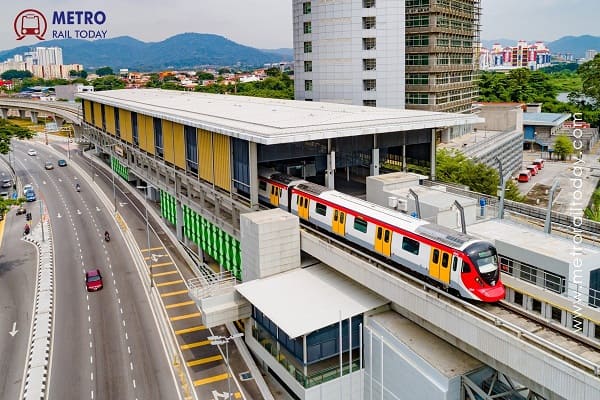 Madrid unveils €1.57 billion Metro Rail Expansion Programme with 27.8 km of New Corridors
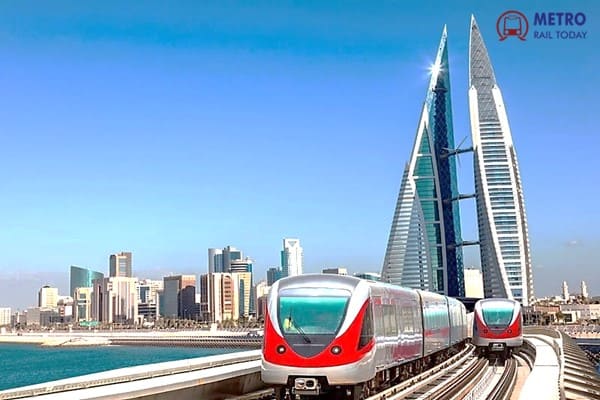 Global Tender launched for Project Management Consultancy for Abu Dhabi Tram Line 4
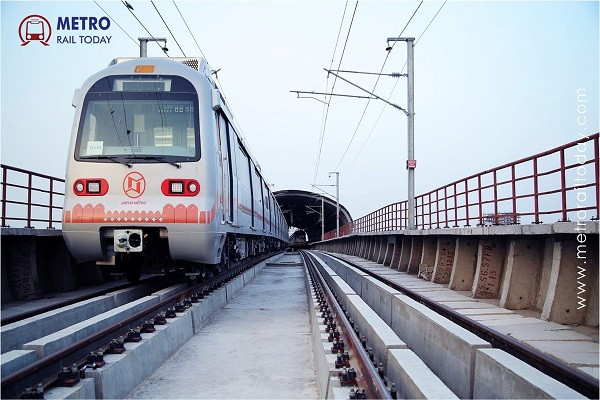 NV Dynamics awarded Noise and Vibration Study contract for Jaipur Metro Phase 2 Project
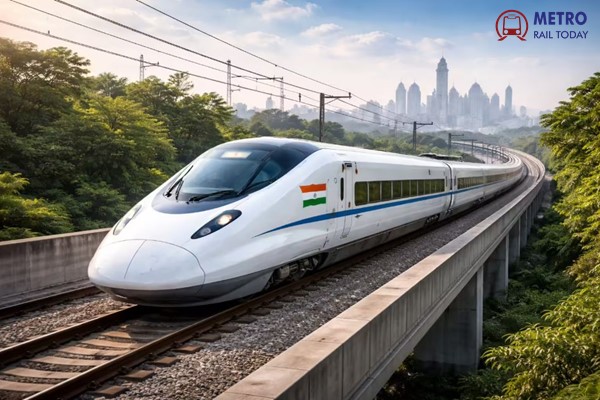 Two global consortia bid for India’s 350 kmph High-Speed Rail Design consultancy contract
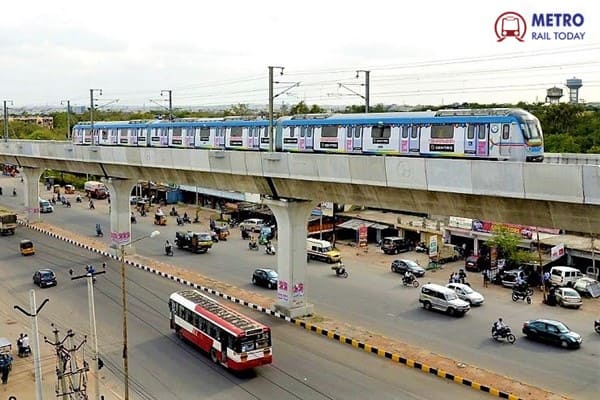 Larsen & Toubro (L&T) extends Hyderabad Metro stake sale timeline to 31 December 2026
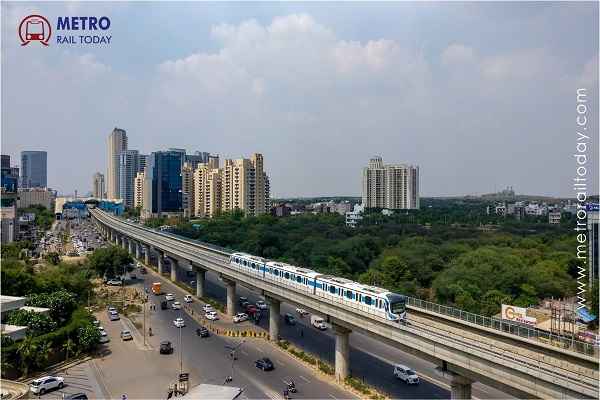 Haryana Govt approves ₹1,662 crore construction tender for Gurugram Metro Phase 2
China advances research on Ultra-High-Speed Hyperloop Transport between Beijing and Shanghai
MRT Online Desk
Posted on: 2026-03-06 15:55:00
Viewer: 1,744
Comments: 0
Country: China
City: Beijing
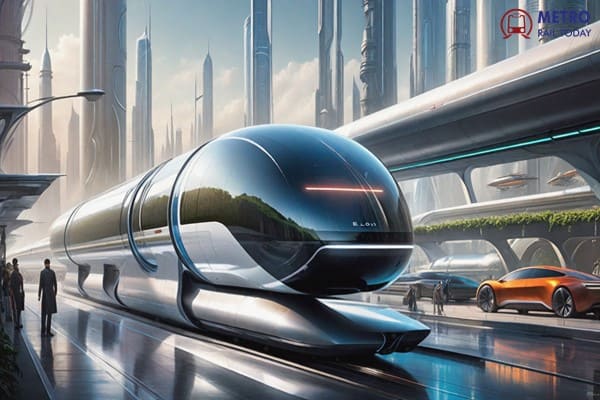
Beijing, China (Metro Rail Today): China is continuing to advance research into ultra-high-speed evacuated tube transport (ETT) technology that could potentially revolutionize intercity travel, with experimental work exploring the possibility of connecting major cities such as Beijing and Shanghai through hyperloop-style systems in the future.
The research is being led by institutions including China State Railway Group and the Chinese Academy of Sciences, which are investigating technologies capable of enabling vehicles to travel through low-pressure tubes using magnetic levitation, dramatically reducing aerodynamic resistance.
If successfully developed and scaled, such systems could theoretically enable travel speeds far beyond current high-speed rail technology, potentially reaching several thousand kilometres per hour.
Evacuated tube transport systems operate by placing magnetically levitated vehicles inside partially evacuated tubes, where reduced air pressure significantly lowers aerodynamic drag. The concept has been explored globally under various names, including hyperloop and vacuum tube transport.
China has already demonstrated experimental maglev systems and vacuum tube test tracks, where prototype vehicles have achieved extremely high speeds in controlled environments.
However, large-scale commercial implementation of such technology remains a long-term engineering challenge worldwide, requiring breakthroughs in infrastructure design, passenger safety systems, and operational logistics.
Developing operational evacuated tube transport networks requires solving several complex technical issues.
One major challenge is maintaining stable low-pressure conditions across hundreds or thousands of kilometres of tube infrastructure while ensuring structural safety and reliability.
Another key issue involves designing efficient passenger transfer systems and station infrastructure, allowing vehicles to enter and exit the low-pressure tube environment without causing operational delays.
Passenger safety and comfort at ultra-high speeds also remain a major area of research, particularly regarding acceleration forces, emergency procedures, and physiological impacts.
If successfully implemented in the future, ultra-high-speed transport systems could significantly reshape economic geography by dramatically reducing travel times between major metropolitan regions.
For example, a future ultra-high-speed connection between Beijing and Shanghai, currently linked by a world-class high-speed rail system with travel times of about 4.5 hours, could potentially reduce journey times to under an hour.
Such connectivity could further strengthen economic integration between the two cities, which together represent two of China’s largest financial, political, and technology hubs.
Several countries and research institutions are exploring next-generation transport technologies, including hyperloop systems, high-temperature superconducting maglev trains, and advanced high-speed rail networks.
China has already made significant progress in high-speed rail and maglev technology, including testing prototype trains designed to operate at speeds of up to 600 km/h.
While evacuated tube transport remains at the research and prototype stage, ongoing experimentation reflects the growing global interest in technologies that could redefine long-distance travel.
Commenting on the future of ultra-high-speed transport technologies, Mrs. Mamta Shah, MD & CEO, Urban Infra Group, said that such concepts represent the next frontier of mobility innovation.
“Technologies like evacuated tube transport and hyperloop systems demonstrate how future mobility solutions could dramatically reduce travel times between major cities. However, these systems still require extensive testing, regulatory frameworks, and large-scale infrastructure development before they become commercially viable,” she said.
She added that while conventional high-speed rail remains the most mature and reliable solution today, research into next-generation transport technologies will continue to shape the long-term evolution of global mobility systems.


MRT Online Desk
Metro Rail Today is an authentic and global news provider for the Rail & Metro industry from and around the world.