

Trending Now
 No DPR received for Metro, Metrolite or Urban Rail Extension to Rishikesh in Uttarakhand
 SYSTRA India announces Mega Recruitment Drive for High-Speed Rail, Metro and Railway Projects
 DB E&C–SYSTRA India JV Sign General Consultancy Contract for Pune Metro Phase 1 Extn and Phase 2
 Metro Man E. Sreedharan Awarded 23rd Honorary Doctorate by Gati Shakti Vishwavidyalaya
 India plans four new High-Speed Rail Corridors to connect Delhi with other major cities
 India’s Metro Network reaches 1,159 km; Government allocates ₹30,942 Crore for FY 2026–27
- RITES and MECON join hands to pursue Rail, Metro and Infrastructure Projects in India and Overseas
- Second TBM begins excavating India’s First Undersea High Speed Rail Tunnel on MAHSR Project
 Govt of India gives In-Principle approval to Meerut–Haridwar–Rishikesh Namo Bharat RRTS Corridor
 TÜV SÜD and MEDHA Servo Drives sign MoU to advance Hydrogen Rail Technologies in India
ICF signs ₹1,513 crore contract to supply Rolling Stock to Bengaluru Suburban Rail Project
MRT Online Desk
Posted on: 2026-05-11 08:15:00
Viewer: 1,885
Comments: 0
Country: India
City: Bengaluru
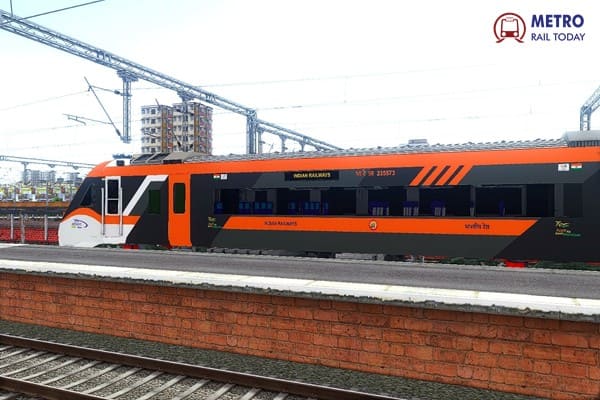
Bengaluru, India (Metro Rail Today): Bengaluru’s ambitious suburban rail project has received a significant push with Bengaluru Integrated Rail Infrastructure Development Enterprise Limited (Bi-RIDE), a subsidiary of K-RIDE, awarding a ₹1,513.75 crore contract to the Integral Coach Factory (ICF), Chennai, for the procurement of 153 air-conditioned broad-gauge metro-style coaches.
The rolling stock will be deployed for Corridors 2 and 4 of the Bengaluru Suburban Rail Project (BSRP), marking one of the most important milestones in the city’s long-awaited effort to build an integrated suburban rail network aimed at easing traffic congestion and improving regional connectivity.
Coach Deliveries to Begin Within 18 Months
The work order was officially issued on May 6, 2026, with deliveries expected to commence within the next 18 months. Authorities stated that the timeline has been strategically aligned with the planned opening of the Chikkabanavara–Yeshwanthpur section under Corridor-2.
The delivery schedule also follows directions issued during the Prime Minister’s PRAGATI review meeting held in December last year, reflecting the project’s national importance in addressing urban mobility challenges in Bengaluru.
The contract covers detailed design, manufacturing, inspection, testing, integration, and commissioning of the trainsets. ICF will additionally be responsible for obtaining statutory approvals from the Research Designs and Standards Organisation (RDSO) and coordinating with signalling, traction, power supply, and platform screen door systems.
Metro-Style AC Coaches for Modern Suburban Operations
The 153 coaches will feature air-conditioned metro-style interiors designed to support high-capacity suburban operations and commuter comfort. The trains will comply with internationally recognised RAMS standards covering Reliability, Availability, Maintainability, and Safety.
Industry experts believe the adoption of metro-style rolling stock will significantly enhance passenger experience and operational efficiency on Bengaluru’s suburban rail corridors, especially as the city struggles with severe road congestion and increasing commuter demand.
The suburban rail network is expected to become a key component of Bengaluru’s integrated urban transport ecosystem, complementing Namma Metro, BMTC bus services, and future multimodal mobility initiatives.
Mrs. Mamta Shah, MD & CEO of Urban Infra Group, said, “The procurement of modern metro-style rolling stock is a major milestone for Bengaluru’s suburban rail project. Efficient and high-capacity suburban systems are essential for reducing urban congestion, improving regional connectivity, and supporting sustainable mobility in rapidly growing metropolitan cities.”
Critical Step Towards Operational Readiness
K-RIDE Managing Director Lakshman Singh described the contract as a crucial milestone that ensures rolling stock availability aligns with the completion of track and systems infrastructure for Corridors 2 and 4.
According to project authorities, synchronising train procurement with infrastructure execution is expected to help avoid delays during the operational launch phase.
An official Memorandum of Understanding (MoU) between K-RIDE and ICF is expected to be signed shortly to formalise the collaboration.
Bengaluru Suburban Rail Project Gains Momentum
The Bengaluru Suburban Rail Project has long been considered a critical solution to the city’s worsening traffic congestion and rising urban mobility challenges. Once operational, the network is expected to connect key suburban and urban growth corridors while reducing dependency on road-based transport.
Corridors 2 and 4 are among the most important sections of the suburban rail network and are expected to witness significant commuter demand due to their strategic alignment through densely populated and industrial areas.
The latest rolling stock contract signals accelerating momentum for the project, which has witnessed increased coordination between the Karnataka government, Indian Railways, and central authorities in recent months.
As Bengaluru continues expanding as one of India’s largest technology and economic hubs, the suburban rail system is expected to play a transformative role in shaping the city’s future urban transportation landscape.

MRT Online Desk
Metro Rail Today is an authentic and global news provider for the Rail & Metro industry from and around the world.