

Trending Now
 MMRDA invites bids for ₹4,882 Crore Rolling Stock & Systems Contract for Mumbai Metro Line 12
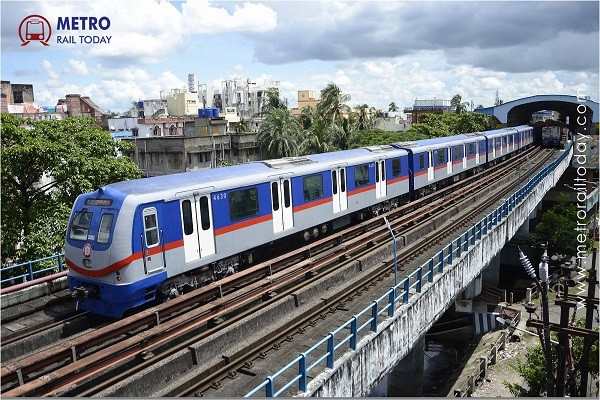 Kolkata Metro completes Aluminium Third Rail Upgrade on Blue Line
 Metroman E. Sreedharan submits new Blueprint for ₹54,000 Crore Kerala High Speed Rail Corridor
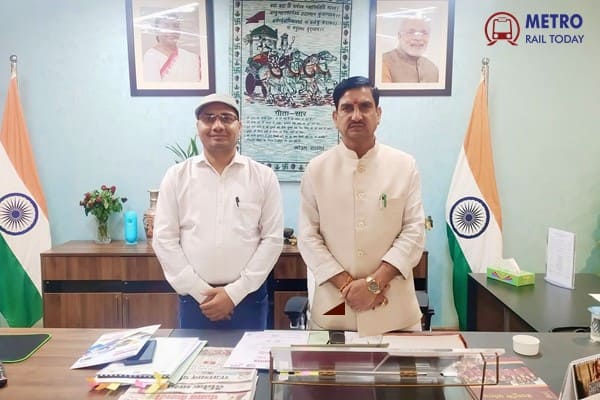 Union Housing & Urban Affairs Minister Tokhan Sahu to inaugurate 6th RailTrans Expo 2026
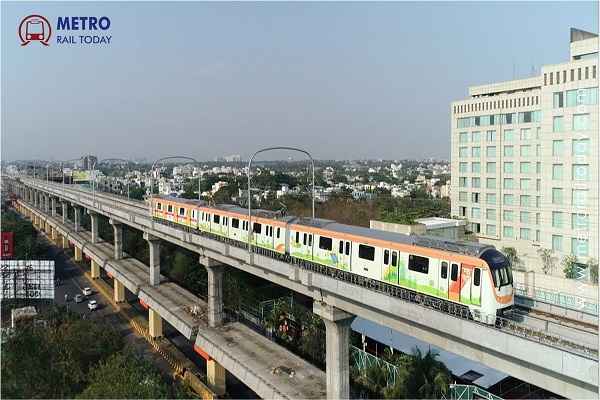 Maha Metro plans Six-Coach Trains ahead of Pune Metro Line 3 Launch
 Railway Ministry approves launch of India’s First Hydrogen-Powered Train on Jind–Sonipat Route
 Kineco Global Rail secures Interior Contract for new 100 Vande Bharat Sleeper Trains
 Ranjit Buildcon Wins ₹383.98 Crore Civil Contract for Lucknow Metro Phase 1B
 Tamil Nadu seeks Central Support for new Metro Rail Projects in Coimbatore, Hosur and Madurai
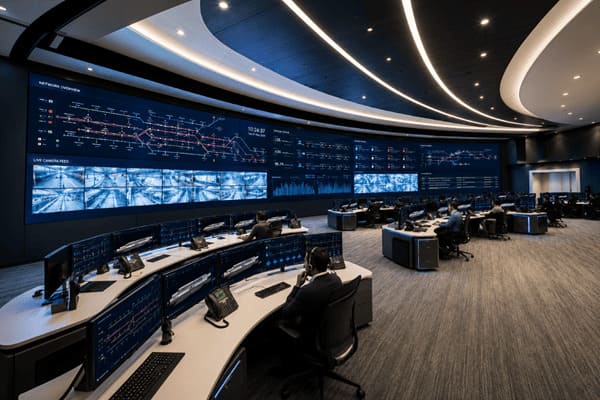 Future Metro Control Centres: ST Engineering Transforms Command Rooms to Intelligent Nerve Centres
Another 17 km section of Delhi-Meerut RRTS Corridor opened to the public
MRT Online Desk
Posted on: 2024-03-06 11:05:00
Viewer: 1,689
Comments: 0
Country: India
City: Ghaziabad
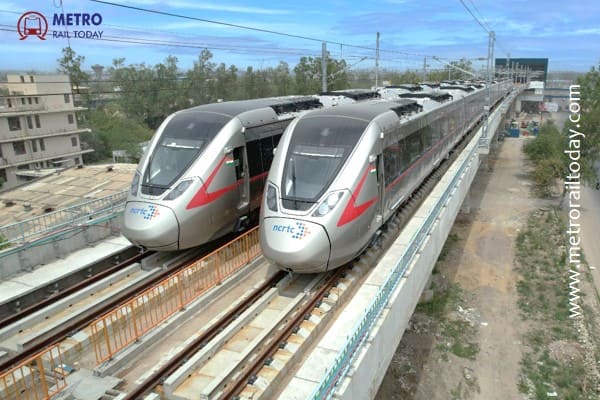
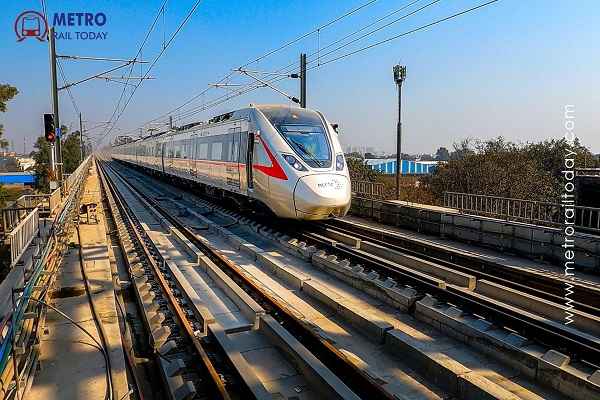
New Delhi, India (Metro Rail Today): In a historic move, Prime Minister Narendra Modi officially inaugurated the 17.1 km Duhai to Modi Nagar North RRTS section, marking a significant milestone in India's regional transportation infrastructure. The virtual flag-off of the Namo Bharat train from Muradnagar RRTS station showcased the government's commitment to advancing regional connectivity and fostering community integration.
The newly added 17.1 km stretch from Duhai to Modi Nagar North on the Delhi – Ghaziabad – Meerut RRTS corridor expands operational reach, incorporating three crucial stations: Murad Nagar, Modi Nagar South, and Modi Nagar North. With this inauguration, Namo Bharat services now seamlessly cover 34.1 km of the Delhi - Meerut RRTS corridor, including eight stations from Sahibabad to Modinagar North.
Honoring the occasion, Chief Guest Hardeep Singh Puri, Minister for Housing & Urban Affairs and Petroleum & Natural Gas, along with dignitaries like General (Dr.) Vijay Kumar Singh, Union Minister of State for Civil Aviation and Road Transport & Highways, marked the significant moment at the Muradnagar RRTS station.
Expressing gratitude to stakeholders, construction partners, and funding agencies, the National Capital Region Transport Corporation (NCRTC) emphasized the transformative impact of the RRTS project. Despite challenges, the support from Hon’ble Minister Hardeep Singh Puri and others played a crucial role in keeping the project on schedule.
Vinay Kumar Singh, MD, NCRTC said, “Under the visionary leadership of the Honorable Prime Minister, India is experiencing remarkable progress in the deployment of cutting-edge urban transit systems, which are developed and manufactured within the country under the Make-in-India initiative. We express our gratitude to the Hon’ble Minister, Housing and Urban Affairs, Government of India, the Government of Uttar Pradesh, and all our stakeholders and partners who have supported the implementation of this unique project.”
The journey of the RRTS corridor, initiated with the foundation stone laid by the Prime Minister in March 2019, saw its first passenger strides in October 2023. Aligned with the PM GatiShakti National Master Plan, the RRTS stations strategically integrate with various transit systems, reflecting a commitment to creating a comprehensive network for public transportation.
The seamless expansion of the Namo Bharat train service to Modi Nagar North enhances regional connectivity, making commuting more convenient. Crucial stations like Murad Nagar, Modi Nagar South, and Modi Nagar North further strengthen the RRTS system's ability to cater to the communities it serves.
The RRTS, boasting a design speed of 180 kmph and an operational speed of 160 kmph, aims to bridge distances within the National Capital Region. The Delhi-Ghaziabad-Meerut RRTS corridor, covering 82 km, promises to revolutionize regional transportation, significantly reducing travel time between Delhi and Meerut.
The inauguration of the extended Duhai to Modi Nagar North RRTS section by Prime Minister Narendra Modi signifies a monumental leap forward in India's pursuit of advanced regional transportation. This expansion not only enhances regional connectivity but also reflects a commitment to sustainable and efficient public transit systems. As the Namo Bharat train embarks on its extended journey, it symbolizes progress, accessibility, and a vision for a seamlessly connected future.

MRT Online Desk
Metro Rail Today is an authentic and global news provider for the Rail & Metro industry from and around the world.