

Trending Now
 Alstom and Siemens sign $1.5 billion Rolling Stock contract for Riyadh Metro Rail Project
 Bangladesh approves Tk 58,477 crore contracts for Dhaka Metro Lines 1 and 5
 RATP Dev–ComfortDelGro JV signs Operations & Maintenance Contract for Copenhagen Metro
 Rail Chamber explores India–Czech Railway Industry Partnerships at New Delhi Business Forum
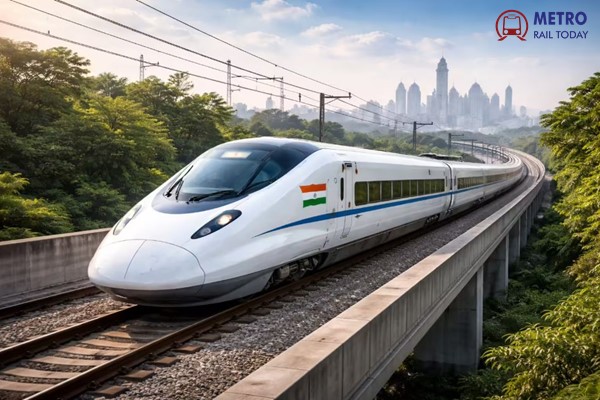 India must prove Safety before running different Bullet Train Systems on One Corridor: JTTRI Chief
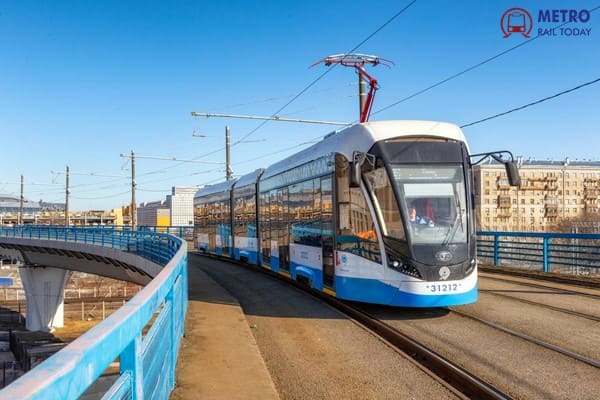 Tender issued for Feasibility Study to Transition Hubballi-Dharwad BRTS to Modern Tram System
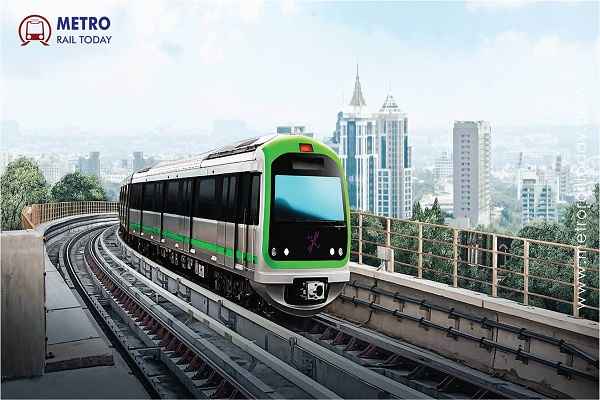 Tamil Nadu Chief Minister seeks Centre’s approval for Bengaluru–Hosur Metro Link
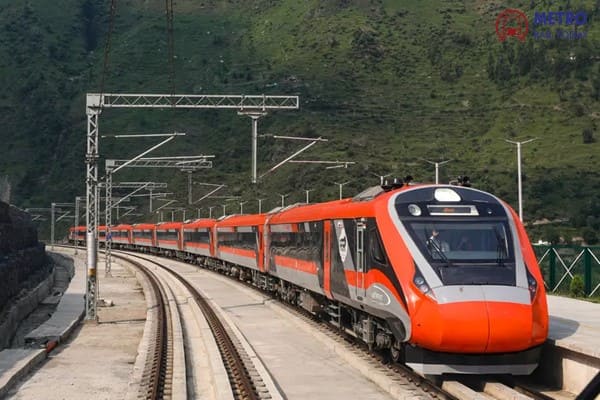 K-RIDE to appoint Detailed Design Consultant for Bengaluru Suburban Rail Project
 Prime Minister Narendra Modi inaugurates first 15-km stretch of Chennai Metro Phase 2
 Karnataka proposes 270-km RRTS Network linking Bengaluru with Tumakuru, Mysuru and KGF
Bangladesh approves Tk 58,477 crore contracts for Dhaka Metro Lines 1 and 5
MRT Online Desk
Posted on: 2026-10-12 08:10:00
Viewer: 203
Comments: 0
Country: Bangladesh
City: Dhaka
Dhaka, Bangaladesh (Rail & Metro Today): Bangladesh has taken a major step towards expanding its urban rail network, with the Cabinet Committee on Government Purchase (CCGP) approving eight contract packages worth Tk 58,477 crore for the country's MRT Line 1 and MRT Line 5 Northern Route projects. The approvals mark a significant milestone in Dhaka's long-term metro rail development programme, bringing major infrastructure packages closer to implementation.
The contracts involve companies from Japan, China, India, South Korea and Bangladesh, highlighting the international participation in the capital's ambitious mass rapid transit programme. The selected contractors include Japanese firms Tokyu, Nishimatsu, TODA and Sumitomo; Chinese companies Sinohydro, China Railway Engineering Corporation (CREC) and MBEC; India's Larsen & Toubro (L&T); South Korea's Hanil Engineering; and Bangladeshi companies Max Infrastructure and Concord Pragatee.
The projects are expected to strengthen Dhaka's public transport capacity, improve connectivity across key urban corridors and help address the city's persistent traffic congestion. Both MRT Line 1 and MRT Line 5 Northern Route are supported by the Japan International Cooperation Agency (JICA), underlining Japan's continuing role in Bangladesh's railway infrastructure development.
MRT Line 1 to Connect the Airport with Kamalapur
MRT Line 1 is planned to connect Hazrat Shahjalal International Airport with Kamalapur, one of Dhaka's important transport hubs. The project is designed to improve north-south connectivity and provide a high-capacity public transport alternative for commuters travelling between the airport, central areas and other major destinations.
With an estimated project cost of approximately Tk 1.14 trillion, MRT Line 1 is among Bangladesh's most ambitious urban rail investments. The network is planned to include an airport route and a section serving the eastern part of Dhaka, with underground construction forming an important component of the project.
Once operational, the line is expected to improve access to employment centres, commercial districts and interchange points across the capital. Its integration with other metro corridors could also help distribute passenger demand more efficiently and reduce dependence on road-based transport.
The involvement of international engineering and construction companies reflects the scale and technical complexity of the project, particularly in areas such as tunnelling, railway systems, station construction and infrastructure integration.
MRT Line 5 Northern Route to Strengthen Urban Connectivity
The MRT Line 5 Northern Route is planned to connect Hemayetpur with Bhatara, serving important areas across the northern part of the Dhaka metropolitan region. The project has an estimated cost of Tk 8,985 crore in the supplied project information and is intended to expand rapid transit access across a growing urban corridor.
The line is expected to improve connectivity for residents and commuters travelling between developing residential areas and major commercial and employment destinations. By providing an alternative to road transport, the corridor could help reduce travel-time uncertainty and support more sustainable urban development.
The participation of contractors from multiple countries is also expected to bring specialised engineering expertise and international project delivery experience to Bangladesh's metro construction programme. Effective coordination among contractors, consultants, government agencies and financing institutions will be essential to managing construction interfaces, costs and implementation schedules.
Commenting on the development, Mrs. Mamta Shah, MD & CEO of Urban Infra Group, said:
“Bangladesh's investment in MRT Line 1 and MRT Line 5 reflects the growing importance of mass rapid transit in addressing urban congestion and supporting sustainable economic development. The participation of companies from Japan, China, India, South Korea and Bangladesh also demonstrates how international engineering expertise and domestic capabilities can complement each other in delivering complex metro projects. Strong project management, technology integration and local capacity building will be critical to ensuring that these investments deliver long-term benefits for passengers and the wider economy.”
Dhaka's Six-Line Metro Vision Gains Momentum
Dhaka Metro Rail is a central part of Bangladesh's strategy to modernise urban mobility in its densely populated capital. The network is being developed under the Dhaka Mass Transit Company Limited (DMTCL), the government-owned organisation responsible for implementing and operating the city's metro system.
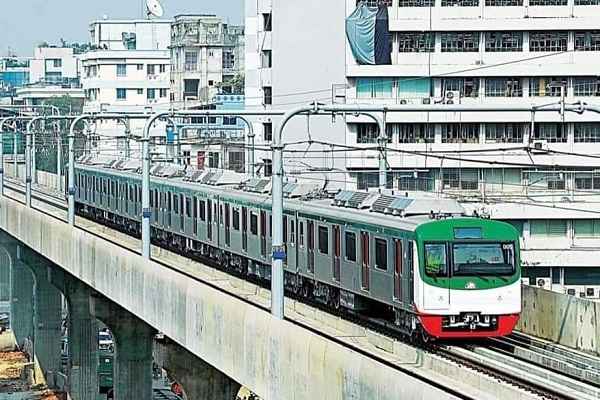
MRT Line 6 is currently the network's operational corridor, providing elevated rapid transit services and demonstrating the potential of metro rail to improve passenger movement in a city known for severe road congestion. The development of additional corridors is intended to extend these benefits to more communities and create a connected urban transport network.
Dhaka's broader metro plan envisages six MRT lines, with the future network expected to connect residential areas, business districts, transport hubs and other major destinations. Delivering this vision will require substantial investment, careful land-use planning, effective integration between corridors and reliable feeder transport services.
The approval of eight contract packages for MRT Line 1 and MRT Line 5 Northern Route represents an important step towards advancing this wider programme. However, the pace of construction, timely delivery of infrastructure and railway systems, and coordination between international and local contractors will determine how quickly the projects translate into passenger services.
As Dhaka continues to grow, the expansion of its metro network could play an increasingly important role in improving urban accessibility, supporting economic activity and reducing pressure on the road network. The latest approvals signal continued progress towards a more integrated and sustainable public transport system for Bangladesh's capital.


MRT Online Desk
Metro Rail Today is an authentic and global news provider for the Rail & Metro industry from and around the world.