

Trending Now
 Siemens Bags Order from Titagarh Rail Systems for Pune Metro Extension Trainsets
 Titagarh Rail Systems becomes Corporate Member of Chamber of Railway Industries (Rail Chamber)
 World Bank approves ₹1,400 crore Civil Tender for Gurugram Metro Phase 2
 Bi-RIDE invites ₹200 crore Tender for Soladevanahalli Depot of Bengaluru Suburban Rail Project
 GHV India awarded ₹107.79 crore Civil Contract for Lucknow Metro East-West Corridor
 Pune Metro Line 3 set to launch First 12-km Section on 15 July 2026
 DMRC gets approval to Fell or Transplant 364 Trees for Central Vista Metro Corridor under Phase IV
 ₹4.5 Lakh crore Metro Rail Investment reaches less than 5% of Urban Population in India
 West Bengal plans to launch Water Metro Systems in Kolkata
- Titagarh Rail Systems targets full Indigenous Aluminium Coach Manufacturing by FY2027
Construction work begins on India's first underground Bullet Train Station
MRT Online Desk
Posted on: 2024-02-26 07:15:00
Viewer: 3,158
Comments: 0
Country: India
City: Mumbai
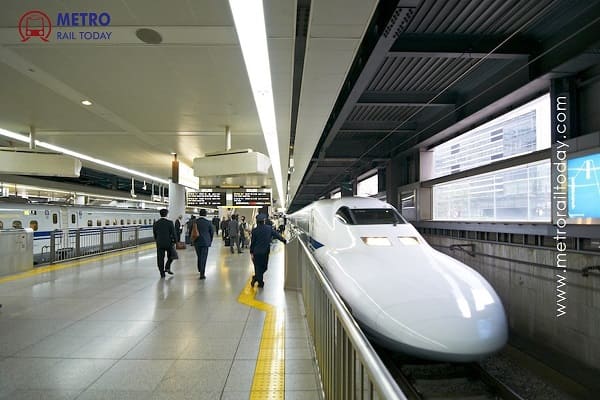
Mumbai, India (Metro Rail Today): In a significant stride towards transforming Mumbai's transportation landscape, the Mumbai-Ahmedabad High Speed Bullet Train project is rapidly advancing, marking a pivotal chapter in India's infrastructural development. The excavation for the Mumbai Bullet Train Station at Bandra Kurla Complex (BKC) has officially kicked off, promising a station that plunges an impressive 32 meters deep – a structural depth equivalent to a 10-story building.
The ambitious initiative includes the construction of a groundbreaking 21km tunnel, connecting the Mumbai Bullet Train Station to Shilphata on the outskirts of Mumbai. This venture is not merely ordinary; it will boast India's first undersea tunnel, stretching an astounding 7km beneath the waters of Thane Creek.
The execution of this formidable task involves the deployment of three Tunnel Boring Machines (TBMs) equipped with a substantial 13.6-meter cutter head diameter. Embracing the innovative New Austrian Tunneling Method (NATM), the project is set to create a state-of-the-art tunnel, with depths ranging from 25 to 57 meters. The pinnacle of engineering excellence will be reached at the deepest point, a staggering 114 meters below the Parsik Hill.
Ensuring the safety of both residents and commercial establishments in the vicinity, extensive safety measures have been put in place. State-of-the-art instrumentation is employed to monitor and protect against potential risks, showcasing a commitment to safeguarding the local community. Additionally, stringent dust and noise control measures are diligently implemented to minimize disruptions during the construction phase.
Behind the scenes, thousands of dedicated workers, engineers, and tunneling experts are working tirelessly day and night to bring India's First Bullet Train Project to fruition. Their commitment and expertise, combined with cutting-edge equipment and machinery, are propelling Mumbai towards a transformative future in transportation.
As the Bullet Train project in Mumbai accelerates its pace, it stands as a testament to India's commitment to modernizing its transportation infrastructure. The integration of cutting-edge technology, safety protocols, and the sheer dedication of the workforce underscore the nation's determination to lead in the realm of high-speed rail travel. The Mumbai Bullet Train is not just a project; it's a symbol of progress, connectivity, and the nation's vision for a dynamic future.
The city eagerly anticipates the day when this engineering marvel will become a reality, revolutionizing the way people traverse Mumbai and setting a new standard for transportation excellence.


MRT Online Desk
Metro Rail Today is an authentic and global news provider for the Rail & Metro industry from and around the world.