

Trending Now
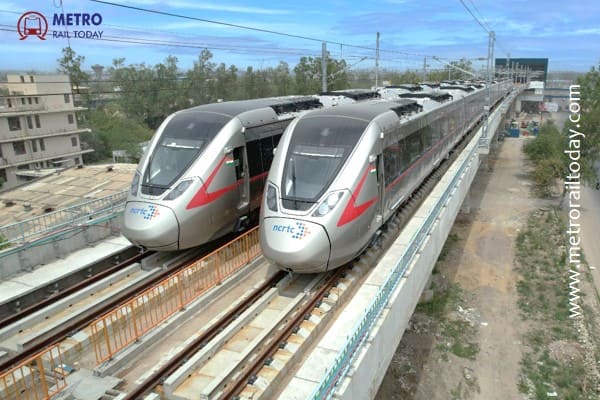
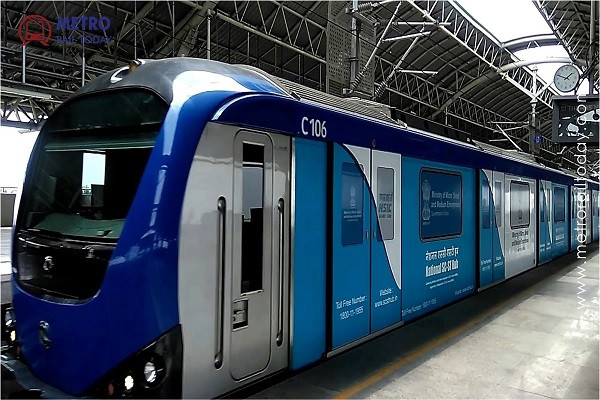 Alstom eyes ₹2,000 crore Chennai Metro tender for supply of 168 Train Coaches
 SYSTRA India emerges as lowest bidder for Thane Metro Design Consultancy Contract
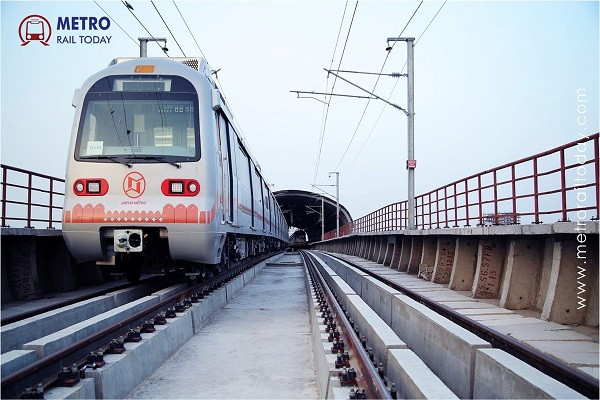 Adani Group's Cemindia Projects wins ₹921.63 crore Underground Package for Jaipur Metro
 EFKON India wins ₹288.11 crore Station Systems Contract for Indore Metro Rail Project
 L&T partners with IIT Madras-Backed TuTr Hyperloop to explore Next-Gen Mobility
 Alstom, Larsen & Toubro unveil First Driverless Trainset for Mumbai Metro Lines 4 and 4A
 BEML, Czech Republic delegation explore strategic Industrial and Technology Partnerships
- Six Firms qualify for ₹1,160 crore Underground Tunnel Package of Jaipur Metro Rail Project
 Alstom and Siemens sign $1.5 billion Rolling Stock contract for Riyadh Metro Rail Project
 Bangladesh approves Tk 58,477 crore contracts for Dhaka Metro Lines 1 and 5
Haryana unveils ₹15,000 crore Rapid Rail Plan connecting Gurugram to Greater Noida
MRT Online Desk
Posted on: 2025-05-24 07:10:00
Viewer: 10,230
Comments: 0
Country: India
City: Gurgaon
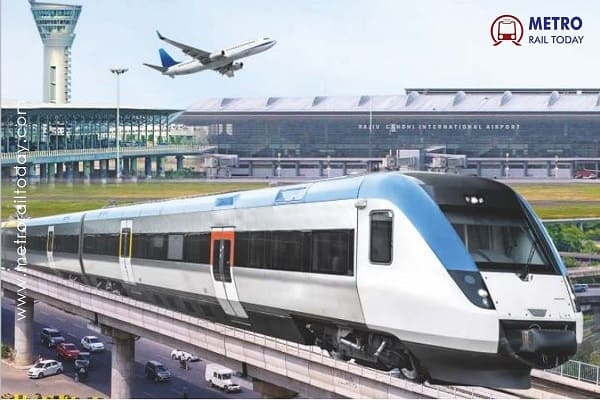
Gurugram, India (Metro Rail Today): In a significant boost to regional connectivity within the National Capital Region (NCR), the Haryana government is reportedly advancing plans for an ambitious ₹15,000 crore high-speed train corridor. This transformative project aims to link Gurugram to Greater Noida, with a crucial stop in Faridabad, promising to drastically cut travel times and unlock new avenues for economic development across the region.
The proposed high-speed rail line is envisioned as a critical artery for commuters and businesses alike, connecting three major urban and industrial hubs. Gurugram, a prominent financial and technology hub; Faridabad, a key industrial city; and Greater Noida, an emerging educational and industrial center, are all set to benefit from this ultra-modern transportation link. The project underscores Haryana's commitment to developing world-class infrastructure that supports rapid urbanization and seamless inter-city movement.
While details on the project's timeline and specific technological specifications are still emerging, the sheer scale of the investment signals a strong intent to implement a state-of-the-art rail system. Such high-speed corridors are instrumental in decongesting existing road networks, reducing pollution, and fostering a more integrated economic landscape by bringing distant areas closer in terms of travel time. This initiative aligns with India's broader vision of enhancing its rail infrastructure to meet the demands of a growing economy and population.
"The proposed ₹15,000 crore high-speed rail link connecting Gurugram, Faridabad, and Greater Noida is a game-changer for the NCR's urban development," stated Mrs. Mamta Shah, MD & CEO, Urban Infra Group. "This project is not just about faster travel; it's about creating a more cohesive economic zone, attracting investments, and significantly improving the quality of life for millions of commuters. Such regional high-speed corridors are essential for unlocking the full potential of our metropolitan areas and setting new benchmarks for integrated urban mobility."
The development of this high-speed corridor is expected to spur further growth in real estate, commercial activities, and industrial development along its route. It will also provide a much-needed alternative to road travel, which is often plagued by heavy traffic congestion in the NCR. As India continues to invest heavily in modernizing its transportation backbone, projects like the Gurugram-Greater Noida high-speed train are pivotal in transforming regional connectivity and fostering sustainable urban growth. The successful implementation of this project could serve as a blueprint for similar high-speed inter-city connections across other densely populated corridors in the country.

MRT Online Desk
Metro Rail Today is an authentic and global news provider for the Rail & Metro industry from and around the world.