

Trending Now
 No DPR received for Metro, Metrolite or Urban Rail Extension to Rishikesh in Uttarakhand
 SYSTRA India announces Mega Recruitment Drive for High-Speed Rail, Metro and Railway Projects
 DB E&C–SYSTRA India JV Sign General Consultancy Contract for Pune Metro Phase 1 Extn and Phase 2
 Metro Man E. Sreedharan Awarded 23rd Honorary Doctorate by Gati Shakti Vishwavidyalaya
 India plans four new High-Speed Rail Corridors to connect Delhi with other major cities
 India’s Metro Network reaches 1,159 km; Government allocates ₹30,942 Crore for FY 2026–27
- RITES and MECON join hands to pursue Rail, Metro and Infrastructure Projects in India and Overseas
- Second TBM begins excavating India’s First Undersea High Speed Rail Tunnel on MAHSR Project
 Govt of India gives In-Principle approval to Meerut–Haridwar–Rishikesh Namo Bharat RRTS Corridor
 TÜV SÜD and MEDHA Servo Drives sign MoU to advance Hydrogen Rail Technologies in India
Indian Railways to implement Kavach 5.0 in Mumbai Suburban Trains
MRT Online Desk
Posted on: 2025-04-14 09:20:00
Viewer: 3,008
Comments: 0
Country: India
City: Mumbai
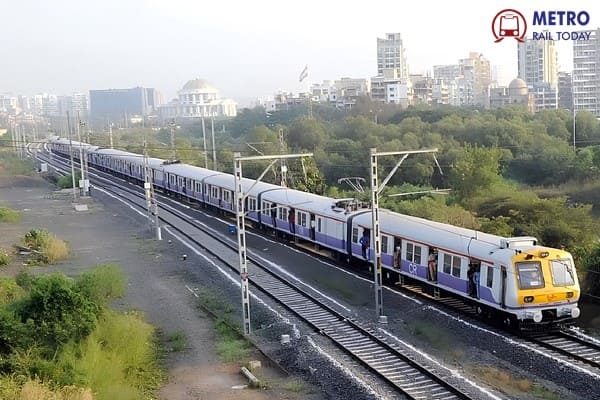
Mumbai, India (Metro Rail Today): In a transformative move aimed at upgrading Mumbai’s suburban rail services, Union Railway Minister Ashwini Vaishnaw on 11th April 2025 announced the upcoming implementation of Kavach 5.0, the latest version of India’s indigenous Automatic Train Protection (ATP) system. This cutting-edge technology is expected to increase the number of local train services by up to 30%, easing congestion for the nearly 80 lakh daily commuters who rely on the Mumbai suburban network.
Speaking at a press briefing alongside Maharashtra Chief Minister Devendra Fadnavis, the minister emphasized the critical role of technology in enhancing urban mobility. He stated that Kavach 5.0 is being developed with a Mumbai-specific objective and will be ready by December 2025. “Currently, the minimum headway between two trains is 180 seconds. With Kavach 5.0, we aim to reduce this by 30%, which will allow us to operate 30% more trains. This means more frequent services and greater convenience for commuters,” Vaishnaw said.
Kavach is an advanced safety system that automatically applies brakes if a loco pilot fails to act in time, thus preventing collisions and maintaining speed limits. It also ensures safer operations in poor weather conditions. The currently deployed Kavach 4.0 is being gradually implemented across different zones of Indian Railways, but the new version—5.0—is specially tailored to meet the demands of Mumbai’s high-frequency, high-volume local rail system.
Mumbai operates approximately 3,500 local train services daily, making it one of the busiest suburban rail networks in the world. Vaishnaw said that a comprehensive three-pronged strategy is being followed to improve suburban rail services—modern infrastructure, advanced technology, and better trains. Under this plan, projects worth ₹17,000 crore are currently being implemented to overhaul and expand rail infrastructure in the Mumbai Metropolitan Region.
“Efforts are underway to ensure that all 80 lakh daily passengers can travel more comfortably and safely. With the integration of Kavach 5.0, we will unlock the potential to offer more frequent and reliable train services, helping us meet growing commuter demand,” he added.
This initiative is part of a broader modernization effort by Indian Railways to deploy state-of-the-art technologies and improve service delivery across the country’s busiest corridors. Once implemented, Kavach 5.0 could serve as a model for high-density suburban networks in other major cities as well.

MRT Online Desk
Metro Rail Today is an authentic and global news provider for the Rail & Metro industry from and around the world.