

Trending Now
 Govt. of India approves ₹12,200 crore, 29-km Thane Integral Ring Metro project in Maharashtra
 World’s Top 20 Metro Systems: Engineering Marvels Transforming the Future of Urban Mobility
 NCRTC celebrates Three Years of Namo Bharat, Highlights 4.5 crore Passenger Journeys
 Alstom eyes ₹2,000 crore Chennai Metro tender for supply of 168 Train Coaches
 SYSTRA India emerges as lowest bidder for Thane Metro Design Consultancy Contract
 Adani Group's Cemindia Projects wins ₹921.63 crore Underground Package for Jaipur Metro
 EFKON India wins ₹288.11 crore Station Systems Contract for Indore Metro Rail Project
 L&T partners with IIT Madras-Backed TuTr Hyperloop to explore Next-Gen Mobility
 Alstom, Larsen & Toubro unveil First Driverless Trainset for Mumbai Metro Lines 4 and 4A
 BEML, Czech Republic delegation explore strategic Industrial and Technology Partnerships
Kochi Metro explores Light Tram System for sustainable Urban Mobility
MRT Online Desk
Posted on: 2025-05-16 10:45:00
Viewer: 4,045
Comments: 0
Country: India
City: Kochi
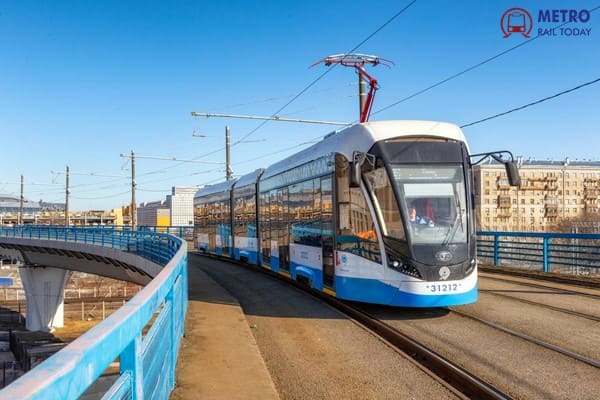
Kochi, India (Metro Rail Today): Kochi Metro Rail Limited (KMRL) is considering the introduction of a light tram system to enhance urban mobility in the city. The proposed system draws inspiration from Brisbane's successful model, aiming to provide an efficient, cost-effective, and sustainable transport solution for Kochi's non-metro areas.
Feasibility Studies and Planning
KMRL has initiated a feasibility study for the light tram project, focusing on the 6.2 km MG Road-Menaka-Park Avenue Road-Jos Junction-Thevara loop line corridor. This route was identified following a preliminary assessment by HESS Green Mobility, a Swiss-based company with experience in implementing light tram services globally. The study aims to evaluate the technical and financial viability of the project.
The light tram system is envisioned to serve as a feeder service to the existing Kochi Metro, particularly benefiting the Aluva-MG Road-Thripunithura phase-1 corridor. Additionally, it aims to integrate seamlessly with the Water Metro ferries operating from the High Court terminal, providing a multimodal transport solution for commuters.
Cost-Effectiveness and Sustainability
One of the primary advantages of the light tram system is its cost-effectiveness. Compared to conventional metro systems, light trams require significantly lower capital investment and have reduced land acquisition needs. For instance, constructing a metro rail system can cost approximately ₹250 crore per kilometer, whereas the light tram system can achieve similar outcomes at a fraction of the cost.
The light trams are designed to be electric-hybrid, offering a sustainable alternative to traditional diesel-powered vehicles. They can be fully recharged in six minutes and are equipped with low-floor boarding, making them accessible to all passengers, including those with disabilities.
Challenges and Considerations
Despite the promising aspects, the implementation of the light tram system faces certain challenges. The Ministry of Housing and Urban Affairs (MoHUA) has raised concerns regarding the feasibility study process, suggesting that KMRL should issue a tender to invite agencies to conduct the study to ensure transparency and accountability.
Additionally, the narrow roads and complex junctions in Kochi pose operational challenges for the light tram system. However, officials are optimistic that advanced intelligent transport signaling systems can mitigate these issues, ensuring smooth and efficient operations.
Future Prospects
If the feasibility study yields positive results, KMRL plans to extend the light tram system to other cities in Kerala, including Thiruvananthapuram and Kozhikode. The goal is to provide an affordable and sustainable mass rapid transport system that complements existing infrastructure and meets the growing urban mobility needs of the state.
Kochi Metro's exploration of the light tram system represents a forward-thinking approach to urban transportation, aligning with global trends towards sustainable and cost-effective mobility solutions. As the feasibility study progresses, stakeholders remain hopeful that this initiative will pave the way for a more connected and sustainable Kerala.

MRT Online Desk
Metro Rail Today is an authentic and global news provider for the Rail & Metro industry from and around the world.