

Trending Now
 Modern Trainlines and the End of Coal Trains: Why Rail Networks Have Moved Forward
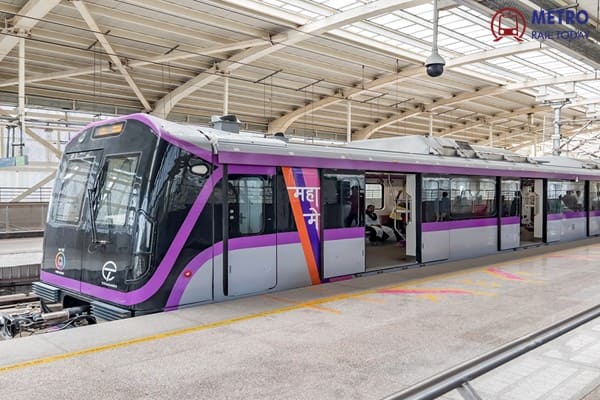 Siemens Bags Order from Titagarh Rail Systems for Pune Metro Extension Trainsets
 Titagarh Rail Systems becomes Corporate Member of Chamber of Railway Industries (Rail Chamber)
 World Bank approves ₹1,400 crore Civil Tender for Gurugram Metro Phase 2
 Bi-RIDE invites ₹200 crore Tender for Soladevanahalli Depot of Bengaluru Suburban Rail Project
 GHV India awarded ₹107.79 crore Civil Contract for Lucknow Metro East-West Corridor
 Pune Metro Line 3 set to launch First 12-km Section on 15 July 2026
 DMRC gets approval to Fell or Transplant 364 Trees for Central Vista Metro Corridor under Phase IV
 ₹4.5 Lakh crore Metro Rail Investment reaches less than 5% of Urban Population in India
 West Bengal plans to launch Water Metro Systems in Kolkata
London abandons plans for Driverless Metro operations due to high costs and infra challenges
MRT Online Desk
Posted on: 2024-12-09 11:00:00
Viewer: 1,196
Comments: 0
Country: United Kingdom
City: London
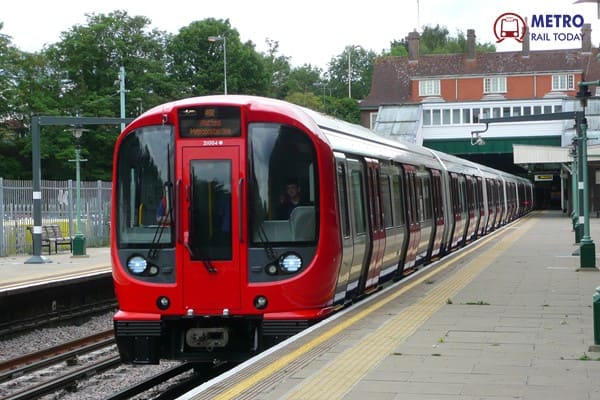
London, United Kingdom (Metro Rail Today): In a significant shift, London has officially abandoned plans to introduce driverless trains to its underground metro system. The decision was announced by Mayor Sadiq Khan, responding to questions raised by Alex Wilson, a member of the Reform UK party, regarding the future of London's transport infrastructure.
Mayor Khan clarified that while many global metro systems have embraced automation, transforming London’s iconic underground network would require extensive and costly upgrades. These changes would include the installation of platform screen doors, the replacement of rolling stock, and an overhaul of signaling systems. He emphasized that the scale of the transformation, coupled with the high financial costs, made it difficult to justify pursuing driverless metro operations at this time.
Costly and Complex Transformation
Transport for London (TfL) began exploring the idea of introducing driverless trains in 2020, considering it as a part of its long-term modernization strategy. However, a leaked report revealed that implementing driverless trains alone would require an investment of £7 billion ($8.9 billion), excluding the necessary infrastructure upgrades. This figure prompted opposition from train drivers' unions, who criticized the plan for its exorbitant costs and questioned its feasibility in light of the ongoing financial challenges faced by TfL.
The unions, which have been vocal about their concerns, argue that the funds required for automation could be better spent on improving existing services and ensuring better working conditions for railway staff. Their stance highlights the ongoing debate around the balance between automation and job security in the transport sector.
Focus on Modernizing Existing Fleet
While the driverless metro project is officially shelved, TfL remains committed to modernizing its fleet and improving the overall passenger experience. The focus is currently on the Piccadilly Line, where TfL is working with Siemens Mobility to introduce 94 new trains. The first of these new trains arrived in London in October 2023, with the complete delivery scheduled for 2027. Notably, 80% of these trains will be manufactured at Siemens' state-of-the-art facility in Goole, UK, supporting local industry and strengthening the UK's manufacturing capabilities.
This modernization effort will significantly improve the efficiency and comfort of services on the Piccadilly Line, which is one of London’s busiest underground routes. The new fleet will be equipped with the latest technology to enhance service reliability and passenger satisfaction, without the need for a full-scale shift to driverless trains.
Public Opinion and Future of London’s Metro System
The decision to abandon the driverless metro project has sparked mixed reactions. Some members of the public and transport experts support City Hall's cautious approach, pointing to the high costs and potential risks associated with such a radical transformation. Others, however, have criticized the decision as a missed opportunity for innovation and the modernization of the city’s transport network.
Despite shelving the driverless train plans for now, London continues to invest in its metro infrastructure with a focus on sustainability, safety, and efficiency. City Hall has stressed that any future discussions about automation will be based on comprehensive research and consultations with all stakeholders, including unions, transport experts, and the public.
The Ongoing Debate on Automation and Job Security
Unions have been particularly vocal in their opposition to automation, emphasizing the important role of train drivers in ensuring passenger safety. They argue that the introduction of driverless technology could lead to job losses and widen social inequality. In contrast, advocates of driverless trains argue that automation could improve efficiency, reduce operating costs, and free up human workers for other roles within the industry.
This ongoing debate over automation versus human-operated systems reflects broader concerns about the future of work in the age of smart technologies. As London’s metro system evolves, finding the right balance between innovation and safeguarding employment remains a key challenge.
A Cautious Step Forward
While the prospect of a driverless metro in London has been abandoned for the time being, the city’s transport authorities are not turning away from progress. The ongoing modernization of the Piccadilly Line and other initiatives under TfL’s long-term plans continue to focus on improving the passenger experience while maintaining a commitment to sustainability and safety.
In the coming years, as technology evolves and further research is conducted, the possibility of automation in London’s transport network may be revisited. For now, though, the focus remains on optimizing the existing infrastructure, with an emphasis on improving the system’s efficiency, reliability, and overall service quality.


MRT Online Desk
Metro Rail Today is an authentic and global news provider for the Rail & Metro industry from and around the world.