

Trending Now
 Efkon India Bags ₹103 Crore Telecom Systems Contract for Mumbai Metro Lines 7A and 9
 Bids invited for Telecommunication Systems Contract for Kochi Metro Phase 2 Pink Line
 KMRL invites bids for supply of Heavy-Duty Escalators for Kochi Metro Phase 2 Pink Line
 Spain floated €357.6 Million civil works tender for Burgos–Vitoria High-Speed Rail Line
 Wabtec bags multiple contracts to supply over 680 Pantographs for Rail & Metro projects in India
 Titagarh Rail bags major Rolling Stock contract for Ahmadabad Metro Phase 2 and Surat Metro
 Indian Railways restructures Railway Board, Redeploys 50 Senior Officers to Field Duty
 T&T Infra–Univastu JV Bags ₹229.97 Crore Civil Contract of Pune Metro Rail Project
 Rail composites market set to reach $2.4 billion by 2028 as Railways embrace lightweight materials
 Alstom powers Delhi Metro's Pink and Magenta Line with Driverless Trains and CBTC Signalling
NCRTC tested ETCS Level 2 Signalling Over LTE for Delhi-Meerut RRTS Corridor
MRT Online Desk
Posted on: 2022-10-10 14:17:00
Viewer: 3,505
Comments: 0
Country: India
City: New Delhi
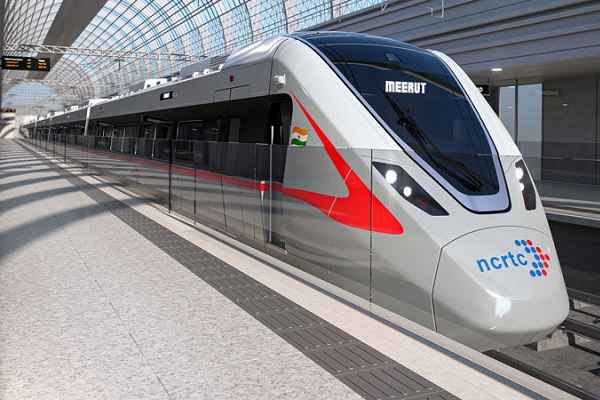
New Delhi, India (Metro Rail Today): The National Capital Region Transport Corporation (NCRTC) has successfully completed the dynamic test run of the RRTS trainset with the European Train Control System (ETCS) level 2 signalling over LTE communication network on the test tracks in Duhai Depot.
"Shri Vinay Kumar Singh, Managing Director, NCRTC, on-board RRTS trainset along with all the Directors and other senior officials of NCRTC, recently initiated the first dynamic test run of the RRTS trainset with the European Train Control System (ETCS) level 2 signalling over LTE communication network, on the test tracks in Duhai Depot. The test run was successful and the Signalling system and the RRTS trainset operated with each other as per the technical expectations," said an official release.
ETCS technology is widely deployed globally on GMS-R communication networks in Europe and other countries. GSM-R technology will become obsolete in near future. It is for the first time in the world that standard ETCS technology is being deployed by NCRTC on the LTE communication backbone for RRTS.
LTE provides a high throughput communication link which will be used for mission-critical data, voice, IoT, important video and other important message exchanges between the train to the trackside and the operation control centre. The Department of Telecommunication (DOT) has temporarily allocated a spectrum in the 900 MHz band for the commissioning of the LTE network for the priority section of Delhi-Meerut RRTS. For the allocation of spectrum in the 700 MHz band permanently, a reference has been made by DOT to TRAI and the recommendation of TRAI is expected soon.
Commuter-centricity being a core value of NCRTC, it has strategically planned for interoperability between all three priority corridors of Phase 1 and the adoption of ETCS Level 2 signalling technology was crucial for enabling it. ETCS Level 2 signalling is vendor agnostic and there it is not essential to go back to the same vendor for future extensions of the corridor. Adopting this technology, which is suitable for the design speed of 180 Kmph of RRTS, will allow the RRTS trains to move seamlessly from one corridor to another. This will help passengers travel comfortably without the hassle of changing trains and promote a modal shift to public transport.
While congratulating the team NCRTC and engineers of Alstom and Nokia, Vinay Kumar Singh, MD, NCRTC said “This is for the first time in the world that a combination of the latest ETCS Level 2, having Automatic Train Operation (ATO) over Long-Term Evolution (LTE) radio is being deployed. I am happy that despite this technological challenge and serious supply-chain constraints posed by the pandemic, NCRTC successfully procured the ETCS Level 2 Signalling system under Make in India guidelines and implemented it within the stipulated timelines.” He also said that “this step will be instrumental to create indigenous capacity for similar systems in the country.”
ETCS signalling will be integrated with the Platform Screen Doors at all the RRTS stations of the corridor. PSD will safeguard commuters on the platform by providing a barrier between the platform and the track.

MRT Online Desk
Metro Rail Today is an authentic and global news provider for the Rail & Metro industry from and around the world.