

Trending Now
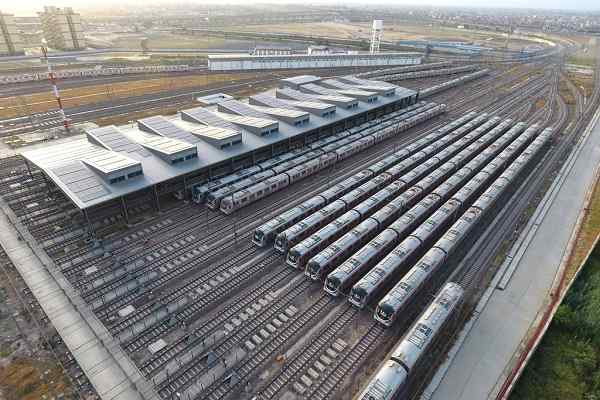 DMRC floats Tender for Central Vista Depot Design in Delhi Metro Phase V Expansion
 MMRDA seeks ₹14,100 Crore Loan for two upcoming Mumbai Metro Corridors
 Jupiter Wagons Eyes ₹20,000-Crore Mumbai Suburban Mega Rolling Stock Tender
 Mumbai Metro Chief Ashwini Bhide appointed as First Woman BMC Commissioner
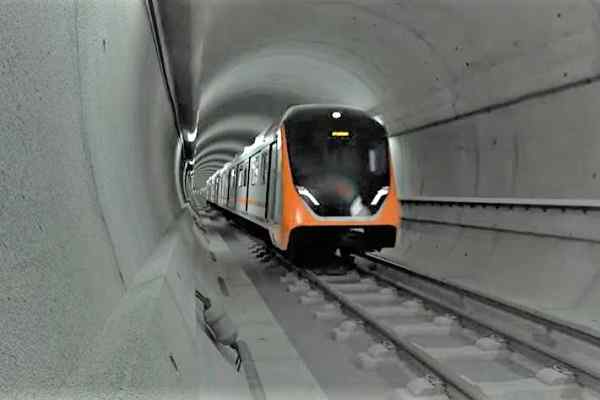 TBM ‘Parvati’ completes Underground Tunnelling on Kanpur Metro Phase 1 Project
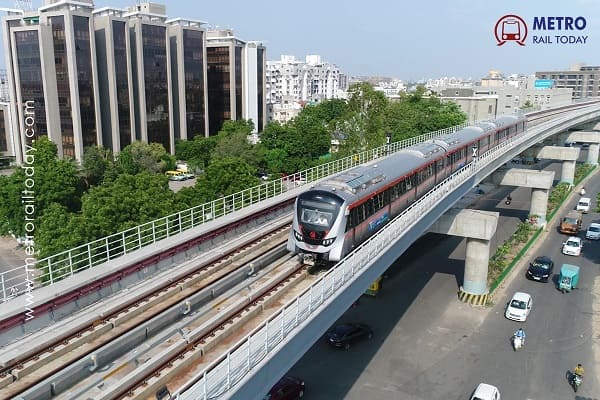 Surat Metro begins First Trial Run on 8.5 km Diamond Corridor between Dream City and Althan Tenement
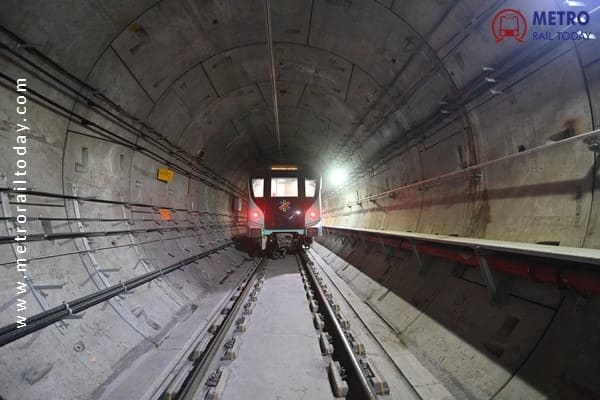 Cemindia wins ₹1,024 crore Civil Contract for Central Vista Tunnel Package of Delhi Metro Phase V
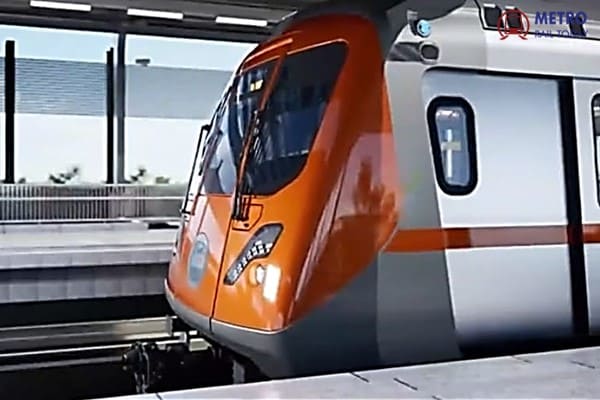 TBM ‘Durgavati’ begins tunneling works on Bhopal Metro Underground Stretch
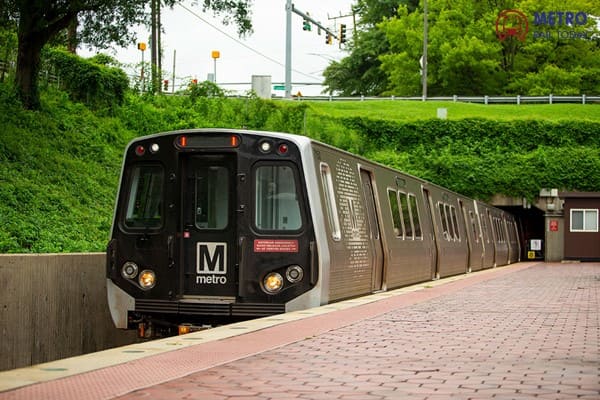 Washington Metro celebrates its Golden Jubilee—50 years of passenger service
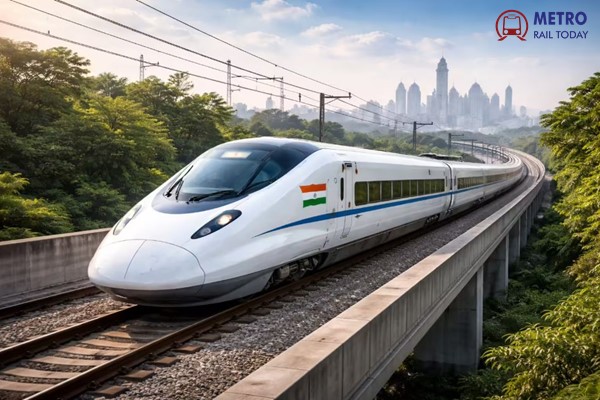 Two TBMs arrive in Mumbai for undersea tunneling on Mumbai-Ahmedabad Bullet Train Project
Saudi Arabia and Qatar Sign Landmark Agreement for Riyadh–Doha High-Speed Rail Link
MRT Online Desk
Posted on: 2025-12-10 06:25:00
Viewer: 1,611
Comments: 0
Country: Saudi Arabia
City: ar-Riyad
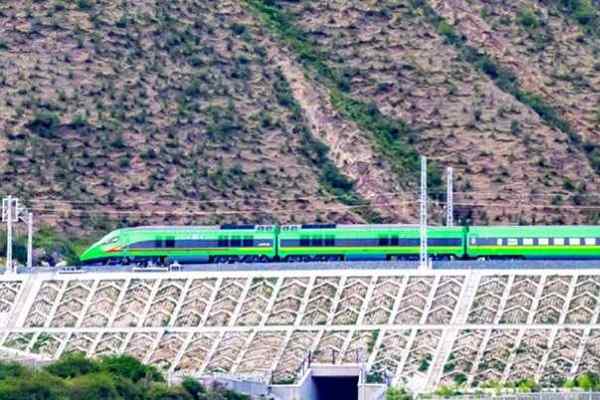
Doha, Qatar (Metro Rail Today): Saudi Arabia and Qatar have taken a decisive step toward deeper regional integration with the signing of a landmark agreement to develop a high-speed rail link between Riyadh and Doha. The project aims to transform cross-border mobility, boost tourism, and strengthen integrated logistics across the Gulf, while potentially reviving momentum for the long-delayed GCC Railway network.
The agreement was signed during the eighth meeting of the Saudi–Qatari Coordination Council in Riyadh, in the presence of Saudi Crown Prince Mohammed bin Salman and Qatar’s Emir Sheikh Tamim bin Hamad Al Thani, underlining the strong political backing behind the initiative.
Once implemented, the project will rank among the most ambitious cross-border rail developments in the Middle East.
Project Overview: A Two-Hour Rail Journey Between Riyadh and Doha
The proposed 785-kilometre electrified high-speed railway will connect the Saudi and Qatari capitals in approximately two hours, with trains expected to operate at speeds exceeding 300 km/h. The corridor is designed to provide a competitive alternative to short-haul air travel, significantly reducing travel time while improving reliability and sustainability.
Key features of the Riyadh–Doha high-speed rail project include:
-
High-speed electric trains capable of 300+ km/h
-
Integration with King Salman International Airport (Riyadh) and Hamad International Airport (Doha)
-
Strategic intermediate connections, including Al-Hofuf and Dammam in Saudi Arabia
-
Annual capacity estimated at over 10 million passengers
-
Projected completion timeline of six years
Authorities estimate the project will generate around 30,000 jobs across construction, operations, maintenance, and allied industries.
Economic and Environmental Benefits
Beyond faster travel, the Riyadh–Doha high-speed rail line is expected to deliver significant economic and environmental gains. By shifting passenger traffic from road and air to rail, the project will contribute to lower carbon emissions, reduced congestion, and improved energy efficiency.
The railway is also expected to:
-
Boost business travel and cross-border tourism
-
Lower transaction costs between the two economies
-
Stimulate growth in hospitality, logistics, retail, and services
-
Enhance labour mobility between Saudi Arabia and Qatar
Strategic Alignment with Vision 2030 and Qatar’s Growth Agenda
For Saudi Arabia, the project directly supports Vision 2030, which seeks to position the Kingdom as a global logistics and connectivity hub, diversify the economy beyond hydrocarbons, and attract foreign investment into transport and mobility ecosystems.
For Qatar, the rail link strengthens its role as a regional transit and business centre, complementing its world-class aviation infrastructure and supporting efforts to expand non-energy economic activity.
The project reflects a broader strategic alignment, with both countries increasingly anchoring their bilateral relationship in shared infrastructure, economic interdependence, and long-term regional competitiveness.
Catalyst for the GCC Railway Network
The Riyadh–Doha rail agreement could serve as a proof of concept for wider GCC rail integration, a long-standing vision to connect all six Gulf Cooperation Council states via a unified railway network.
After years of delays due to political and economic factors, the successful execution of this bilateral project could revive confidence in cross-border rail connectivity, demonstrating its feasibility, economic value, and strategic relevance. If extended, a GCC-wide network would significantly enhance intra-regional mobility and reduce dependence on short-haul aviation.
Institutional Backing Through the Saudi–Qatari Coordination Council
The Saudi–Qatari Coordination Council has emerged as a key institutional platform driving bilateral cooperation across economic, political, security, and cultural domains. The eighth session reviewed ongoing initiatives and identified new areas for collaboration, including business, media, technology, and infrastructure development.
The involvement of top leadership signals a commitment to embedding cooperation at an institutional level, moving beyond symbolic reconciliation toward long-term partnership.
Diplomacy, Security, and Energy Cooperation
The rail agreement also reflects the dramatic improvement in Saudi–Qatar relations since the 2021 Al-Ula reconciliation, which ended a multi-year diplomatic rift and restored land, air, and sea connectivity.
Alongside the rail announcement, both countries issued a joint statement committing to:
-
Expand defence and security cooperation
-
Strengthen coordination on regional issues
-
Enhance collaboration on counterterrorism financing, drug trafficking, and passenger security
The two sides also emphasized cooperation in energy markets, electricity exchange, renewable energy, and energy efficiency—areas likely to shape the Gulf’s next phase of economic and energy transition.
Opportunities Across Multiple Sectors
The Riyadh–Doha high-speed rail project opens up wide-ranging opportunities:
Cross-border tourism and services
The two-hour rail link is expected to significantly increase short-haul tourism, business travel, and event-driven mobility between the two capitals.
Logistics and multimodal integration
By linking major airports, industrial zones, and urban centres, the line enables new multimodal logistics hubs and regional distribution networks.
Rail construction and technology
The six-year construction phase will generate demand for civil contractors, rail system integrators, rolling stock suppliers, signalling providers, and digital operations platforms, with long-term opportunities in maintenance and upgrades.
Investment and PPP potential
The project could act as a platform for public–private partnerships, infrastructure investment funds, and transit-oriented development around stations and corridors.
Conclusion: A Symbol of Gulf Integration Through Infrastructure
The Riyadh–Doha high-speed rail project represents more than a transport upgrade. It marks a decisive evolution in Saudi–Qatar relations, translating post-Al-Ula normalization into structurally binding economic and strategic cooperation.
If delivered as planned, the railway will stand as a tangible symbol of Gulf integration—demonstrating how cross-border infrastructure can generate economic returns, enhance mobility, and reinforce political stability in an increasingly complex regional environment.
For the Gulf region, the project signals a future where rail connectivity complements aviation, strengthens economic resilience, and positions the GCC as a more connected and competitive global bloc.


MRT Online Desk
Metro Rail Today is an authentic and global news provider for the Rail & Metro industry from and around the world.