


Trending Now
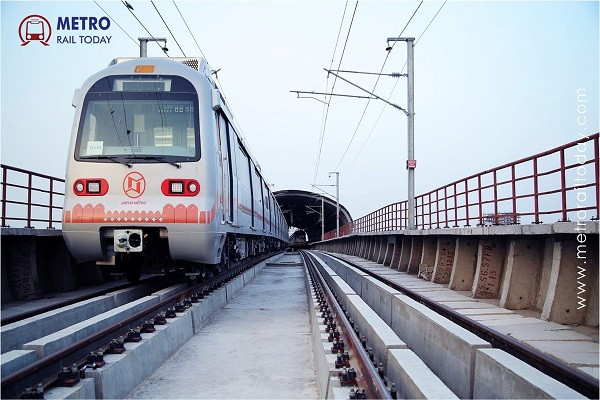 Paras Railtech wins ₹84.72 crore Ballastless Track Contract for Jaipur Metro Rail Project
 Indian Railways announces 3,548 Graduate-Level Vacancies under NTPC Recruitment 2026
 European Union sanctions €10 million to support extension of Hanoi Metro Line 3
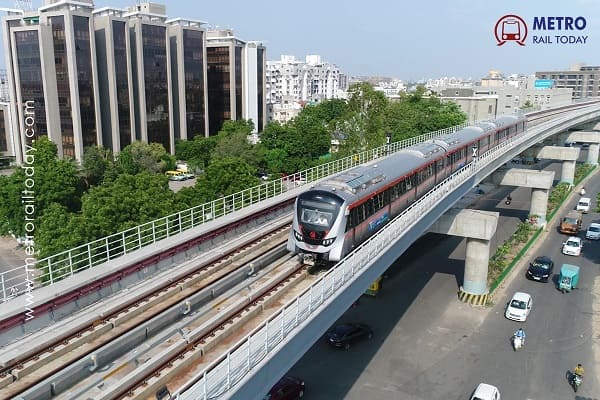 GMRC issues ₹683 crore Tender for construction of 8.68 km stretch for Ahmedabad Metro
- GMRC launches ₹439 crore Tender for construction of 5 New Ahmedabad Metro Stations
 Global tender issued for procurement of 60 Rolling Stock coaches for Hyderabad Metro Rail Project
 Global tender issued for procurement of 102 Rolling Stock coaches for Patna Metro Rail Project
 Gamuda awarded RM3.7 billion contract to build Keelung Mass Rapid Transit in Taiwan
 Maharashtra forms special Task Force to plan Rail, Metro and RRTS expansion
 Govt. of India approves ₹12,200 crore, 29-km Thane Integral Ring Metro project in Maharashtra
Two Firms Bid for Mumbai's Personal Rapid Transit (PRT) System Contract
MRT Online Desk
Posted on: 2024-08-23 17:15:00
Viewer: 8,140
Comments: 0
Country: India
City: Mumbai

Mumbai, India (Metro Rail Today): Mumbai's Bandra-Kurla Complex (BKC) is on the cusp of a transportation transformation with the introduction of a Personal Rapid Transit (PRT) system, designed to enhance connectivity within the bustling business district. Two firms, Sai Green Mobility and Refex Industries, have submitted bids for the construction and operation of this innovative Pod Taxi network. The project, aimed at easing transit between key locations in BKC, is being pursued under the Design-Build-Finance-Operate-Transfer (DBFOT) model.
Overview of the PRT Project
Approved by the Mumbai Metropolitan Region Development Authority (MMRDA) in March 2024, the PRT network will span 8.8 kilometers, linking Bandra Railway Station to Kurla Railway Station. The system is envisioned to feature small, driverless pod-cars that can transport 4-8 passengers each, offering a seamless point-to-point travel experience. With 38 designated stops, the network will serve major hubs including the forthcoming BKC Station for the Mumbai-Ahmedabad Bullet Train and Mumbai Metro's Line-2B/Yellow Line projects.
Bidders in the Race
The MMRDA's call for bids in March 2024 attracted proposals from two contenders:
-
Sai Green Mobility: Established on March 14, 2024, Sai Green Mobility is a subsidiary of Sai Wardha Power Generation Pvt. Ltd. The company has claimed involvement in a ropeway project at Sinhagad Fort, though its experience in large-scale transit systems remains limited.
-
Refex Industries: Known primarily for its activities in refrigerant gas sales and coal ash disposal, Refex Industries lacks significant experience in transportation infrastructure. Its bid raises questions about its capability to handle a project of this scale and complexity.
Evaluation Process
The technical bids from Sai Green Mobility and Refex Industries will be assessed by Tata Consulting Engineers (TCE), which has recently been awarded a consulting contract worth ₹19.80 crore. TCE will support the MMRDA in evaluating the feasibility and readiness of the bids, drawing on their extensive experience in metro, road, bridge, and transportation projects, totaling ₹34,174 crore.
Insights on PRT Systems
Despite the excitement surrounding the PRT system, its utility in the urban landscape of Indian cities remains a point of contention. PRT systems, while innovative, are often criticized for their limited capacity and high costs relative to their benefits. In densely populated urban areas like Mumbai, the small size of PRT pods can become a bottleneck, making them less effective compared to other transportation solutions.
The PRT system’s design allows for headways of just one second, but such frequent service is impractical in many urban contexts due to capacity constraints. Critics argue that simpler, more cost-effective measures—such as improving sidewalks, optimizing road junction designs, and enhancing bus stop placements—might offer greater benefits for urban mobility.
The bidding process for Mumbai’s PRT system underscores the city's commitment to modernizing its transportation infrastructure. With Sai Green Mobility and Refex Industries vying for the contract, the final decision will be crucial in determining the future of BKC’s transit options. As the technical evaluation progresses, the feasibility and potential impact of the PRT system will become clearer, shaping the next steps in Mumbai’s transportation evolution.

MRT Online Desk
Metro Rail Today is an authentic and global news provider for the Rail & Metro industry from and around the world.